easy beef korean bibimbap recipe nights usually happen at my place when I am tired, hungry, and tempted to order takeout again. You know the feeling, you want something cozy and satisfying, but you do not want a sink full of dishes. Bibimbap hits that sweet spot because it is basically a happy bowl of rice plus toppings, and you can keep it simple or go a little extra depending on your energy. This version is quick, beefy, and honestly pretty hard to mess up. If you have leftover veggies in the fridge, even better, this bowl loves a clean out. 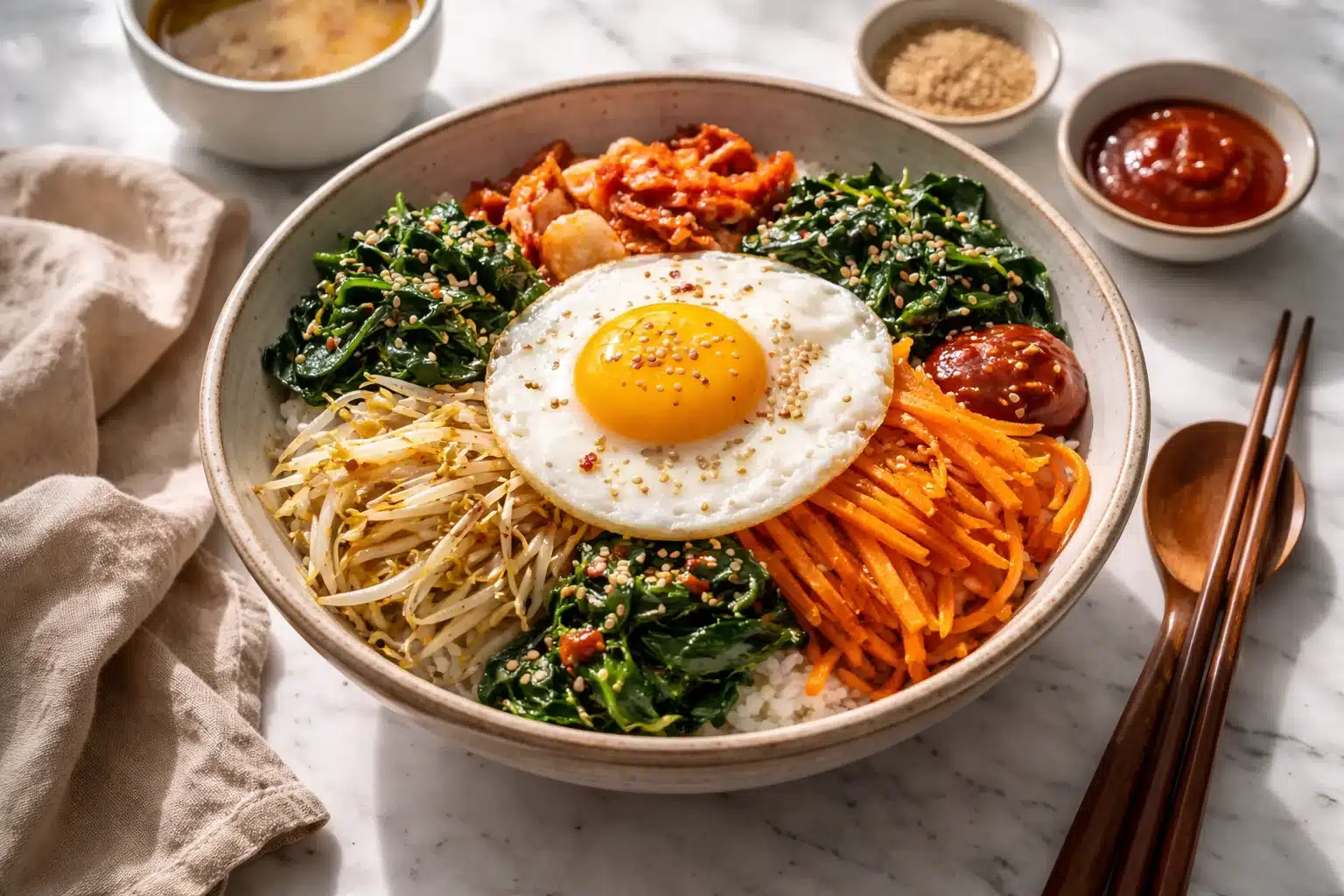
What is Bibimbap?
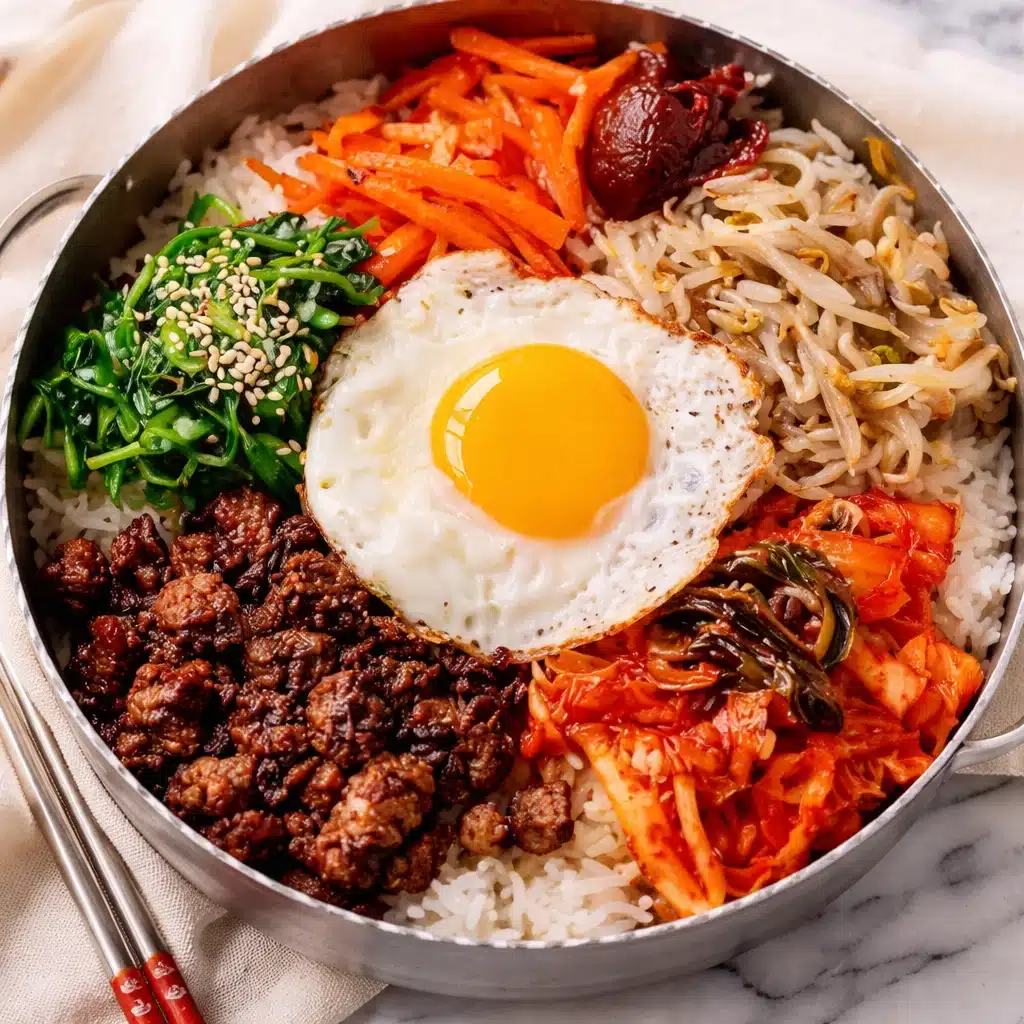
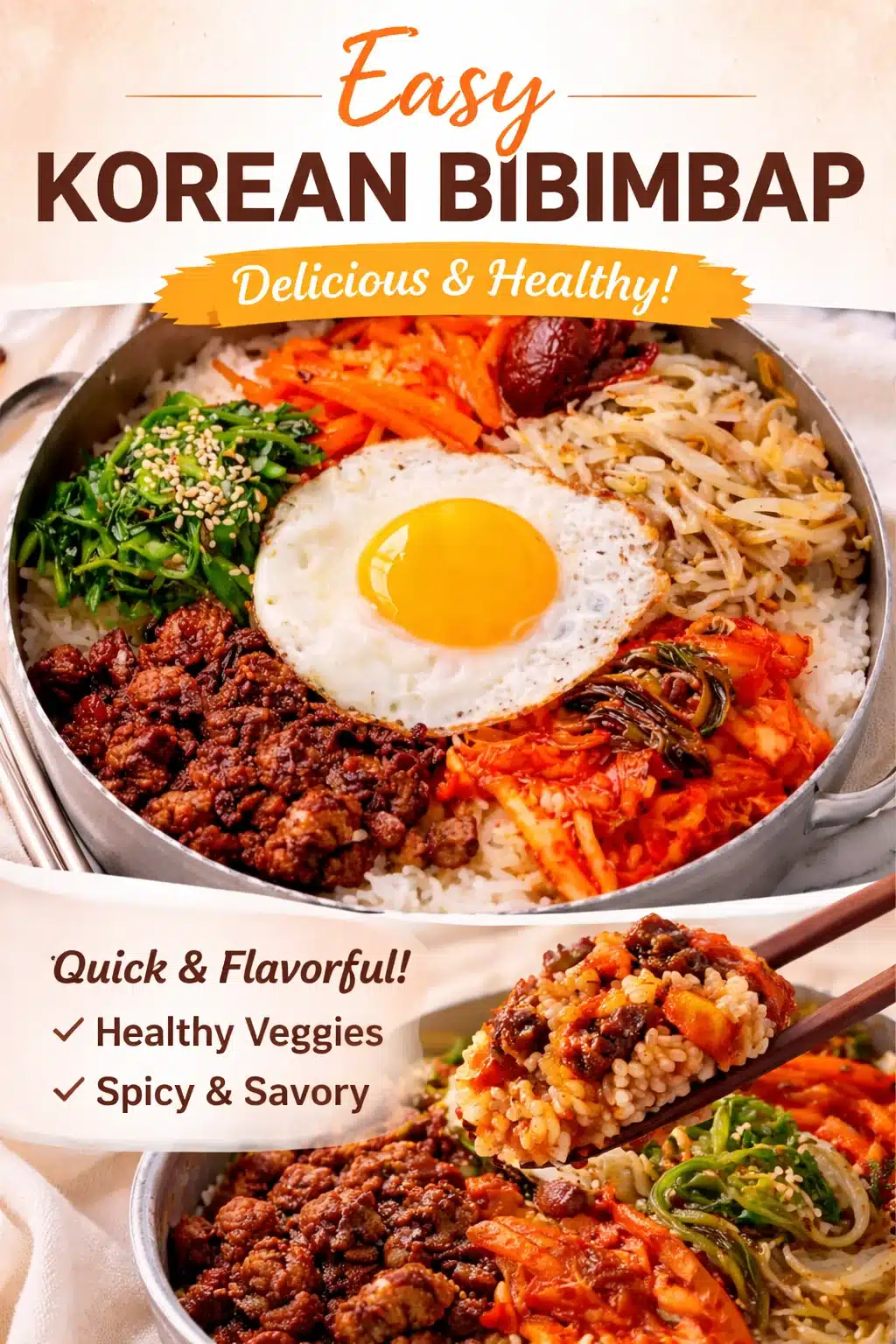
Bibimbap is a classic Korean rice bowl that literally means mixed rice. You put warm rice in a bowl, pile on different toppings like seasoned vegetables, meat, and a fried egg, then mix it all up with a spicy sauce. The whole point is contrast: warm rice, crunchy veggies, savory beef, creamy egg yolk, and that punchy gochujang sauce.
What I love most is that bibimbap is flexible. At Korean restaurants it can be super elaborate with lots of banchan style veggies, but at home it can be whatever you have. If you can cook rice and brown some beef, you can make a very legit bowl. It is also one of those meals that feels kind of special even though it is made from everyday stuff.
If you are in a weeknight cooking phase and want more fast ideas, I keep a running list of cozy, simple meals on my blog, like this roundup of easy healthy recipe options that save me when I am low on time.
Easy Beef Korean Bibimbap
- Total Time: 30 minutes
- Yield: 4 servings 1x
- Diet: Omnivore
Description
A quick, cozy, and satisfying Korean rice bowl topped with savory beef, fresh vegetables, and a fried egg, all mixed with a spicy sauce.
Ingredients
- 2 cups cooked white or brown rice
- 1 pound ground beef
- 2 teaspoons gochujang
- 2 teaspoons soy sauce
- 1 teaspoon sesame oil
- 2 cloves garlic (minced)
- 1 teaspoon brown sugar or honey
- Vegetable toppings (choice of 3-5): spinach, carrots, cucumber, mushrooms, zucchini, bean sprouts, kimchi
- 1 egg (per bowl)
- Sesame seeds and sliced green onions for topping
Instructions
- Start the rice. If you don’t have cooked rice, prepare it first.
- Cook the beef. In a skillet over medium-high heat, add ground beef and break it apart. Brown it, then stir in soy sauce, sesame oil, garlic, and sugar.
- Prep the vegetables. Sauté spinach for 1 minute with sesame oil and salt, sauté carrots for 1-2 minutes, keep cucumber raw, and sauté mushrooms with soy sauce.
- Fry the egg. Cook to your preference (sunny side up is recommended).
- Mix the sauce in a small bowl: combine gochujang, soy sauce, sesame oil, sugar, rice vinegar, and water. Adjust to taste.
- Build your bowls: add rice, arrange beef and veggies, top with egg, spoon on sauce, and sprinkle with sesame seeds and green onions.
Notes
Bibimbap is very forgiving; feel free to use whatever leftover vegetables you have.
- Prep Time: 15 minutes
- Cook Time: 15 minutes
- Category: Main Course
- Method: Stovetop
- Cuisine: Korean
Nutrition
- Serving Size: 1 bowl
- Calories: 450
- Sugar: 6g
- Sodium: 600mg
- Fat: 20g
- Saturated Fat: 7g
- Unsaturated Fat: 10g
- Trans Fat: 0g
- Carbohydrates: 50g
- Fiber: 4g
- Protein: 20g
- Cholesterol: 210mg
Keywords: bibimbap, Korean recipe, beef bowl
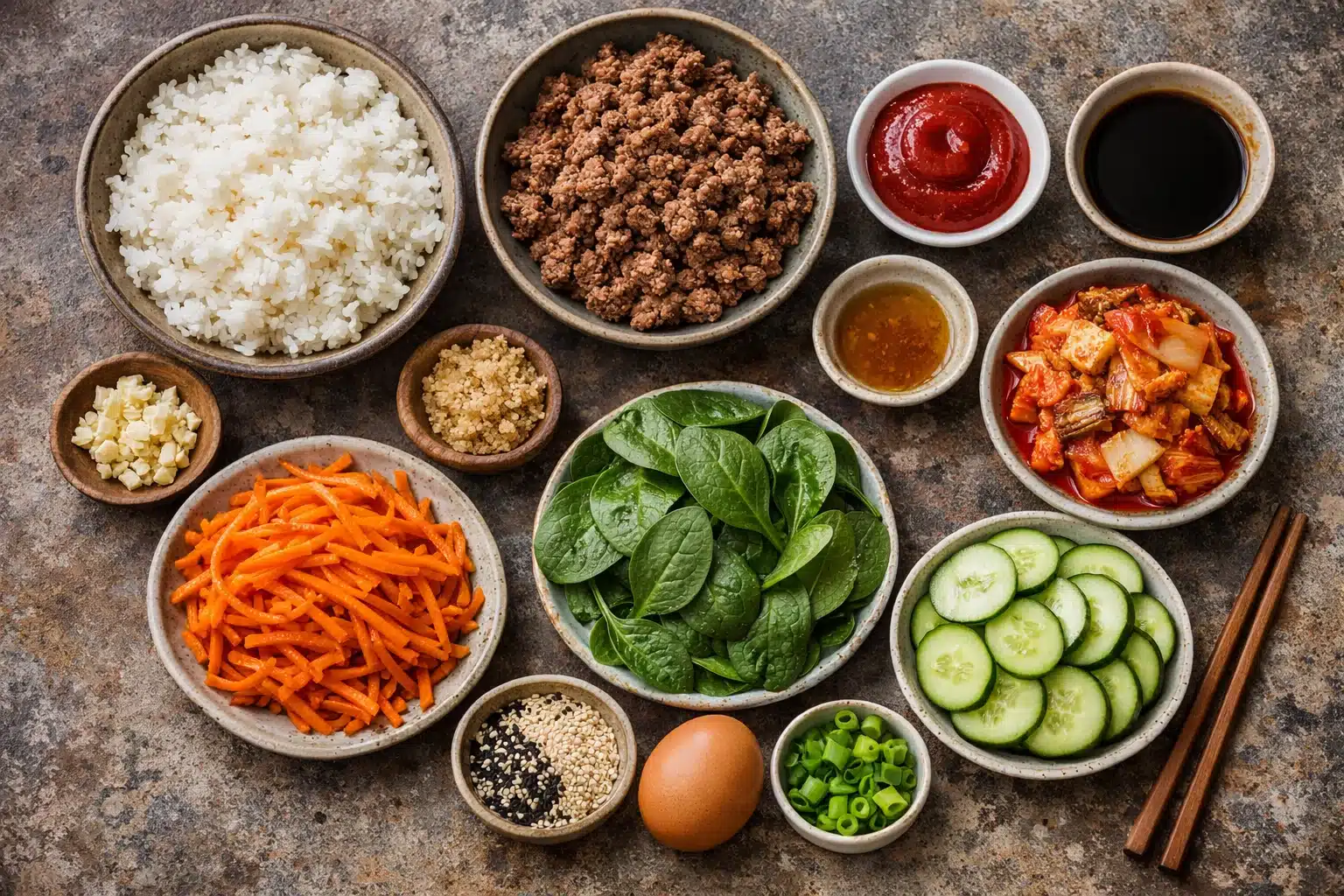
Ingredients for Bibimbap
This is the grocery list for my quick version. I am keeping it realistic and beginner friendly, but still super tasty. I will also add swaps so you are not stuck if you cannot find something.
- Cooked rice: white rice is classic, but brown rice works too. Even microwave rice is fine on busy nights.
- Ground beef: fast and easy. You can also use thin sliced steak if you have it.
- Gochujang: Korean red chili paste, the signature flavor.
- Soy sauce
- Sesame oil
- Garlic (fresh or paste)
- Brown sugar or honey (just a little)
- Vegetable toppings: pick 3 to 5 like spinach, carrots, cucumber, mushrooms, zucchini, bean sprouts, kimchi
- Eggs (1 per bowl)
- Sesame seeds and sliced green onions for topping
My usual topping combo is quick sautéed spinach, shredded carrots, and cucumber slices. If I have kimchi, that goes on the bowl no matter what. If you are missing a veggie, no stress. Bibimbap is very forgiving.
And if you like exploring Asian flavors in general, you might also enjoy my list of 30 easy Japanese recipes. It is a fun way to mix up your weeknight rotation without getting overwhelmed.
How to Make Bibimbap
Step by step, the no stress way
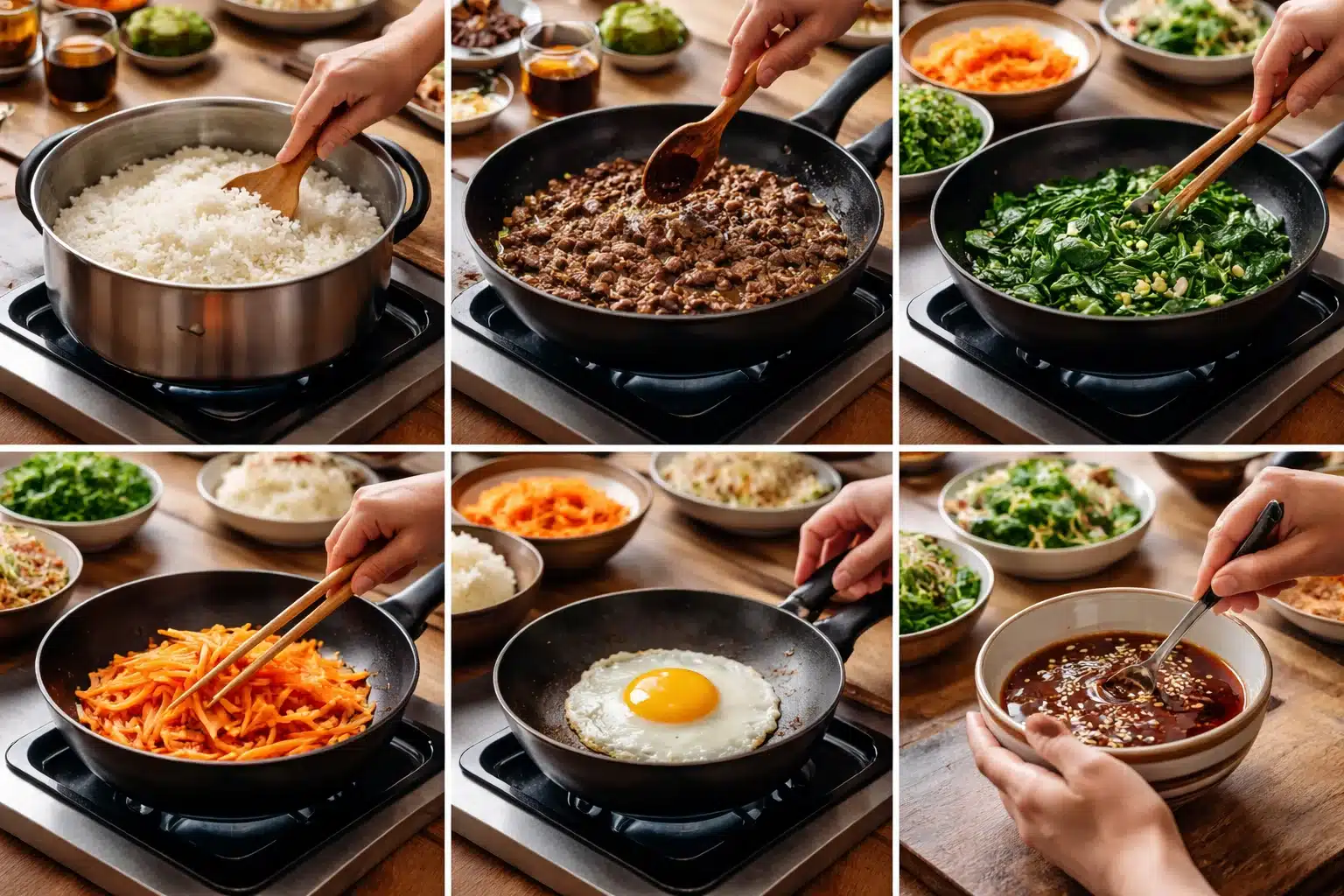
I like to set this up like a little assembly line. Rice first, then beef, then veggies, then egg, then sauce. It sounds like a lot, but once you do it once, it becomes muscle memory.
1) Start the rice
If you do not already have rice, get it going first since it takes the longest. While it cooks, you can prep everything else. If you are using leftover rice, warm it in the microwave with a splash of water and cover it so it steams.
2) Cook the beef
Heat a skillet over medium high heat. Add the ground beef and break it up. When it is mostly browned, add:
- 2 teaspoons soy sauce
- 1 teaspoon sesame oil
- 2 cloves garlic (minced) or 1 teaspoon garlic paste
- 1 to 2 teaspoons brown sugar or honey
Cook for another 1 to 2 minutes. Taste it. If it needs more salt, add a tiny splash more soy sauce. If you want heat, add a little gochujang right into the beef too.
3) Quick veggie prep
Here is my lazy but effective method:
Spinach: sauté a handful with a tiny bit of sesame oil and a pinch of salt, 1 minute max.
Carrots: sauté shredded carrots for 1 to 2 minutes with a pinch of salt.
Cucumber: keep it raw for crunch, just slice it.
Mushrooms: sauté with a little soy sauce until they shrink down.
4) Fry your egg
I love a sunny side up egg for bibimbap because the runny yolk becomes part of the sauce. If you prefer over easy or scrambled, go for it. No judgment in this kitchen.
5) Mix the sauce
In a small bowl stir together:
- 1 tablespoon gochujang
- 2 teaspoons soy sauce
- 1 teaspoon sesame oil
- 1 teaspoon sugar or honey
- 1 teaspoon rice vinegar or a squeeze of lemon
- 1 to 2 teaspoons water to thin (as needed)
Taste and adjust. More gochujang for heat, more honey for sweet, more water if it is too thick.
6) Build the bowls
Add rice to each bowl. Arrange beef and veggies in little piles. Top with the egg. Spoon on sauce and sprinkle sesame seeds and green onions.
The best part is mixing it up at the table. Tell everyone to stir like they mean it. The rice turns red and glossy, and suddenly it smells like your favorite Korean spot.
If you are into comfort food that stretches leftovers, you would probably also like my leftover chicken noodle soup recipe easy comfort. It has the same cozy vibe for a different kind of night.
Essential Korean Ingredients
The small list that makes it taste legit
You can make a basic mixed rice bowl with whatever sauce you like, but if you want that true bibimbap flavor, a few Korean staples go a long way. The good news is you do not need a whole pantry makeover.
Gochujang is the big one. It is spicy, a little sweet, and kind of funky in the best way. Look for it in the international aisle, at Asian markets, or online. Once you have it, you can use it in marinades, stir fries, and even soups.
Sesame oil is the other must. It adds that toasty smell that makes the whole bowl feel warm and rich. A little goes a long way, so do not pour it like cooking oil.
Kimchi is optional but I love it here. It adds crunch and tang and makes the bowl feel more complete. If you are new to it, start with a small amount on the side and work your way in.
If you like adding little healthy habits alongside meals like this, I sometimes make a simple drink from my 5 easy metabolism booster drink recipes list to sip while I cook. It is just a nice way to feel refreshed while dinner comes together.
Why This Recipe Works
Fast, flexible, and big flavor
This is the kind of dinner that makes you feel like you did something impressive, but it is secretly low effort. The beef gives you savory flavor fast. The sauce brings everything together with spice and a little sweetness. And the veggies keep it from feeling heavy.
Here is what makes this quick version dependable:
It is built for shortcuts. Use leftover rice, bagged spinach, pre shredded carrots, or whatever you have. It still tastes great.
It is easy to scale. Cooking for one? Make one bowl. Feeding a group? Set up toppings buffet style and let everyone build their own.
It saves your budget. Ground beef is usually cheaper than steak, and veggies stretch the meal. Plus, it is a great way to use odds and ends that might go bad.
If you are trying to keep breakfast simple too, my list of 7 delicious weight loss breakfast recipes might help you plan the rest of the day without overthinking it.
Common Questions
Can I use a different protein instead of beef?
Yes. Ground turkey, chicken, tofu, or even leftover steak all work. Just season it with soy sauce, garlic, and a touch of sweetener so it does not taste bland.
Is bibimbap super spicy?
It depends on the sauce. Gochujang has heat, but you control how much you add. Start with a small spoonful and add more after you mix.
What veggies are best if I only want to cook one?
Spinach is the easiest. It cooks in about a minute and tastes great with sesame oil and a pinch of salt.
Can I meal prep this?
Totally. Cook the rice, beef, and veggies and store them separately. When you are ready to eat, reheat and fry a fresh egg. The sauce keeps well for several days in the fridge.
Do I have to use a fried egg?
Nope. The egg adds richness, but you can skip it or use a soft boiled egg if that is easier for you.
A cozy bowl you will want on repeat
If you try this easy beef korean bibimbap recipe, do not be surprised if it becomes one of those back pocket meals you make all the time. It is quick, it is flexible, and it tastes like a treat without requiring restaurant level effort. If you want to compare styles or dive deeper, I learned a lot from Easy Korean Beef Bibimbap Recipe – The Woks of Life, P
lus the classic breakdown at Bibimbap (Korean Mixed Rice with Meat and Assorted Vegetables), and another solid take from Easy Korean Beef Bibimbap Recipe (Mixed Rice) – The Forked Spoon. Make it once, tweak it to your taste, and you will see why this bowl is such a weeknight hero. easy beef korean bibimbap recipe nights are about keeping it simple and still eating really well.