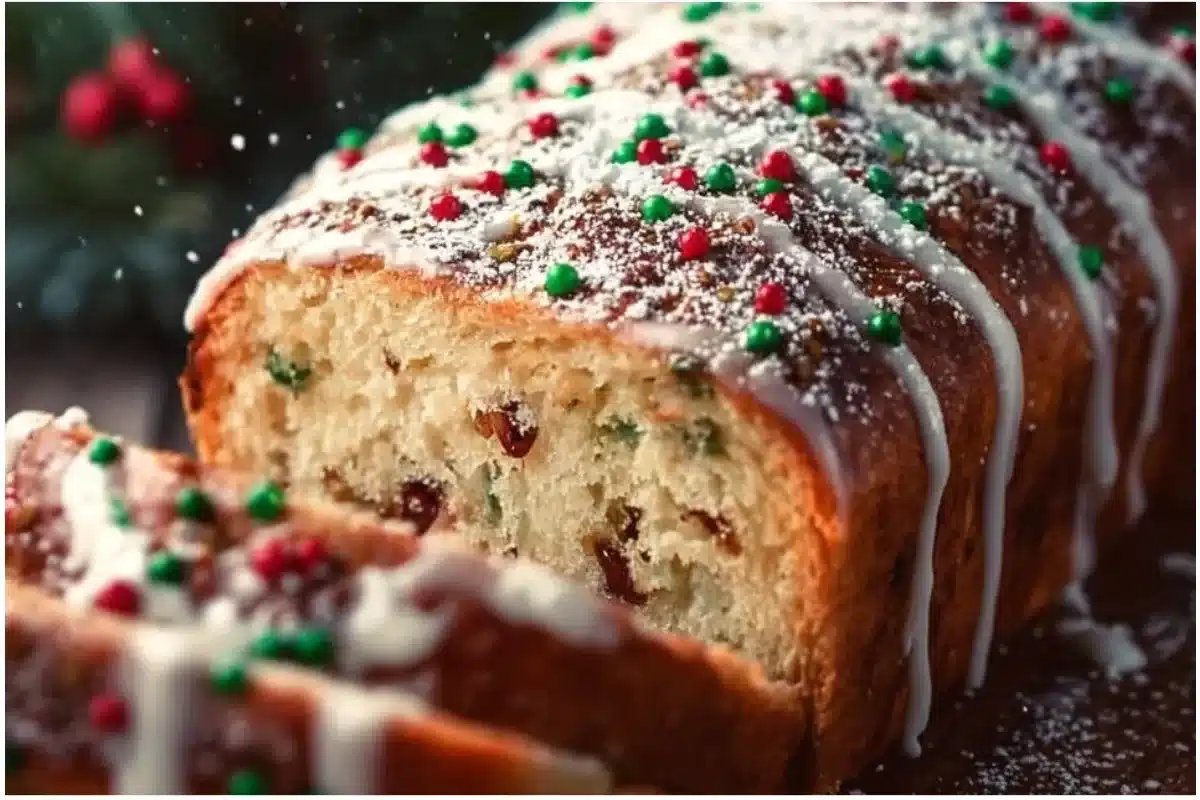
Nothing announces the holidays like the smell of warm, buttery bread studded with dried fruit and glazed with something shiny. Festive Christmas Bread turns plain flour, butter, and yeast into something celebratory: a centerpiece for breakfast, a portable host-gift, or the finishing touch on a holiday table. This guide gives you the full picture—recipe, ingredient science, troubleshooting, plus pro techniques so your loaf rises tall, slices clean, and keeps guests asking for the recipe.
If you like festive loaves with cozy spice and tender crumb, you may also enjoy my spin on rich seasonal bakes like this Apple Cider Donut Bread, which shares the same technique of enriched batter and warm, comforting flavors.
Image prompt: a golden, braided Festive Christmas Bread on a wooden board, glazed and dusted with powdered sugar, sprigs of rosemary and cranberries around, warm kitchen lighting.
Why this article is different: instead of a single recipe and vague tips, you’ll get the logic behind every ingredient, realistic timelines for home bakers, troubleshooting for common failures, and multiple variation ideas to match your pantry and dietary needs.
What is Festive Christmas Bread?
Festive Christmas Bread is an umbrella term for enriched, often fruit-studded loaves baked around the holidays. It includes traditional breads like panettone, stollen, British Christmas fruit loaf, and regional variations. For home cooks, the model is simple: make a rich dough (milk, eggs, butter, sugar), fold in fruit and nuts, proof to maturity, shape (braid, round, or in a pan), then bake and finish with glaze or sugar.
The goal is a soft but structured crumb that supports inclusions (dried fruit, chocolate, nuts) and a flavor profile that echoes the season: citrus, warm spices, brandy or rum, and sometimes marzipan. This recipe uses that model but prioritizes practical timing and techniques suited to a standard home oven.
Why make your own Festive Christmas Bread?
- Control the sweetness and alcohol infusion—rathеr than buying overly sugary commercial loaves, you can balance fruit, spice, and glaze.
- Fresh-baked aroma and texture—homemade enriched dough develops a more tender crumb and richer flavor.
- Giftable and customizable—bake multiple loaves with different fillings for friends and family.
- Learning-rich baking—this recipe teaches enriched dough handling, proofing cues, and shaping skills useful across brioche and challah.
Festive Christmas Bread
- Total Time: 160 minutes
- Yield: 12–14 slices 1x
- Diet: Vegetarian
Description
A warm, buttery bread studded with dried fruit, perfect for the holidays as a centerpiece for breakfast or a portable gift.
Ingredients
- 420 g (3 1/2 cups) all-purpose flour (or 500 g bread flour for chewier crumb)
- 60 g (1/3 cup) granulated sugar
- 8 g (2 tsp) fine salt
- 8 g (2 tsp) instant yeast (or 14 g active dry yeast proofed)
- 180 ml whole milk, warmed to 95–100°F (35–40°C)
- 2 large eggs + 1 egg for egg wash
- 100 g (7 tbsp) unsalted butter, softened
- 150 g mixed dried fruit (currants, chopped apricots, raisins)
- 50 g chopped nuts (optional) (toasted almonds or pistachios)
- Zest of 1 orange and 1 lemon
- 1 tsp ground cinnamon
- 1/4 tsp ground nutmeg (optional)
- 2 tbsp rum, brandy, or orange juice (optional; for soaking fruit)
- For finish: simple sugar glaze (1 cup powdered sugar + 2–3 tbsp milk) or butter + dusted sugar
Instructions
- If soaking fruit: soak dried fruit in rum/juice at least 30 minutes, drain.
- Mix flour, sugar, salt, yeast in mixer bowl. Warm milk + beaten eggs; combine. Knead 6–8 minutes until dough is smooth.
- Add softened butter in pieces; knead until fully incorporated and dough is elastic (8–12 minutes).
- Fold in drained fruit and nuts during last knead.
- First proof: 60–90 minutes until doubled.
- Shape: braid, form round, or place in pan. Final proof: 45–60 minutes.
- Egg wash, bake at 350°F (175°C) for 30–40 minutes until internal temperature reaches 190–200°F.
- Cool; glaze.
Notes
Soak dried fruit for better flavor distribution. Ensure dough is elastic and not overly sticky before measuring flour.
- Prep Time: 120 minutes
- Cook Time: 40 minutes
- Category: Baking
- Method: Baking
- Cuisine: American
Nutrition
- Serving Size: 1 slice
- Calories: 300
- Sugar: 12g
- Sodium: 400mg
- Fat: 10g
- Saturated Fat: 4g
- Unsaturated Fat: 6g
- Trans Fat: 0g
- Carbohydrates: 45g
- Fiber: 2g
- Protein: 7g
- Cholesterol: 45mg
Keywords: Christmas bread, holiday bread, enriched dough, festive baking, seasonal recipes
Ingredient breakdown with science and benefits
Understanding each ingredient helps you troubleshoot and adapt the recipe.
Flour
- All-purpose vs bread flour: All-purpose has ~10–11% protein; bread flour is 12–14%. Bread flour gives stronger gluten and a chewier crumb; all-purpose yields softer, more tender loaf. For Festive Christmas Bread, either works. Use bread flour if you want a tall, well-structured loaf that holds heavy fruit.
Yeast
- Instant vs active dry vs fresh: Instant yeast mixes directly into dry ingredients; active dry needs proofing in warm water; fresh yeast is rare in home kitchens. Yeast quantity controls rise speed. This recipe uses instant yeast for convenience. If using active dry, proof in the milk/egg mixture.
Milk
- Milk contributes tenderness and browning. Warming milk to 95–100°F (35–40°C) activates yeast without killing it. For dairy-free versions, use full-fat coconut milk or oat milk; expect slight flavor differences.
Eggs
- Eggs add richness, color, and structure. They also act as emulsifiers—helping fat and water bind for a smooth crumb.
Butter
- Solid fat in enriched dough provides flavor and a tender, layered crumb. Adding butter slowly after gluten has developed (the “butter-in” phase) helps the dough absorb fat without weakening structure.
Sugar
- Feeds yeast (in moderation) and tenderizes crumb. High sugar concentrations slow yeast growth; keep sugar below 25% of flour weight for balanced rising.
Salt
- Strengthens gluten and controls yeast. Never add salt directly onto yeast; it can inhibit activity.
Dried fruit & nuts
- The classic inclusions—raisins, currants, candied citrus, chopped apricots, pistachios—add flavor and texture. Soaking fruit in warm liquor or juice plumps them and distributes flavor. Drain well and pat dry to avoid adding too much free liquid to the dough.
Spices & citrus
- Cinnamon, nutmeg, orange and lemon zest are holiday signatures. Zest adds fresh aromatic oils that cut through richness.
Liquids and temperature
- Dough temperature at the end of mixing (final dough temperature, FDT) should be around 76–78°F (24–26°C) for typical home kitchen yeasts. If your kitchen is cold, proof in the oven with light on or on top of a warm appliance.
Why length of kneading matters
- For enriched doughs, initial gluten formation is easier because liquids and eggs help hydrate proteins. However, adding butter can slacken gluten; continue kneading until the dough is elastic and passes the “windowpane” test (a thin, translucent membrane when stretched).
Role of retardation (overnight cool fermentation)
- Slowing proof in the refrigerator overnight deepens flavor through slow yeast activity and enzyme action. It also makes shaping easier because chilled dough is firmer.
Nutrition and health note
- Festive Christmas Bread is a treat—enriched, sometimes with added sugar and fat. You can trim calories by reducing sugar by 15–20% and using part whole-wheat flour (up to 25%), though expect slightly denser texture. For lower-calorie holiday bakes, see related lighter breads and fruit-forward options.
For another enriched quick-bread style that uses ripe bananas instead of yeast, see my Banana Bread Recipe—different technique but similar comfort.
Step-by-step method with real cooking insights
Preparation chronology matters for enriched doughs: plan for two rises (bulk and final), plus any overnight chilling if chosen. Here’s a detailed timeline and reasoning.
Make-ahead plan (best for holiday schedules)
- Night before: soak fruit in liquor/juice and refrigerate. Mix dough and place in refrigerator for slow bulk fermentation (retard) for 8–16 hours. Next morning, shape and final proof while you have coffee and prepare the table. Bake mid-morning.
Step 1 — Soak fruit (optional but recommended)
- Use 150 g mixed fruit. Cover with rum, brandy, or orange juice. Cover and rest 30–60 minutes. Drain; reserve any liquid for brushing or glaze. Tip: chop large fruits to evenly distribute.
Step 2 — Mix dry ingredients
- Combine flour, sugar, salt, and instant yeast in mixer bowl. Keep salt and yeast on opposite sides of the bowl if adding by hand.
Step 3 — Add liquids
- Warm milk to 95–100°F. Whisk eggs and add to milk. If using active dry yeast, dissolve it in the warm milk with a pinch of sugar and let sit 8–10 minutes until foamy.
Step 4 — First mix and knead
- With dough hook on low, add liquids and mix until shaggy. Increase to medium and knead 5–8 minutes until gluten starts to form.
Step 5 — Incorporate butter
- Add softened butter in small cubes. Knead another 8–12 minutes until dough is glossy, slightly tacky, and elastic. The dough should clean the bowl but still have some stickiness.
Insight: If dough feels very loose after butter addition, continue kneading. If it’s overly sticky and won’t hold shape, add a tablespoon of flour at a time. Conversely, overflouring yields a dry crumb; use minimal additions.
Step 6 — Add inclusions
- During the last 2 minutes of kneading, add drained fruit and nuts. Use a paddle briefly if inclusions are heavy; you want even distribution without crushing fruit.
Step 7 — Bulk fermentation (first rise)
- Transfer dough to a lightly oiled bowl, cover, and proof at a warm place (75–80°F) until nearly doubled—about 60–90 minutes. For deeper flavor, refrigerate overnight (8–16 hours); dough will rise slowly and develop acidic notes.
Step 8 — Shape
- Knock back gently to remove large bubbles. For a festive look: divide into three equal pieces and braid, or form a round boule with seams tucked under. Brush with egg wash (1 beaten egg + 1 tbsp water) for shine.
Shaping tips:
- For braid: roll ropes of equal size to maintain even baking. For ring: shape a large rope and form a circle; tuck ends under.
- For pan loaf: press dough into a greased loaf pan, seam side down, smooth top for even crust.
Step 9 — Final proof
- Final proof 45–60 minutes until dough has risen to almost doubled and springs back slowly when poked. Overproofing will cause collapse in the oven (oven-spring lost).
How to check proofing:
- Finger indentation test: poke with your finger; if indentation slowly rebounds and not fully springing back, it’s ready. If it’s springy and bounces back fully, proof longer.
Step 10 — Bake
- Preheat oven to 350°F (175°C). Place loaf on middle rack. Bake for 30–40 minutes for a large loaf; smaller loaves 20–30 minutes. Internal temp target: 190–200°F (88–93°C). Crust should be golden and firm.
Oven-spring and crust
- If crust browns too quickly, tent with foil. For a softer crust, brush with melted butter immediately out of the oven.
Step 11 — Cool and finish
- Cool on rack 30–60 minutes before slicing; warm loaves will be gummy inside. Apply glaze when loaf is warm but not hot so glaze sets.
Real-cooking insight: Many home bakers hurry and slice right away, but the crumb continues to set as it cools. You’ll get cleaner slices and less tearing if you wait.
Tips, pro advice, and mistakes to avoid
- Temperature control is everything: warm milk activates yeast; room temperature affects proof times. Use a thermometer to be precise.
- Don’t add all butter at once: adding butter gradually helps the dough absorb fat and maintain structure.
- Avoid excess flour when kneading: add only what’s needed to make dough manageable.
- Overproofing = flat loaf: do not let the dough double to the point where it can’t spring back.
- Underbaking = gummy center: use an instant thermometer. A golden crust does not guarantee a finished center.
- Soak fruit to plump but dry them before adding to avoid soggy dough.
- For even bake, rotate the pan halfway through baking.
- If glaze is too runny, chill to thicken or add powdered sugar.
- Use fresh yeast—expired yeast can underperform. Proof active dry to confirm viability.
Common mistakes and fixes
- Dough is too sticky after butter: refrigerate 10–20 minutes to firm fat, then continue kneading.
- Dense, heavy loaf: likely underproofed or too heavy on inclusions; punch down, reshape, proof longer.
- Dry crumb: too much flour or too much bake time. Reduce flour next attempt and check oven calibration.
- Fruit sinks: ensure your dough is strong and not too slack; toss fruit in a tablespoon of flour before folding in for extra help.
Variations and swaps
This Festive Christmas Bread is a template; swap flavors and inclusions to fit tradition or pantry.
Classic Panettone-style
- Use Italian techniques: higher hydration, long cold retardation, candied orange, lemon, raisins, and a domed mold. For a lighter, airier panettone, use a preferment (biga or sponge) and multiple rises.
Stollen-inspired
- Add marzipan roll in center and more butter in dough. Dust heavily with powdered sugar after baking.
Chocolate-hazelnut
- Use chopped dark chocolate and toasted hazelnuts, omit citrus zest, and finish with a chocolate glaze.
Savory Christmas pull-apart
- Reduce sugar to 1–2 tbsp, add grated parmesan, rosemary, and roasted garlic. Shape as pull-apart buns in a Bundt pan.
Vegan version
- Replace milk with plant milk, butter with vegan butter or coconut oil, and use a flax egg (1 tbsp ground flax + 3 tbsp water per egg). Expect slightly different crumb and less browning.
Gluten-free adaptation
- Use a high-quality gluten-free flour blend formulated for yeast breads and add xanthan gum per package instructions. Gluten-free doughs won’t behave the same; bake in loaf pans for structure and reduce hydration slightly.
Quick cake-mix version
- For a no-yeast shortcut, there are cake-mix-based Christmas breads. For a tested cake-mix option, see the linked resource in the conclusion.
If you want to experiment with tender quick-breads that channel similar seasonal flavors but use different techniques, my Blender Banana Bread technique shows how speed and texture trade-offs work.
Storage and reheating (with exact timing)
Storing enriched breads properly preserves freshness and texture.
Room temperature
- Wrap cooled loaf tightly in plastic wrap or beeswax wrap and store at room temperature up to 2 days. Keep in a cool, dry spot away from direct sunlight.
Refrigeration
- Refrigeration can dry enriched bread quickly due to starch retrogradation. Only refrigerate if you live in a hot, humid climate; wrap tightly and consume within 4–5 days.
Freezing
- Wrap tightly in plastic wrap and foil or place slices in a zip-top bag. Freeze up to 3 months. Thaw at room temperature in packaging to avoid condensation on the crust.
Reheating
- For day-old slices: preheat oven to 325°F (160°C). Wrap slice in foil and warm 8–10 minutes. For a crisp crust, unwrap for the last 2 minutes.
- Microwave reheating: quick but makes crumb rubbery. Microwave 12–18 seconds for one slice and immediately rest 15 seconds.
- Refreshing glazed bread: warm slightly and reapply a thin glaze to restore shine and moisture.
For a different fast-bake sweet loaf you can freeze or serve warm, try a banana-loaf-based recipe technique like my blender banana bread linked earlier.
Storage mistakes to avoid
- Don’t store warm bread in plastic—this traps steam and makes crust soggy. Always cool completely before wrapping.
- Avoid leaving uncovered at room temperature—crumb will dry out and go stale in a few hours.
Nutrition insights
Festive Christmas Bread is an enriched baked good; nutrition varies with ingredients and portion size. Typical 1-slice nutrition (approximate, for a 12-slice loaf with butter and sugar):
- Calories: 220–320 kcal per slice (depends on butter, sugar, and fruit)
- Carbs: 30–40 g
- Fat: 8–14 g (saturated fat varies with butter)
- Protein: 4–6 g
Ways to reduce calories and sugar
- Reduce sugar by 15–25% with minimal effect on structure.
- Use less butter—or swap half the butter for ricotta to reduce fat while maintaining tenderness (changes flavor).
- Increase fruit proportion for natural sweetness.
- Use part whole-wheat flour (25–30%) for added fiber; expect denser crumb.
Allergen notes
- Contains gluten, dairy, eggs, and potentially nuts. Provide clear labeling for guests or swap ingredients accordingly (see variations).
Frequently Asked Questions (FAQ) — Schema-ready style
Q: Can I make Festive Christmas Bread ahead of time?
A: Yes. You can mix dough and refrigerate for slow bulk fermentation overnight (8–16 hours). Alternatively, bake and freeze finished loaf for up to 3 months. Thaw and rewarm before serving.
Q: How do I keep dried fruit from sinking to the bottom?
A: Toss fruit in a tablespoon of flour before adding to dough, or reduce dough hydration slightly so inclusions are supported. Distribute fruit evenly during the final kneading stage.
Q: My bread tastes yeasty. What happened?
A: Likely overproofing. Next time shorten proof times, punch down to redistribute yeast, or use slightly cooler proofing environment. Retarding in the refrigerator also reduces strong yeast tang and develops a more complex flavor.
Q: Can I use instant yeast in place of active dry?
A: Yes. Use 25–30% less instant yeast by weight than active dry, or use equal amounts and skip the proofing step. This recipe is written for instant yeast unless otherwise specified.
Q: How do I achieve a shiny crust?
A: Apply an egg wash (1 beaten egg + 1 tbsp water) before baking. For a softer sheen, brush with melted butter right after baking.
Q: My bread is crumbly. How can I make it more cohesive?
A: Likely under-kneaded or too much flour added. Knead until dough is smooth and elastic and avoid adding flour beyond what’s necessary. Ensure your dough reaches appropriate final dough temperature.
Q: Can I freeze dough after shaping?
A: Yes. Proof dough briefly, then flash-freeze on a tray, wrap well, and freeze. When ready to bake, thaw and complete final proof until doubled, then bake as directed—this may take several hours.
Q: What is the best fruit mix for Christmas bread?
A: Classic: raisins, currants, chopped dried apricot, and candied citrus peel. Add toasted almonds or pistachios for crunch and color.
Q: What internal temperature indicates the bread is done?
A: 190–200°F (88–93°C) for enriched loaves. Use an instant-read thermometer inserted into the center.
Q: How do I make a richer, more brioche-like loaf?
A: Increase butter to 150–200 g and eggs to 3; use bread flour and longer kneading. Expect longer mixing times and a softer, more tender crumb.
Troubleshooting quick reference
- Dough won’t rise: check yeast freshness; ensure liquid not too hot or too cold. If using active dry, proof yeast first.
- Heavy, dense loaf: underproofing, immature gluten development, or too much flour.
- Overly dark crust: lower oven temp 10–20°F or tent with foil.
- Sticky dough after butter: chill briefly, then resume kneading.
Serving ideas and pairings
- Serve slices warm with softened butter and marmalade.
- Pair with hot coffee, mulled cider, or spiced tea.
- Turn slices into French toast for a holiday breakfast the next morning.
- Use slices as a base for a festive stuffing by cubing and toasting.
Recipe variations recap — quick list
- Panettone (airy, tall; add preferment)
- Stollen (add marzipan and extra butter)
- Chocolate-hazelnut (replace fruit with chocolate)
- Savory rosemary-parmesan pull-apart
- Vegan and gluten-free options described earlier
Final presentation tips
- Garnish with fresh rosemary sprigs and sugared cranberries for color.
- For a gift: wrap cooled loaf in parchment, then twine and a sprig of pine.
- For buffet display: slice partially and fan on a board with small bowls of butter, jam, and mascarpone.
Conclusion
Festive Christmas Bread is more than a recipe—it’s a technique you can adapt year after year. Whether you aim for a classic fruit-studded loaf, a brioche-like richness, or a quick cake-mix shortcut, the building blocks are the same: great ingredients, controlled fermentation, and mindful shaping. For a no-yeast shortcut you can try at the last minute, see this Christmas Bread Recipe (Using Cake Mix) by Bitz & Giggles. If you want inspiration from traditional regional loaves to expand your holidays, browse this roundup of 11 Traditional Christmas Breads to Bake Your Season Bright on Epicurious.
External resources:
- Christmas Bread Recipe (Using Cake Mix) – Bitz & Giggles (https://bitzngiggles.com/christmas-bread-recipe-using-cake-mix/)
- 11 Traditional Christmas Breads to Bake Your Season Bright … (https://www.epicurious.com/recipes-menus/christmas-breads)
If you baked this Festive Christmas Bread, save the recipe, leave a comment about your variation, or share photos — I love seeing home bakers make holiday tradition their own.