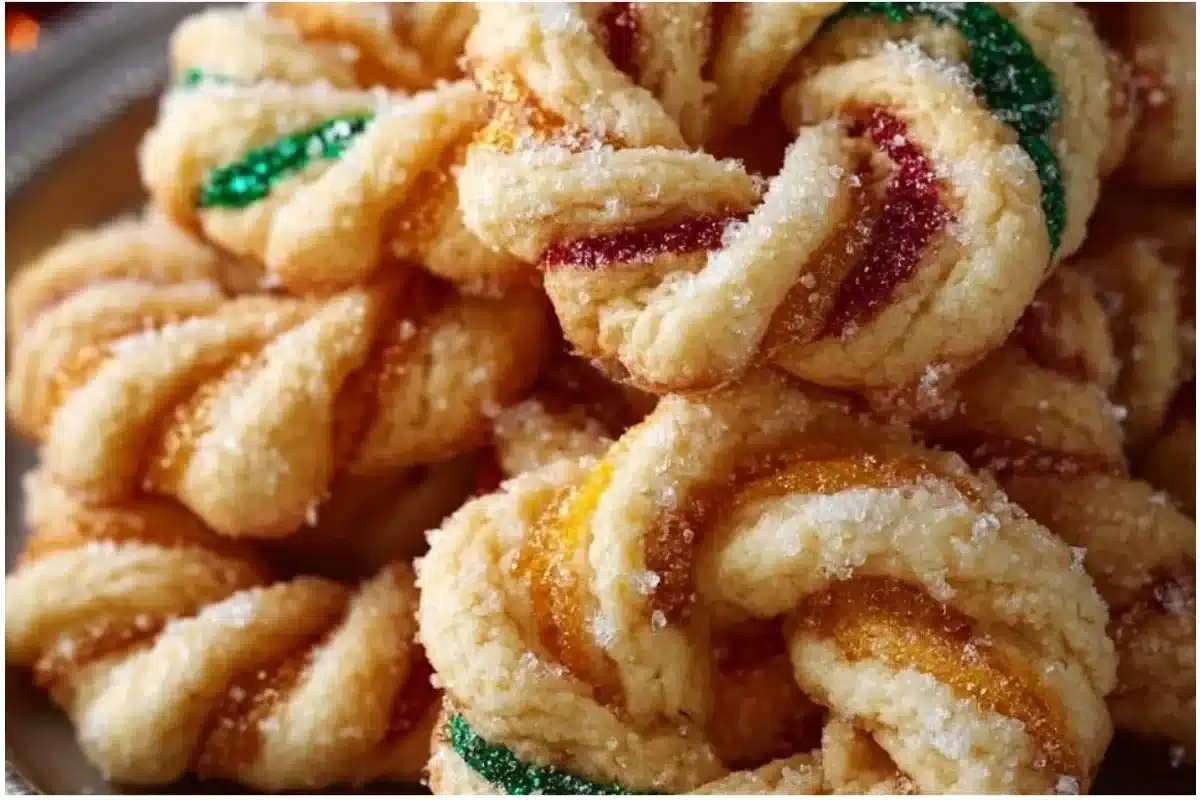
Twisted Christmas Cookies are the kind of holiday cookie that looks impressive on the tray but is simple to make reliably. Whether you’re baking for a classroom swap, a cookie exchange, or a quiet night in with hot chocolate, this recipe gives you crisp edges, tender interior, and beautiful twist patterns every time. In this guide I’ll walk you through the exact ingredients and techniques that create consistent results, explain the science behind the dough, and offer practical variations — from vegan and gluten-free swaps to using cinnamon, pistachio, or citrus flavors.
If you already love classic shapes and flavors, you’ll find this method elevates them: these twists borrow ideas from pinwheels and ribbon cookies but are easier to assemble. For more classic designs and extra holiday inspiration, see this roundup of classic Christmas cookie ideas that pair well with Twisted Christmas Cookies.
What makes a Twisted Christmas Cookie different?
- Two-texture contrast: crisp outer layers and soft-but-cakey middle.
- Visual twist: two colors or flavors rolled together and twisted for a stripe effect.
- Sturdy yet tender dough: holds shape during twisting and bakes cleanly.
This article is written for home bakers who want predictable, delicious results. Read straight through for the full recipe card and step-by-step method, or jump to the sections you need: ingredients, technique notes, tips, variations, or storage.
Why this recipe works: the baking logic
Twisted cookies rely on balance: fat for tenderness, sugar for structure and browning, enough flour for shape, and chilling time for control. The success points you’ll see reflected in the recipe:
- Creamed butter and sugar create structure and increase spread control.
- Adding an egg and a small amount of liquid stabilizes and softens the crumb.
- Chilling firms the butter and hydrates the flour so the dough is easy to roll and twist without tearing.
- Two thin layers yield a crisp exterior but not overbaked interiors.
Recipe Card — Twisted Christmas Cookies
Yields: about 36 cookies (18 twists) | Active time: 45 minutes | Total time: 3 hours (including chill)
Ingredients
- 2 1/2 cups (312 g) all-purpose flour
- 1/2 teaspoon fine salt
- 1 teaspoon baking powder
- 1 cup (227 g) unsalted butter, room temperature
- 3/4 cup (150 g) granulated sugar
- 1 large egg, room temperature
- 1 teaspoon pure vanilla extract
- 1 tablespoon heavy cream (or milk)
- Optional dark dough addition: 1/3 cup (35 g) cocoa powder OR 2 teaspoons ground cinnamon + 1 tbsp brown sugar (adjust sweetness)
- Garnish: powdered sugar or sanding sugar for sparkle
Equipment
- Stand mixer or hand mixer
- Rolling pin
- Parchment or silicone baking mat
- Baking sheets
- Bench scraper or knife
- Refrigerator
Method (short)
- Whisk flour, salt, baking powder.
- Cream butter and sugar until light. Add egg, vanilla, cream.
- Mix in dry ingredients to form dough.
- Divide dough in half. Add cocoa or cinnamon to one half.
- Roll each half into flat rectangles 1/8–1/4″ thick, chill 20–30 minutes.
- Stack rectangles (light on top of dark), roll lightly, slice into strips, twist into shapes.
- Chill shaped cookies 10–15 minutes, bake at 350°F (175°C) for 10–12 minutes.
Full method and why every step matters is below.
Ingredient breakdown — science and benefits
Flour: All-purpose gives a reliable protein level (around 10–11%) that creates enough gluten for structure but not toughness. For a tender cookie, do not overwork the dough once the flour is added — overmixing develops gluten and makes cookies dense.
Butter: Unsalted, room temperature butter provides flavor and the right fat content. Butter’s water content creates steam in the oven, which helps a flaky interior. If you substitute margarine or butter alternatives, texture will change; see variations.
Sugar: Granulated sugar contributes sweetness and spread; creaming sugar with butter incorporates air, helping lift and lightness. If you want slightly crispier cookies, replace up to 1/4 cup granulated with light brown sugar — the molasses improves chew and browning.
Egg: Binds the dough and enriches it. Using only yolks makes cookies richer and more tender but less structured; whites give more crispness.
Leavening: Baking powder is a gentle leavener here to provide a slight lift so the layers don’t collapse. The cookies should not be cake-like; the powder adds height without puffing them flat.
Flavoring: Vanilla is the base. Add cinnamon, citrus zest, or cocoa powder to the second half of the dough depending on your twist theme.
Salt: Enhances flavor and balances sweetness—don’t skip.
Liquid: The tablespoon of cream is a control tool: it makes the dough more pliable without making it sticky. Omit for a firmer dough; add up to 2 tbsp if the dough is dry (cold climate).
Detailed step-by-step method with chef insights
Step 1 — Mise en place (10 minutes)
- Measure ingredients precisely: weighing flour yields the most consistent results. If using cups, spoon flour into the cup and level; don’t scoop.
- Soften butter to room temperature, but not melty. It should give to a finger but hold shape.
- Line two baking sheets with parchment and have a rolling surface ready.
Step 2 — Mix dry ingredients (2 minutes)
- Combine 2 1/2 cups flour, 1/2 tsp salt, 1 tsp baking powder in a bowl. Whisk to aerate and distribute the leavener. This promotes even lift and no bitter pockets of baking powder.
Step 3 — Cream butter and sugar (3–5 minutes)
- Using a paddle attachment or hand mixer, cream butter with 3/4 cup granulated sugar until pale and slightly fluffy. This traps tiny air bubbles which expand in the oven and give lightness.
- Don’t over-cream longer than required — you want texture, not melted butter.
Step 4 — Add egg and vanilla (1 minute)
- Add the egg and 1 tsp vanilla, mixing until just combined. Add 1 tablespoon heavy cream (or milk) to loosen the dough slightly. The egg also adds moisture and structure.
Step 5 — Combine with dry (1-2 minutes)
- With mixer on low, add dry ingredients in two batches until a cohesive dough forms. Scrape the bowl once. Overmixing at this stage develops gluten — mix only until the flour is incorporated.
Step 6 — Divide and flavor (2–3 minutes)
- Divide dough into two equal balls. For a classic dark-and-light twist, mix 1/3 cup unsweetened cocoa powder into one half. For cinnamon twist, add 2 tsp ground cinnamon plus 1 tbsp brown sugar to the dark dough.
- Work quickly — the warmth of your hands softens butter. If dough gets too soft, chill briefly.
Step 7 — Roll into rectangles (10 minutes)
- On lightly floured parchment, roll each dough half to an even rectangle about 10×8 inches and 1/8–1/4 inch thick. For a cleaner sandwich, make the darker sheet slightly smaller so edges line up when stacked.
- Use a ruler for uniform thickness if precision matters for presentation.
Step 8 — Chill between steps (20–30 minutes)
- Chill rolled rectangles for 20–30 minutes until firm but still pliable. Chilling prevents the butter from smearing and ensures crisp edges in the oven.
Step 9 — Stack, roll, and slice (10 minutes)
- Place the chilled dark sheet on top of the light one (or vice versa). Press gently with a rolling pin to adhere. Trim edges for clean lines, then cut the layered dough into 1/2-inch to 3/4-inch strips using a sharp knife or bench scraper.
- For each strip, hold both ends and twist away from you two or three times to form a single twist, or create a double-twist for a braid effect. Place twists on a prepared baking sheet 1 inch apart.
Chef tip: If the dough resists twisting or cracks, chill shapes 10–15 minutes to firm up and then twist again. The slight chill makes the layers less fragile.
Step 10 — Final chill (10–15 minutes)
- Chill shaped twists for 10–15 minutes. This step reduces spread and keeps the stripes crisp.
Step 11 — Bake (10–12 minutes)
- Preheat oven to 350°F (175°C). Bake on the middle rack for 10–12 minutes or until the edges are just golden. Rotate pan halfway through for even color.
- The cookies will firm as they cool; remove when edges have color but centers are still slightly soft.
Step 12 — Cool and finish (10 minutes)
- Transfer cookies to a cooling rack after 5 minutes on the sheet. Dust with powdered sugar or apply sanding sugar while warm for sparkle.
Common mistakes and how to avoid them
Mistake: Twists spread and lose definition.
Fix: Chill the dough more (both after rolling and after shaping) to firm the butter. Reduce oven temperature by 10°F if spreading persists.Mistake: Dough cracks when twisting.
Fix: Roll a hair thicker (1/8″ to 1/4″) and ensure the dough is not overchilled to the point of brittleness. If it’s cold and cracks, let stand 5 minutes at room temperature, then twist.Mistake: Dry, crumbly cookies.
Fix: Add one extra tablespoon of cream or egg white to the dough next time; avoid packing flour during rolling.Mistake: Too soft inside.
Fix: Bake a minute or two longer, and ensure slices are uniform thickness. Use a convection oven setting cautiously — it can dry the exterior too fast, leaving interior underbaked.
Pro tips to elevate your Twisted Christmas Cookies
- Flavor layering: Use orange zest in the light dough and cinnamon-cocoa in the dark dough for a festive orange-chocolate twist.
- Texture contrast: Sprinkle chopped toasted nuts (pistachio or almond) on the dark layer before stacking to add crunch and color.
- Make-ahead: Dough freezes well. Wrap rolled sheets tightly and freeze up to 1 month; thaw in the refrigerator before shaping.
- Decorating: For a two-tone glaze, thin powdered sugar with a touch of milk and color with food gel, then drizzle across twists after cooling.
- Uniformity trick: Use a pastry guide or ruler to cut strips evenly. Even strips bake evenly.
Variations and swaps
Classic cinnamon twist: Add 2 tsp ground cinnamon to the dark dough and 1 tbsp brown sugar for a warm holiday profile.
Vegan option:
- Replace butter with vegan buttery block (use a brand with similar fat content).
- Replace egg with 2 tbsp aquafaba or 1/4 cup applesauce (texture will be slightly different; chill extra).
- Use non-dairy milk for the cream. Bake slightly longer if needed.
Gluten-free:
- Use a 1:1 gluten-free flour blend with xanthan gum. Expect a slightly more crumbly texture; chill longer and handle gently.
Pistachio-vanilla twist:
- Replace the light dough’s 1/4 cup flour with 1/4 cup finely ground pistachios for nutty flavor; reduce baking time slightly to prevent overbrowning.
Citrus-chocolate twist:
- Add 1 1/2 tsp orange zest to the light dough and 1/3 cup cocoa to the dark. The contrast of citrus and chocolate is festive and bright.
Savoury-sweet holiday twist (less traditional):
- Use browned butter in light dough, add 1 tbsp finely chopped rosemary, and a pinch of flaky sea salt on top before baking. Works as a unique holiday palette cleanser.
For inspiration on similar layered cookies and designs, check these pinwheel-style approaches for shaping and finishing that pair well with twisted techniques: pinwheel inspiration.
Scaling and timing for large batches
- Double the recipe and work in parallel: make and roll four sheets at a time using two countertop spaces.
- Keep completed, shaped twists on parchment-lined trays and freeze them in a single layer. Once frozen, transfer to airtight containers and bake from frozen adding 1–2 minutes to baking time.
- For cookie exchange deadlines, bake the day before and frost or sugar the day of for optimal texture.
Storage and reheating
Storage:
- Room temperature: Store cooled cookies in an airtight container layered with parchment for up to 5 days.
- Refrigerator: Not recommended; refrigeration can make cookies stale faster due to moisture. Use only for frostings or fillings that require refrigeration.
- Freezing: Freeze unbaked shaped twists on a sheet pan until solid, then transfer to airtight freezer bags for up to 1 month. Bake from frozen adding 1–2 minutes.
Reheating:
- To refresh crispness, warm in a 300°F oven for 3–5 minutes. Avoid microwaving — it makes cookies soggy.
Variation link (seasonal candy cane twist):
- If you want to add peppermint or red coloring for a candy-cane look, try these swap ideas and flavor ratios from a candy-cane cookie approach: candy cane swaps.
Nutrition insights
These cookies are a traditional indulgence. Below are approximate nutrition facts per cookies (one twist, assuming recipe yields 18 twists, per twist estimate):
- Calories: ~160–190 kcal
- Fat: 10–12 g (saturated fat from butter)
- Carbohydrates: 16–20 g
- Protein: 2–3 g
- Fiber: <1 g
- Sugar: 8–10 g
Health-conscious tweaks:
- Reduce sugar by 10–20% — most recipes handle lower sugar without major texture loss.
- Use whole-grain pastry flour (up to 25%) for more fiber but watch for denser texture.
- For lower calories, try smaller twists or cut into 24 mini twists instead of 18.
Batch workflow (for efficient holiday baking)
- Day 1: Make and roll dough, freeze one set of rolled sheets.
- Day 2: Thaw, stack, cut, shape twists, and bake. Freeze any unbaked or baked extras for later events.
- Assembly-line: Enlist helpers to roll, twist, and lay on trays; one person should watch baking and rotate trays.
Troubleshooting quick guide
- Dough too sticky: Chill 10–20 minutes, dust rolling surface lightly with flour. Avoid adding too much flour.
- Dough too dry/crumbly: Add 1 tsp liquid at a time (cream or milk) until cohesive.
- Twists collapse: Dough warmed or oven too hot — chill shapes and check oven temp with thermometer.
- Uneven baking: Rotate pans and check oven calibration; use middle rack.
Frequently Asked Questions (FAQ)
Q: Do I need to use cocoa powder for the second color?
A: No — cocoa powder is one option. You can use cinnamon, matcha, fruit puree (reduced and dried into a paste), or natural food coloring mixed with a small amount of dough to create contrast.
Q: Can I make these gluten free?
A: Yes. Use a 1:1 gluten-free blend with xanthan gum. Handle gently and chill more between steps.
Q: How thin should the layers be?
A: Aim for 1/8–1/4 inch. Too thin risks tearing and too thick gives no visual contrast.
Q: Will the dough spread too much in a hot kitchen?
A: Possibly. Keep dough chilled and work quickly. Consider lowering oven temp by 10°F if you consistently see over-spread.
Q: Can I pipe the dough instead of rolling?
A: For twists, rolling and slicing gives the best layered stripe. For a similar flavor, you can pipe ribbon-like logs and bake, but they won’t have the same two-tone twist.
Internal linking recap and resources
- For traditional and ornate holiday cookie ideas to mix with your lined twist tray, revisit our guide to classic Christmas cookie ideas to plan your cookie box.
- Need structural ideas for spiraling and pinwheel techniques that translate well into twists? Check this pinwheel-focused tutorial for shaping tips: pinwheel inspiration.
Chef’s final notes before you bake
- Visuals matter: clean edges and uniform size create an impressive tray even with simple sugar dusting.
- Texture is everything: aim for crisp edges and tender interiors—chilling is the key.
- Practice one pan first. Baking a single tray gives you confidence to scale up.
Conclusion
Twisted Christmas Cookies are an approachable yet elegant addition to your holiday baking rotation. They combine visual flair with dependable technique—cream the butter and sugar, control temperature, and use chilling to your advantage. If you want alternative shaping ideas or cultural variations that inspired modern twists, see this Greek holiday twist technique for a different shaping tradition: How to bake Greek Holiday Twist Christmas cookie recipe at high … (https://highaltitudebakes.com/cookies/2012/12/11/greek-holiday-twist-cookies/). For a simple, plant-based cinnamon twist option using 8 ingredients, this Cinnamon Twist Christmas Cookies guide is a great resource for vegan swaps and flavor adjustments: Cinnamon Twist Christmas Cookies (8-Ingredients) (https://sweetsimplevegan.com/cinnamon-twist-christmas-cookies/).
Make a batch, experiment with one variation, and share a photo or gift tin with friends. If you like this recipe, save the page, pin it, or print the recipe card for holiday prep. Happy twisting—and happy baking.