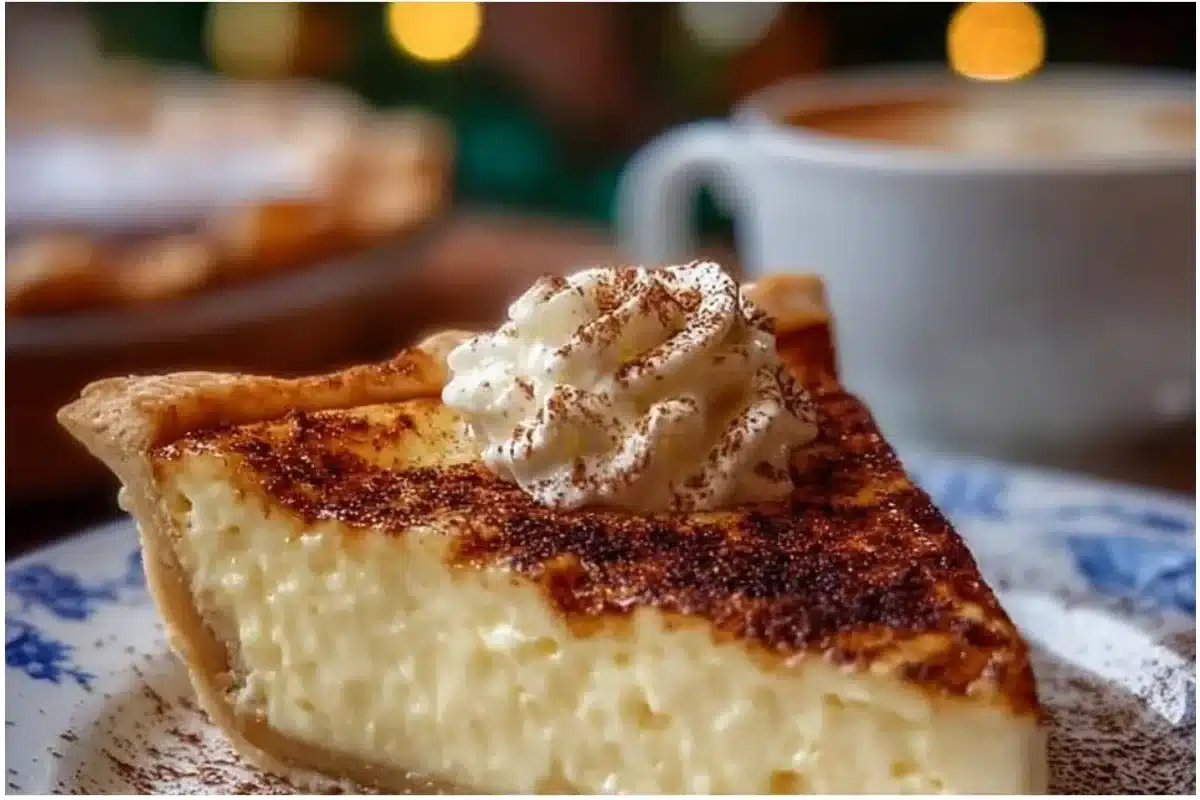
There’s a reason the holidays reward simple classics: rich flavor, familiar comforts, and reliable results. The Christmas Eve Cinnamon-Vanilla Custard Pie – Creamy Holiday Dessert Magic is exactly that kind of dessert — deceptively simple, buttery and aromatic, and silken in texture. If you want a centerpiece pie that feeds a crowd without complicated tempering, this custard pie blends old-world technique and modern kitchen logic so you’ll get smooth, crack-free slices every time.
This article gives you the full recipe, step-by-step technique, ingredient science, troubleshooting, and holiday-ready serving ideas. Plus, I’ll show you smart shortcuts, variations (including festive swaps), storage and nutrition notes, and answers to the common pitfalls that turn a silky custard into a curdled disaster.
If you enjoy custard desserts, you might also like this festive twist on holiday flavor: Christmas Peppermint Pie.
Why this custard pie works for Christmas Eve
Custard pies shine at the holidays for several practical reasons:
- They can be made ahead and gently reheated or served cold, freeing you to focus on the main meal.
- Custard uses common pantry ingredients — eggs, cream, sugar, and vanilla — but rewards precision. Minimalist ingredients mean flavors like cinnamon and real vanilla have space to sing.
- The custard’s richness complements sharper mains and wine pairings without being overly sweet.
This recipe balances the warmth of cinnamon with the floral clarity of vanilla and uses a stabilized custard technique so the filling sets cleanly without rubbery eggs or a soggy bottom.
Understanding custard: the science behind the silk
A custard is an emulsion and a delicate protein gel. Eggs coagulate as they heat, turning a liquid mixture into a stable semi-solid. The trick is controlling the temperature and rate of coagulation so proteins form a fine network that traps dairy and sugar — yielding smooth, tender custard — rather than squeezing out liquids and creating curds.
Key science points:
- Egg proteins begin to coagulate around 140–150°F (60–65°C) and firm more at higher temps. For a pie custard, aim for a final internal temperature around 175–185°F (80–85°C). Overheat and the texture becomes grainy.
- Sugar raises the coagulation temperature slightly, giving you a wider window for smooth set.
- Fat (cream, half-and-half, butter) interferes with protein bonding and makes custard more tender. Using a mix of cream and milk balances richness and stability.
- Tempering eggs when adding hot liquid prevents rapid coagulation. Gradually raise egg temperature to avoid scrambled bits.
We’ll use a water bath (bain-marie) to buffer oven temperature and slow, even heat transfer — the single best step to a glossy, even-set custard.
Print
Christmas Eve Cinnamon-Vanilla Custard Pie
- Total Time: 75 minutes
- Yield: 8 servings 1x
- Diet: Vegetarian
Description
A creamy and aromatic custard pie featuring rich flavors of cinnamon and vanilla, perfect for holiday gatherings.
Ingredients
- 1 (9-inch) pie crust, blind-baked and cooled
- 3 large eggs
- 1 large egg yolk
- 3/4 cup granulated sugar
- 1 cup heavy cream
- 1/2 cup whole milk
- 1 1/2 teaspoons pure vanilla extract (or seeds from 1 vanilla bean)
- 1/2–1 teaspoon ground cinnamon (to taste)
- Pinch of kosher salt
- Freshly grated nutmeg (optional)
- 1 tablespoon unsalted butter, softened (optional; for crust)
- Optional garnish: whipped cream, cinnamon dust, orange zest
Instructions
- Preheat oven to 375°F (190°C). Blind-bake the crust and brush with butter if using.
- In a saucepan, warm cream and milk with cinnamon and vanilla (remove from heat before boiling).
- In a bowl, whisk eggs, yolk, sugar, and salt until smooth, then temper the eggs with the hot milk mixture slowly.
- Strain the custard into the crust, place the pie in a water bath, and bake until the center registers 175–185°F.
- Cool gradually, then chill for at least 4 hours before serving. Garnish and serve.
Notes
Chilling the pie overnight improves texture and makes slicing cleaner. Use a water bath to reduce the chance of cracks.
- Prep Time: 25 minutes
- Cook Time: 50 minutes
- Category: Dessert
- Method: Baking
- Cuisine: American
Nutrition
- Serving Size: 1 slice
- Calories: 370
- Sugar: 22g
- Sodium: 150mg
- Fat: 24g
- Saturated Fat: 14g
- Unsaturated Fat: 9g
- Trans Fat: 0g
- Carbohydrates: 34g
- Fiber: 0g
- Protein: 6g
- Cholesterol: 145mg
Keywords: custard pie, cinnamon pie, holiday dessert, vanilla custard, Christmas dessert
Ingredients and why they matter
Below is the ingredient list and why each item matters to texture and flavor.
- Pie crust (1 9-inch blind-baked crust; homemade or store-bought): A flaky, pre-baked crust prevents a soggy bottom. Blind baking sets the crust so the custard cooks in and the edge stays crisp.
- Whole eggs (3 large): Eggs are the gelling agent; whole eggs give structure with a tender bite.
- Egg yolk (1 large): Adds extra richness and silkiness; yolks have more fat and emulsifiers.
- Granulated sugar (3/4 cup): Sweetens and slightly increases temperature tolerance for the egg proteins.
- Heavy cream (1 cup) + whole milk (1/2 cup): A cream + milk combo yields richness with reduced heaviness so the filling doesn’t feel cloying.
- Pure vanilla extract or vanilla bean seeds (1 1/2 teaspoons extract or 1 pod): Vanilla is the primary aromatic. Use real vanilla for best depth.
- Ground cinnamon (1/2–1 teaspoon) + cinnamon stick (optional): Cinnamon warms and accentuates custard’s vanilla tones. Toasting whole cinnamon lightly in the pan releases oils for a brighter note.
- Kosher salt (pinch): Balances sweetness and clarifies flavors.
- Nutmeg (freshly grated, optional): A light grating enhances the holiday profile.
- Unsalted butter (1 tablespoon, melted, optional): Brushed into the hot crust helps seal it and adds a glossy finish.
- Optional: orange zest (1 teaspoon) for a festive citrus lift.
Ingredient benefits:
- Using both cream and milk creates a custard that’s rich yet not overly dense.
- Extra egg yolk improves mouthfeel; whole eggs provide reliable structure.
- Real vanilla (bean) contributes aromatic polymers unavailable in cheap imitation vanilla.
For a cranberry-forward holiday twist see this cranberry custard inspiration: Cranberry Custard Pie.
Step-by-step method with real cooking insights
Preheat and prep
- Preheat oven to 375°F (190°C). Position a rack in the lower-middle third of the oven to accommodate the water bath.
- Roll out your pie dough and fit into a 9-inch pie pan. Trim the edge and crimp as desired. For store-bought crusts, press into pan and dock lightly with a fork.
Blind-bake the crust
- Line the crust with parchment, fill with pie weights (or dried beans/rice), and bake for 15–18 minutes until the edges begin to color.
- Remove weights and parchment, brush the hot crust lightly with softened butter and return to oven 3–5 minutes until golden. The butter seals layers and helps prevent sogginess.
Pro tip: Docking alone often isn’t enough for custard pies; fully blind-baking sets the bottom so it won’t rehydrate.
Prepare the custard base
- In a saucepan, combine 1 cup heavy cream and 1/2 cup whole milk with 1/2–1 teaspoon ground cinnamon and the scraped seeds of 1 vanilla bean (or 1 1/2 tsp extract). Warm gently until just below simmering — tiny bubbles form at the edge. Remove from heat and let flavors steep 10 minutes for bean or 1–2 minutes for extract.
- Meanwhile, whisk together 3 whole eggs, 1 egg yolk, 3/4 cup sugar, and a pinch of kosher salt until homogeneous. Don’t over-whisk incorporate air — you want smooth, not frothy.
Temper the eggs (critical)
- Slowly ladle about 1/3 cup of the hot cream into the eggs while whisking constantly to raise the eggs’ temperature gradually. Continue adding the warm cream in a thin stream until half of the cream is incorporated.
- Pour the tempered egg mixture back into the saucepan with the remaining warm cream and return to very low heat. Stir constantly with a spatula until the custard registers about 160°F (not for thickening into pudding — we’re just integrating).
- Alternatively, for confidence, pour the full mixture through a fine-mesh strainer into a pitcher. Straining removes any coagulated bits and the cinnamon stick remnants.
Assemble and bake in a water bath
- Place the blind-baked crust on a sheet pan. Pour the strained custard into the crust, leaving a small gap at the top to prevent spillage.
- Set the pie dish into a roasting pan or deep rimmed sheet tray. Pour hot (not boiling) water into the pan until it reaches halfway up the side of the pie dish.
- Place in preheated oven and bake 35–50 minutes. Start checking at 30 minutes; depending on your oven and crust thermal mass, time varies.
- The pie is done when the center jiggly area (about 2 inches across) wobbles slightly like a very soft jelly. An instant-read thermometer inserted slightly off-center should read 175–185°F. Avoid overheating.
- Remove the pie from the water bath carefully and transfer to a wire rack. Cool to room temperature for 30–60 minutes, then chill 4 hours (or overnight) to finish setting.
Browning the top (optional)
- If you like a slightly caramelized top, use a kitchen torch to gently brown the surface or put under a hot broiler for just 30–90 seconds: watch closely to avoid bubbles or burnt sugar.
Serving
- Slice with a hot, dry knife (dip in hot water and wipe between cuts) for clean slices.
- Garnish lightly with whipped cream and a dusting of cinnamon, or scatter candied orange peel for sparkle.
Pro tips and common mistakes (and how to avoid them)
Seasoned custard bakers know a few repeatable techniques that dramatically improve results:
- Always blind-bake the crust for custard pies. A soggy base is a crime in custard baking.
- Use a water bath. The bain-marie equalizes heat and keeps the outer layers from overheating before the center sets.
- Temper eggs slowly. Rapid addition of hot milk/sugar to eggs causes scrambling.
- Use an instant-read thermometer. Bake by temperature, not time. Aim for 175–185°F internal.
- Cool gradually. Sudden temperature changes can create surface cracks. Turn off oven, crack door slightly, or move to counter to cool slowly before chilling.
- Don’t overwhisk eggs. You want a homogeneous mix, not incorporated air. Air causes bubbles and uneven texture.
- Strain the custard before baking. It removes coagulated egg bits, vanilla hulls, and warmed cinnamon stick shards.
- Use fresh eggs. Old eggs set unpredictably and may affect texture.
- Keep oven door interruptions to a minimum. Heat loss can prolong bake and stratify set.
Mistakes to avoid:
- Skipping the water bath (results in cracked, rubbery custard).
- Overbaking (leads to dry, curdled texture).
- Not chilling long enough before cutting (custard will slice poorly).
- Putting cold custard directly into a hot crust (can cause thermal shock and shrinkage).
For more custard and custard-adjacent inspiration, try this festive custard-based treat: Magic Custard Cake.
Variations and ingredient swaps
This recipe is forgiving and welcomes customization for dietary needs or flavor moods.
Spice and flavor variations
- Orange-cinnamon custard: add 1 teaspoon orange zest to warm milk and finish with a splash of Cointreau.
- Gingerbread twist: replace half of the cinnamon with ground ginger and 1/4 teaspoon ground cloves.
- Vanilla bean deepening: double the vanilla bean for a more floral aroma.
Texture and fat swaps
- Lighter version: replace heavy cream with additional whole milk to reduce richness. The custard will be slightly less silky but still satisfying.
- Lactose-free: use lactose-free milk and a lactose-free cream alternative, but reduce overheating as some substitutes separate.
- Dairy-free: use full-fat canned coconut milk for richness; flavor will skew coconut-forward. Use the same technique but expect a denser set.
Crust alternatives
- Graham cracker crust: 1 1/2 cups graham cracker crumbs, 6 tablespoons melted butter, 1 tablespoon sugar — press and blind-bake 8–10 minutes. Works well if you want a sweeter, crumbly counterpoint.
- Gluten-free crust: use your favorite gluten-free pie dough; blind-bake as crusts can be more fragile.
Festive add-ins
- Spiced streusel top: sprinkle a thin layer of streusel (butter, flour, sugar, cinnamon) and bake until golden. This adds a crunchy counterpoint.
- Candied cranberries: scatter on top after chilling for color and bright acid — think holiday presentation.
If you want a berry-forward custard pie, this cranberry custard idea is complementary: Cranberry Custard Pie.
Troubleshooting quick guide
Problem: Center is too loose after full bake time.
Fix: Bake a bit longer and check by temperature. If the edges are set but center remains very loose, tent the pie with foil to prevent over-browning and continue checking every 5–7 minutes until 175°F.
Problem: Curds or grainy texture.
Fix: Likely overheated eggs. Next time temper more slowly and bake gentler using a water bath. If this batch is only slightly grainy, serve chilled; the texture becomes less noticeable when cold.
Problem: Soggy bottom.
Fix: Ensure proper blind-bake and brush with melted butter to seal flaky dough. Consider prebaking a second longer if crust is very thick.
Problem: Cracked surface.
Fix: Usually due to overbake or rapid cooling. Cool gradually and keep oven door closed during baking.
Storage and reheating
Storage
- Refrigerate covered tightly with plastic wrap or store in an airtight cake box. Custard pie stays best for up to 3–4 days.
- Avoid freezing custard pies. Freezing breaks the emulsion and creates a watery, grainy texture upon thawing.
Transport
- For potlucks, chill the pie completely then transport chilled in an insulated bag with frozen gel packs.
Reheating
- Custard pies are typically best served chilled or at cool room temperature. If you prefer warm slices, reheat gently:
- Oven: Cover with foil and warm at 325°F for 10–12 minutes, checking frequently.
- Microwave: Not recommended — microwaving often causes separation and curdling.
Nutrition insights
Custard pies are calorie-dense due to cream, eggs, and sugar. Here’s a rough estimate per serving (1/8 of pie):
- Calories: ~340–420 kcal (varies with crust and cream amount)
- Fat: 20–28 g (saturated fat is significant if using heavy cream)
- Protein: 6–8 g
- Carbohydrates: 30–40 g (mostly from sugar and crust)
- Sugars: ~18–25 g
To lower calories:
- Use reduced-fat dairy and a lighter crust, reduce sugar by 10–20% (test sweetness), or serve smaller slices with a robust coffee or fruit salad.
Health note
- Custard is a good source of protein and fat-soluble vitamins from eggs but should be portion-controlled as part of a balanced holiday meal.
Presentation and pairing ideas
- Garnish: whipped cream lightly sweetened and set with a touch of vanilla; dust with cinnamon or cocoa; finish with candied orange peel or roasted pecans.
- Pairings:
- Coffee or espresso: cut the richness.
- Dessert wine (Sauternes, Vin Santo) or tawny port for a sweet finish.
- Spiced tea or mulled cider: mirrors cinnamon notes.
- Serving temperature: Cold or cool room temperature. Chilling helps the custard slice cleanly.
FAQs (schema-ready)
Q: Can I make this pie a day ahead?
A: Yes — in fact, chilling overnight improves texture and makes slicing cleaner. Store covered in the fridge.
Q: Do I have to use a water bath?
A: While not strictly mandatory, a water bath greatly improves heat distribution and reduces the chance of cracks and overcooked edges. For reliable results, use a bain-marie.
Q: Why did my custard curdle?
A: Curdling happens when eggs overcook or are shocked by sudden heat. Temper eggs slowly, bake in a water bath, and remove the pie when the center still has a slight jiggle.
Q: Can I use low-fat milk?
A: You can, but the custard will be less rich and slightly firmer. Reduce heating slightly and monitor texture.
Q: How long does the pie keep in the fridge?
A: Properly covered, 3–4 days. Do not freeze — freezing disrupts the custard emulsion.
Q: Can I make mini custard tarts from this recipe?
A: Yes — reduce baking time. Start checking at 15–20 minutes; mini tarts set faster.
Final serving suggestions and shortcuts
- Shortcut crust: Use a high-quality store-bought pie crust and blind-bake fully. Brush with melted butter to seal.
- Quick spice infusion: Toast the cinnamon stick for 30 seconds in the saucepan before adding dairy to lift aroma without needing longer steep time.
- Serving size control: Cut into smaller wedges and accompany with a tart fruit compote to balance richness.
Conclusion
Make this Christmas Eve Cinnamon-Vanilla Custard Pie – Creamy Holiday Dessert Magic your new holiday staple. It balances dependable technique with approachable flavor, allowing you to present a beautiful, silky dessert with minimal stress. If you cherish custard desserts, these additional recipes offer complementary approaches — try a tangier alternative like the classic Egg Custard Pie – Platter Talk for comparison, or for a fruit-forward, lighter style explore an Easy Crustless Rhubarb Custard Pie | Kitchen Frau.
If you liked this recipe, save it for your holiday plans, share it with friends, and come back for variations and tips. Happy baking and merry holidays!