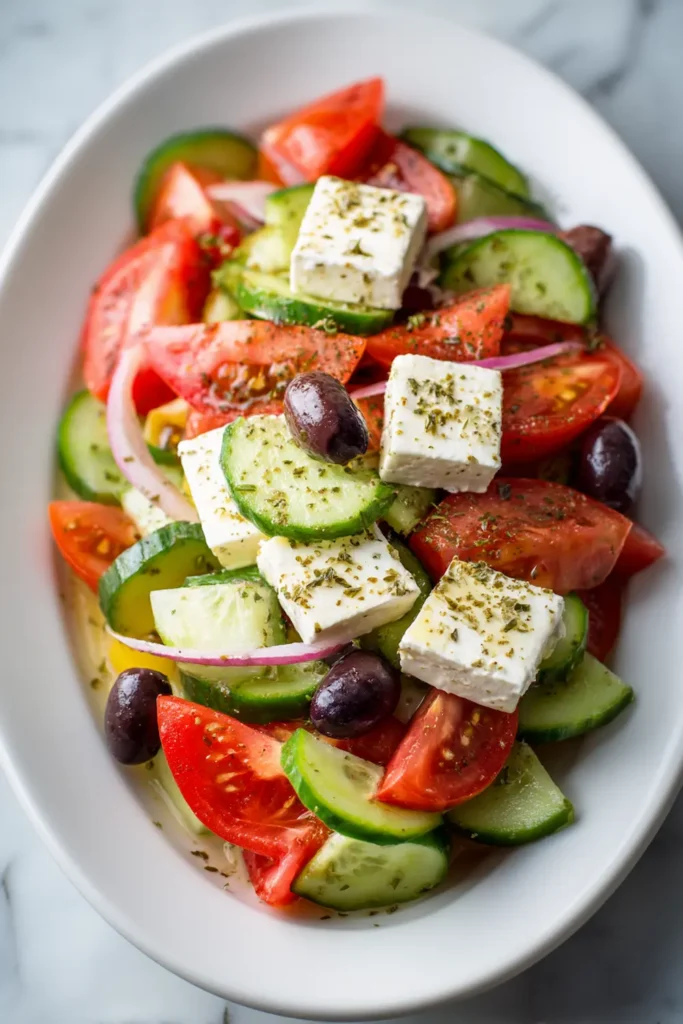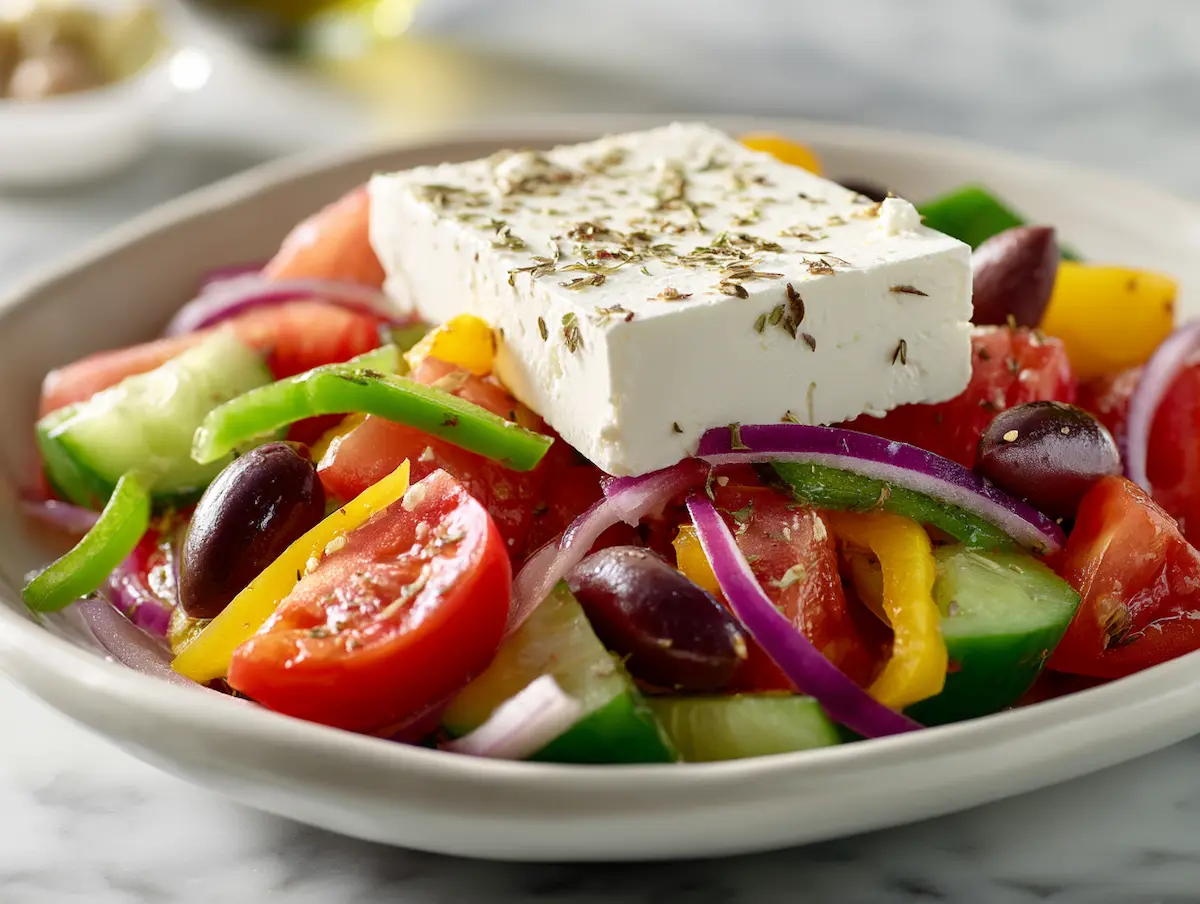
I used to think classic greek salad had to be fussy and restaurant-level perfect. Then I realized the best versions in Greece are actually rustic: big juicy tomato wedges, olive oil you can taste, and a thick slab of feta right on top. Once I simplified the ingredients and stopped overthinking the dressing, this easy greek salad became my go-to side dish on busy nights.
As a mom trying to keep dinners fresh but realistic, I love that this salad needs no cooking and still feels special. My kids snack the cucumbers straight off the cutting board while I toss everything together. Today I’ll show you the exact version I make at home on wecookrecipe, plus how to keep it authentic, how to meal prep it, and the mistakes I made when I first tried to copy restaurant greek salad. What you will learn
Key Takeaways
- The difference between authentic classic greek salad (horiatiki) and American-style versions with lettuce.
- Exact US measurements and 15‑minute method for an easy greek salad that still tastes traditional.
- How to balance olive oil and vinegar so the veggies stay crisp, not soggy.
- A quick comparison table of greek salad vs two popular salad styles for meal planning.
- Practical tips for make-ahead, leftovers, and common mistakes to avoid.
What Is Classic Greek Salad?
Classic greek salad, or horiatiki, is a chunky village salad made with ripe tomatoes, cucumber, green bell pepper, red onion, Kalamata olives, and a block of feta dressed in olive oil, oregano, and a splash of vinegar. There is traditionally no lettuce: the focus is on peak‑season vegetables, good cheese, and fruity olive oil. The salad was born in Greek tavernas and island homes as a simple way to use what farmers had on hand, which is why everything is cut in generous pieces and served family‑style on a big platter. I prefer this rustic version because it stays crisp longer and feels satisfying enough to be dinner with some grilled chicken or warm bread.
Classic Greek Salad Ingredients (US Measurements)
This easy greek salad stays simple on purpose. When you use sweet tomatoes and real Greek feta, you don’t need a long ingredient list.
| Ingredient | Amount | Notes |
|---|---|---|
| Ripe tomatoes | 4 medium (about 1½ lb), cut into wedges | Room‑temperature, not refrigerated |
| English cucumber | 1 large, half‑moons about ½‑inch thick | Partially peeled in stripes for texture |
| Green bell pepper | 1 pepper, seeds removed, sliced into rings | Traditional color and gentle bitterness |
| Red onion | ½ small, very thin slices | Soak in ice water to mellow the bite |
| Kalamata olives | ½ cup, pitted | Briny flavor that defines greek salad |
| Feta cheese block | 7–8 oz | Preferably sheep’s milk in brine |
| Extra‑virgin olive oil | ¼ cup | Fruitier oils shine here |
| Red wine vinegar | 1–2 tbsp | Start with 1 tbsp, add more to taste |
| Dried oregano | 1½ tsp | Divide between salad and feta topping |
| Kosher salt & black pepper | To taste | Go light on salt because of feta and olives |
If you’re tracking nutrition closely, you can plug these ingredients into USDA FoodData Central to calculate exact calories, fats, and micronutrients for your serving size.
How to Make Classic Greek Salad Step by Step
This easy greek salad comes together in about 15 minutes, and the only “cooking” is giving the onion a quick ice bath so it turns sweet and mild. Once you prep the vegetables, you simply layer, season, and finish with olive oil, vinegar, and that beautiful feta block. The biggest trick is not over‑mixing so the tomatoes stay juicy instead of crushed.
Step 1: Prep the vegetables
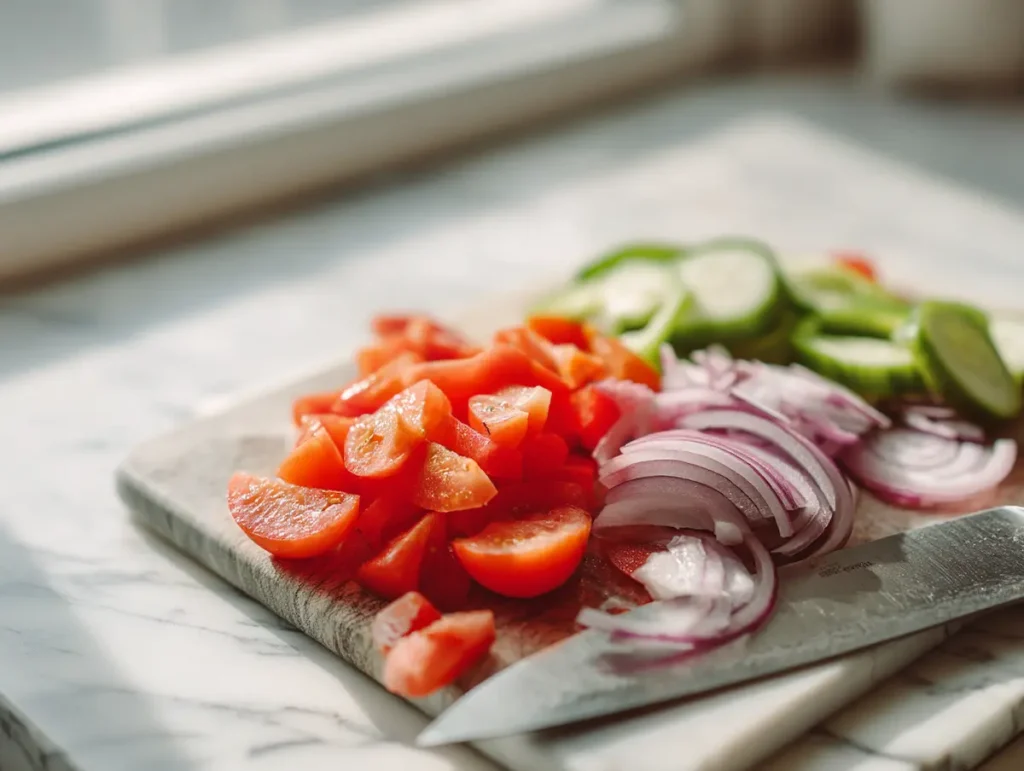
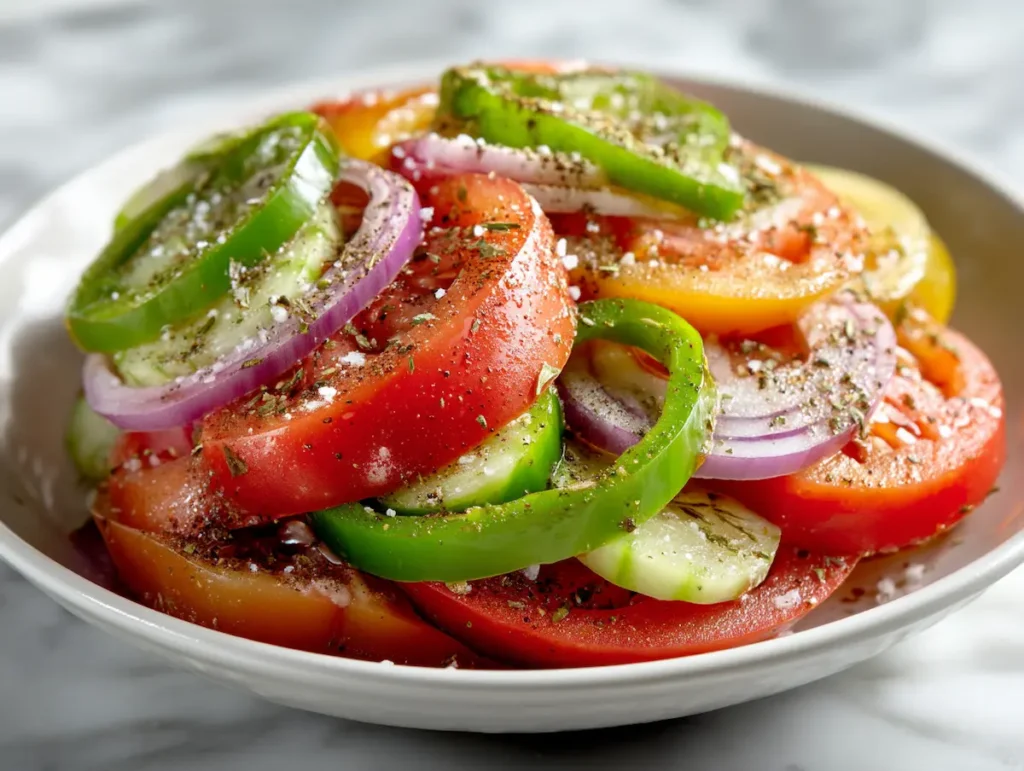
Cut the tomatoes into wedges and let any excess juice drip into the bowl you’ll serve the salad in. Slice the cucumber into chunky half‑moons, then cut the green pepper into thin rings. Slice the red onion paper‑thin and soak it in a small bowl of ice water for 10 minutes while you prep everything else; this keeps the flavor gentle instead of sharp.
Step 2: Build the base of the salad
Add the tomatoes, cucumber, drained onion, and pepper rings to a wide shallow bowl or platter. Sprinkle with a generous pinch of kosher salt, several twists of black pepper, and about 1 teaspoon of dried oregano. I like to season in layers here, because it pulls a little juice from the tomatoes that will mingle with the dressing later.
Step 3: Add olives and make the simple dressing
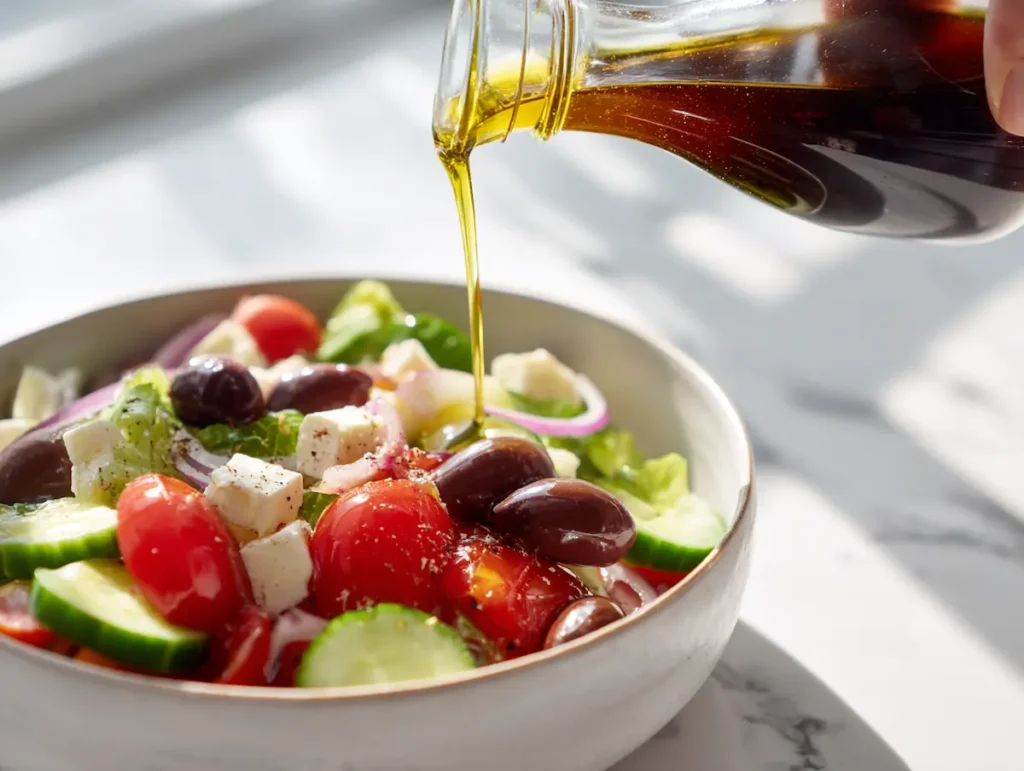
Scatter the Kalamata olives over the vegetables. In a small jar or measuring cup, whisk together the ¼ cup olive oil and 1 tablespoon red wine vinegar. Taste and add up to 1 more tablespoon vinegar if you prefer a brighter salad. The dressing should taste slightly saltier and tangier than you want the final salad, since it will coat all those mild, watery vegetables.
Step 4: Dress and gently toss
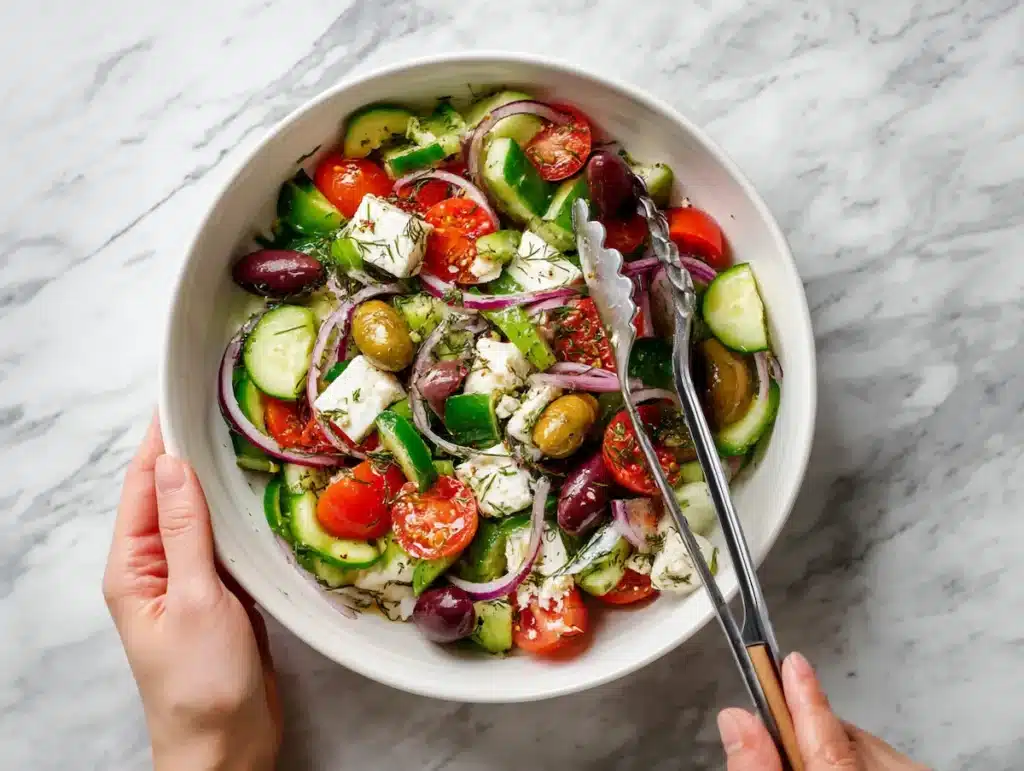
Pour the dressing evenly over the salad and use your hands or tongs to toss everything just 2–3 times. The goal is to coat the vegetables without breaking the tomatoes or turning the cucumbers watery. You should see a glossy sheen on every piece and a little bit of flavorful liquid pooling at the bottom of the bowl.
Step 5: Finish with feta and oregano
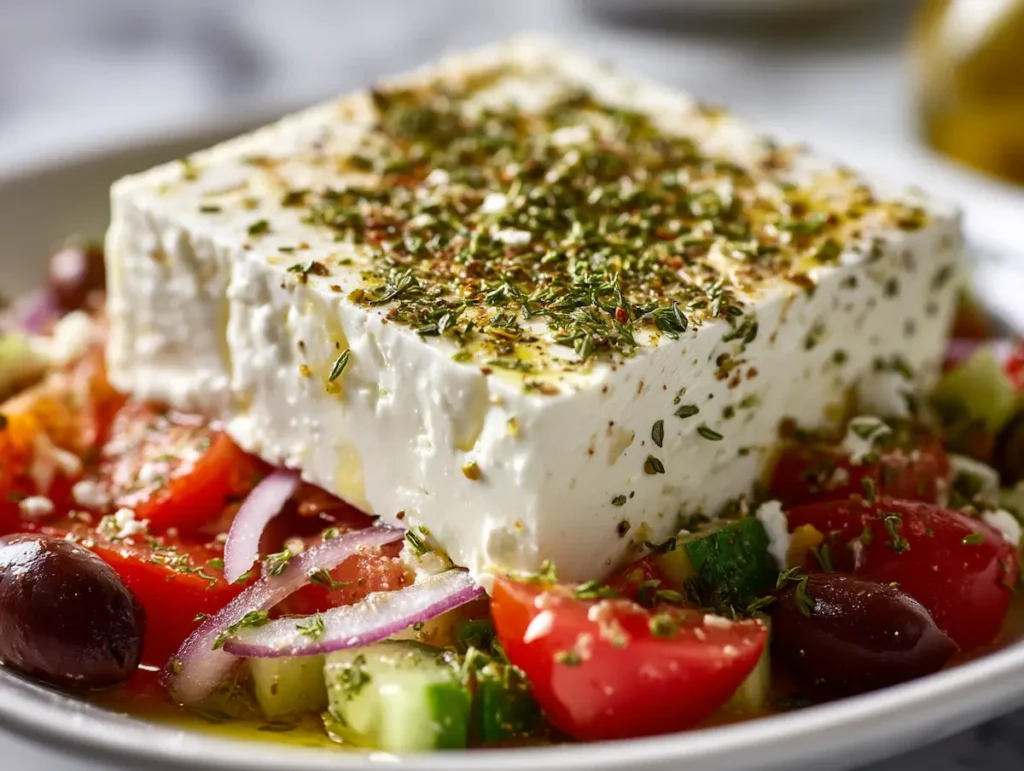
Place the feta block right on top in the center of the salad. Drizzle a teaspoon or two of olive oil over the cheese and sprinkle with the remaining dried oregano. I prefer to leave the feta as a slab instead of crumbled, because everyone can break off the amount they like and it keeps its creamy texture longer.
Authentic Classic Greek Salad (Easy Horiatiki Recipe)
- Total Time: 15 minutes
- Yield: 4 servings
Description
Classic greek salad in 5 easy steps with tomatoes, cucumbers, olives and feta for an authentic horiatiki flavor in about 15 minutes.
Ingredients
4 medium ripe tomatoes, cut into wedges1 large English cucumber, sliced into 1/2-inch half-moons1 green bell pepper, seeded and sliced into thin rings1/2 small red onion, very thinly sliced1/2 cup pitted kalamata olives7 to 8 ounces feta cheese block, preferably in brine1/4 cup extra-virgin olive oil1 to 2 tablespoons red wine vinegar, to taste1 1/2 teaspoons dried oregano, dividedKosher salt, to tasteFreshly ground black pepper, to taste
Instructions
1. Prep the vegetables by cutting the tomatoes into wedges, slicing the cucumber into chunky half-moons, slicing the green pepper into thin rings, and slicing the red onion very thin. Soak the onion in a small bowl of ice water for about 10 minutes to mellow the flavor, then drain well.
2. Add the tomatoes, cucumber, drained onion, and pepper rings to a wide shallow salad bowl or platter. Sprinkle with a generous pinch of kosher salt, several twists of black pepper, and about 1 teaspoon of the dried oregano.
3. Scatter the kalamata olives over the vegetables. In a small jar or measuring cup, whisk together the olive oil and 1 tablespoon of red wine vinegar until emulsified, then taste and add up to 1 more tablespoon vinegar if you like a brighter salad.
4. Pour the dressing evenly over the salad and use tongs or clean hands to toss gently just a few times until the vegetables are lightly coated but not crushed. You should see a glossy sheen on the tomatoes and cucumbers with a little dressing pooling at the bottom.
5. Place the feta block on top in the center of the salad. Drizzle with a little extra olive oil and sprinkle with the remaining dried oregano. Serve right away or within 15 to 20 minutes for the best texture.
Notes
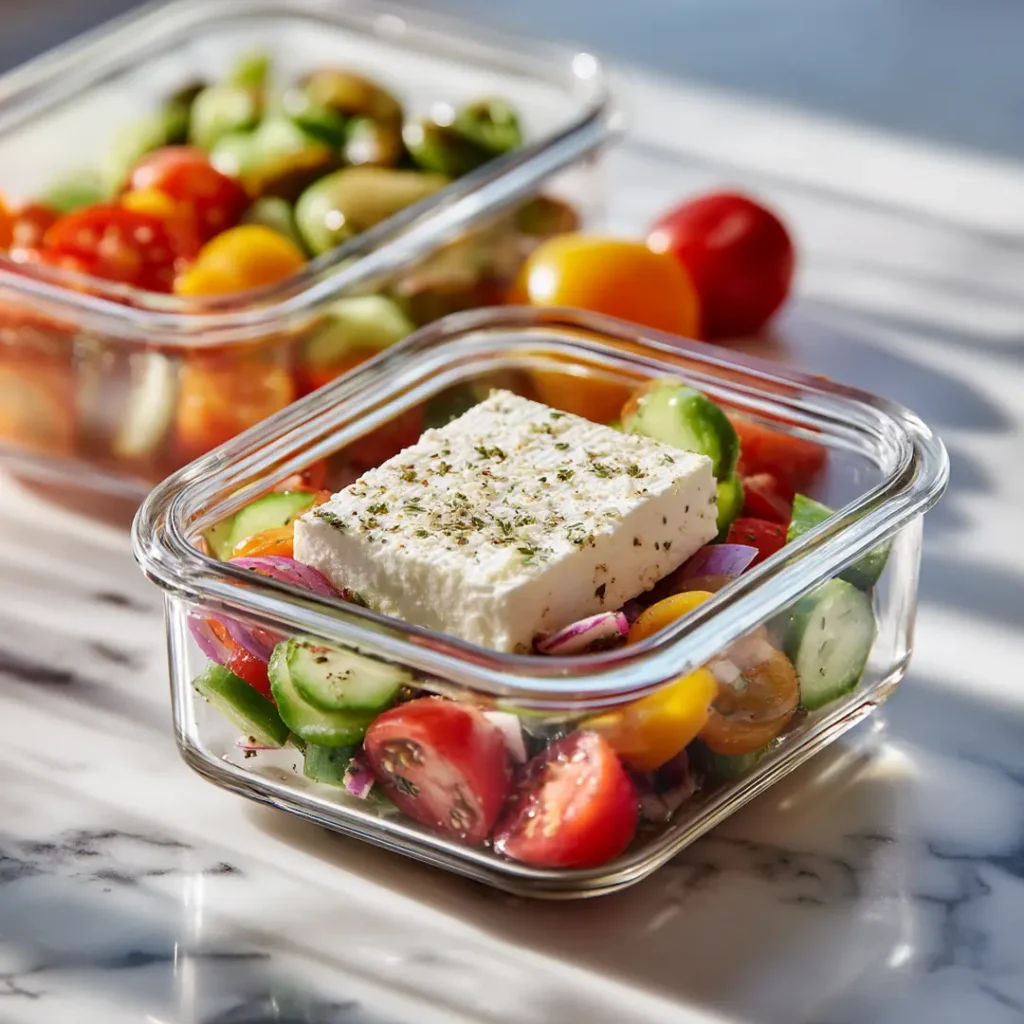
Storage: Leftover greek salad keeps about 1 day in the refrigerator before the vegetables soften too much; store in a shallow container with the feta resting on top.Substitutions: You can use cherry tomatoes instead of whole tomatoes and add yellow or orange bell pepper along with the green;
if you cannot find kalamata olives, use any flavorful black olives you enjoy.Tip: For easy meal prep, chop the vegetables up to 8 hours ahead and refrigerate them undressed, then add the dressing and feta just before serving so everything stays crisp.
- Prep Time: 15 minutes
- Cook Time: 0 minutes
- Category: Salad
- Method: No-Cook
- Cuisine: Mediterranean
Nutrition
- Serving Size: 1 portion (about 1 1/2 cups)
- Calories: 230
- Sugar: 6g
- Sodium: 620mg
- Fat: 19g
- Saturated Fat: 7g
- Unsaturated Fat: 11g
- Trans Fat: 0g
- Carbohydrates: 10g
- Fiber: 2g
- Protein: 6g
- Cholesterol: 30mg
Keywords: classic greek salad, easy greek salad, horiatiki salad, authentic greek salad recipe, greek salad with feta, tomato cucumber feta salad, mediterranean salad recipe, no lettuce greek salad, simple greek salad dressing, kalamata olive salad
Classic Greek Salad vs Other Easy Salads
If you’re planning the week, it helps to see where classic greek salad fits compared with other quick options like a big mac salad or a simple checkerboard salad.
| Salad | Main Flavors | Prep Time | Best For |
|---|---|---|---|
| Classic greek salad (easy horiatiki) | Tomato, cucumber, olives, feta, oregano | About 15 minutes | Light Mediterranean lunches, grilled meats, summer dinners |
| Big Mac salad | Ground beef, pickles, cheddar, burger sauce | 20–25 minutes | Low‑carb takeout craving nights |
| Checkerboard salad | Arranged veggies, optional cheese and dressing | Around 20 minutes | Pretty party platters and kids who like “snack plates” |
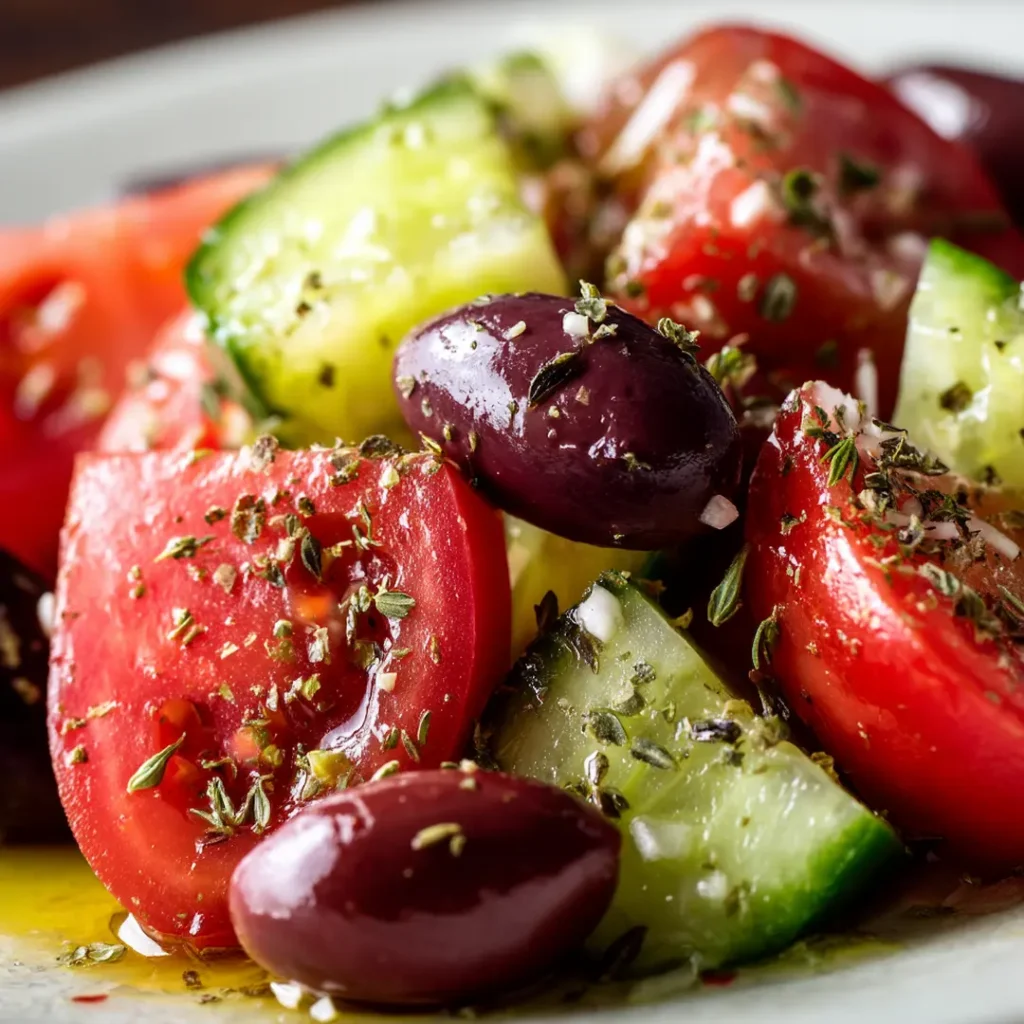
Mediterranean‑style vegetable‑rich eating patterns like greek salad have been linked with better heart health in multiple large studies referenced by the National Institutes of Health.
Why Classic Greek Salad Is Good For You
Classic greek salad is naturally rich in fiber, antioxidants, and heart‑healthy fats, which makes this easy greek salad more than just a side dish. Tomatoes provide lycopene, an antioxidant that may support heart health, while olive oil adds monounsaturated fats that are a cornerstone of the Mediterranean diet. Cucumber and bell pepper bring hydration and vitamin C, and feta contributes protein plus calcium in a smaller, flavorful portion.
A USDA “simple greek salad” example shows how quickly these ingredients add up to nutrients: one cup of a similar salad can land around 200–250 calories with a generous 2 tablespoons of olive oil, plus several grams of protein and fiber depending on how many vegetables and cheese you use. When I serve this for dinner, I’ll often pair it with grilled chicken, salmon, or even leftover easy healthy mains from the site so we get a full, satisfying plate without feeling heavy afterward.
Classic Greek Salad In Your Weekly Routine
On busy weeks, I treat this classic greek salad as my “built‑in vegetable” and plan around it. If I know I’ll grill chicken or toss pasta later, I prep the vegetables in the morning, keep them undressed in the fridge, and assemble the salad just before dinner. That tiny bit of planning makes it feel like a fresh, easy greek salad instead of yet another chore when everyone is hungry.
You can also use leftovers in creative ways. Spoon the salad over toasted bread for a quick bruschetta‑style lunch, or tuck it into warm pita with hummus and leftover grilled chicken. If you love bright, crunchy salads, you might also enjoy my turmeric quinoa salad for make‑ahead lunches with a little extra protein.
5 Classic Greek Salad Mistakes To Avoid
The first time I tried to make greek salad at home, I grabbed a bag of mixed lettuce, crumbled some feta on top, and wondered why it tasted nothing like the salads I loved on vacation. Here are the biggest mistakes I made and what to do instead.
- Using lettuce as the base. Traditional horiatiki has no lettuce at all; the salad should feel chunky, not fluffy. Lettuce waters down the dressing and steals space from the flavorful vegetables.
- Over‑chopping the vegetables. Tiny dice turn the salad mushy. Aim for generous wedges and thick slices so every bite has texture.
- Buying pre‑crumbled feta. Crumbles often contain anti‑caking agents and dry out quickly. A block of feta in brine tastes creamier and lets everyone break off pieces the way they like.
- Serving it fridge‑cold. Ice‑cold tomatoes get mealy and bland. Let vegetables and cheese sit at room temperature 15–20 minutes before serving so the flavors open up.
- Over‑dressing in advance. If you add oil and vinegar too far ahead, the cucumbers and tomatoes shed water. Dress the salad no more than 15–20 minutes before eating, and keep any leftovers in a shallow container so they don’t drown.
For more general guidance on building balanced meals at home, I like how the USDA MyPlate framework reminds us to fill at least half the plate with fruits and vegetables, which this salad makes very easy.
Pro tip: If you want to stretch this classic greek salad into a full main course without cooking more meat, toss in a can of drained chickpeas or white beans just before serving. They soak up the dressing beautifully and make the bowl much more filling.
Classic Greek Salad FAQ
Is this classic greek salad also an easy greek salad for beginners?
Yes, this classic greek salad is perfect for beginners because everything happens in one bowl with simple chopping and no cooking at all. You only whisk olive oil and vinegar, toss gently, and finish with feta on top. If you can slice vegetables safely, you can master this easy greek salad in under 15 minutes.
Can I make greek salad ahead of time?
You can prep the vegetables for greek salad a few hours in advance and keep them undressed in the fridge. Wait to add the olive oil, vinegar, and feta block until 15–20 minutes before serving so the tomatoes stay juicy and the cucumbers crisp. If everything sits in dressing overnight,
the texture turns soft. Is lettuce ever used in authentic greek salad?
Authentic horiatiki in Greece skips lettuce entirely and focuses on tomatoes, cucumber, onion, pepper, olives, and feta. Some American restaurants add romaine to stretch the bowl, which tastes good but changes the traditional character. At home I keep lettuce for other salads and let this one stay truly classic.
What protein goes well with classic greek salad?
Grilled chicken, fish, or shrimp pair beautifully with classic greek salad because they pick up the lemony, herby flavors from the dressing. You can also add chickpeas or white beans directly into the bowl for a vegetarian protein boost. I often serve it beside leftover roasted chicken for an effortless weeknight dinner.
How long do leftovers last in the fridge?
Leftover greek salad keeps for about one day in the fridge before the vegetables soften too much. Store it in a shallow glass container so the feta rests on top instead of being buried in dressing. The next day it’s lovely spooned over toasted bread or tucked into a pita wrap for lunch.
Can I turn this into a pasta or grain salad?
Yes, you can toss this classic greek salad with cooked and cooled pasta, or with grains like quinoa or farro, to create a heartier main dish. Add a splash more olive oil and vinegar so the dressing still coats everything. It makes a great make‑ahead option for potlucks and lunch boxes.
Bringing Classic Greek Salad Into Your Kitchen
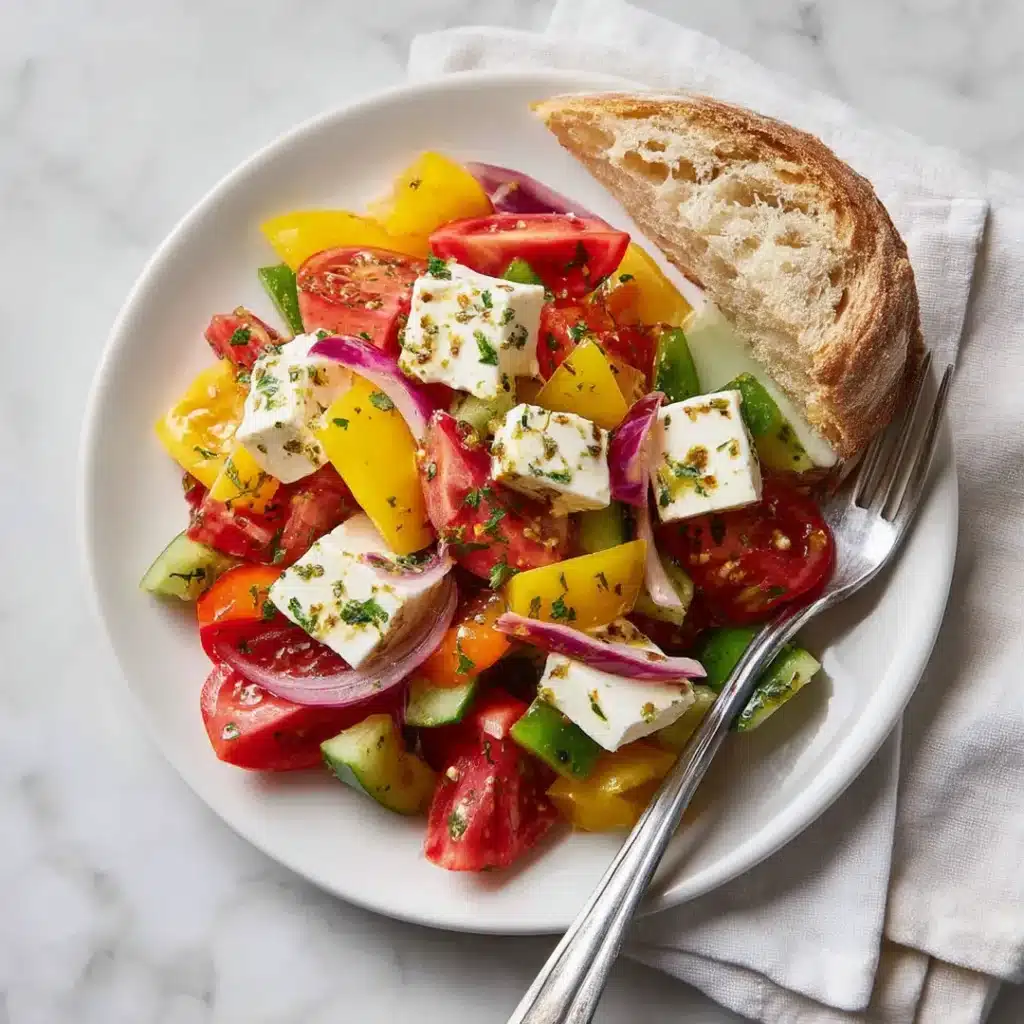
Classic greek salad proves that simple ingredients and a few minutes of chopping can turn into something that feels like a small vacation on a plate. Once you try the chunky, lettuce‑free horiatiki style with a real feta block on top, it is hard to go back to the mixed‑greens version from most takeout spots. I hope this easy greek salad becomes one of those recipes you can throw together without even checking the measurements, the way it has in my own kitchen.
If you are planning a full Mediterranean‑inspired menu, pair this salad with something cozy like my easy classic chicken noodle soup on cooler nights, or one of our grilled chicken or salmon recipes when the weather is warm. Either way, you get a balanced, colorful plate without spending your whole evening cooking.