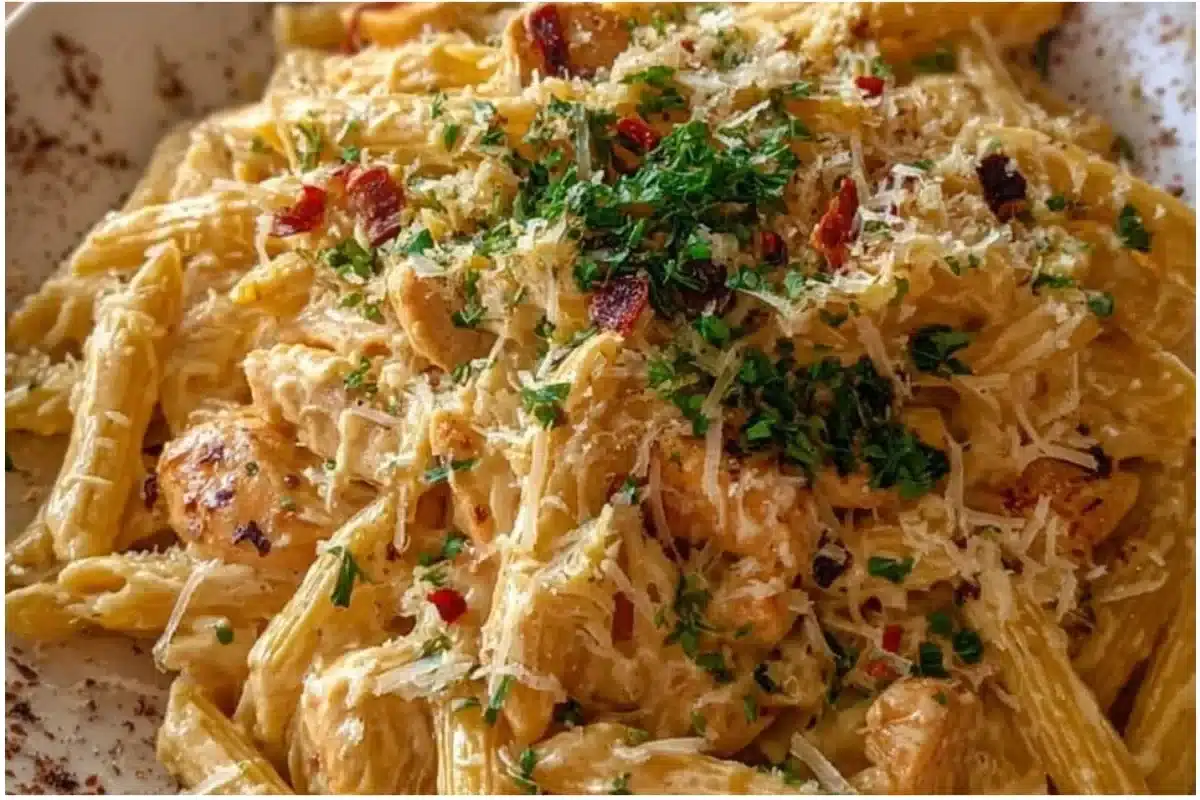
Why this recipe works and why you’ll want to cook it tonight: One Pot Creamy Garlic Pasta gives you maximum flavor with minimal cleanup. Instead of boiling pasta in one pot and finishing the sauce in another, this method extracts starch from the pasta directly into a garlic-forward, creamy base so the sauce clings like it was made for the pasta. The result is glossy, evenly-coated noodles, bold garlic flavor without bitterness, and a dinner that comes together in under 30 minutes.
If you want a chicken-and-pasta version that uses the same flavor principles, check this easy one-pot creamy garlic chicken pasta — it’s the perfect follow-up after you master the base technique.
What is One Pot Creamy Garlic Pasta?
One Pot Creamy Garlic Pasta is a stovetop method where uncooked or partially cooked pasta is simmered in a flavorful liquid that becomes the sauce — usually butter or oil, aromatics (garlic is key), stock or water, and dairy (cream, milk, cream cheese, or grated cheese). As the pasta cooks, it releases starch into the cooking liquid. That starch emulsifies with fat and dairy to produce a naturally thick, velvety sauce that coats each strand.
This technique is efficient, forgiving, and scalable. It reduces steps and pots without sacrificing depth. But to make it reliably excellent, you need to control a few variables: pasta-to-liquid ratio, garlic technique (to avoid burnt bitterness), and cheese timing (to prevent graininess).
Print
One Pot Creamy Garlic Pasta
- Total Time: 28 minutes
- Yield: 4 servings 1x
- Diet: Vegetarian
Description
A weeknight lifesaver: rich, garlicky, saucy pasta cooked in one pan, delivering maximum flavor with minimal cleanup.
Ingredients
- 12 oz (340 g) dried spaghetti or linguine
- 3 tablespoons unsalted butter + 1 tablespoon olive oil (or 4 tbsp butter for richer)
- 6–8 medium garlic cloves, finely minced (about 3–4 tablespoons)
- 1 small onion (optional), finely diced (about 1/2 cup)
- 1 tsp kosher salt, plus more to taste
- 1/2 tsp freshly ground black pepper
- 1/4 tsp red pepper flakes (optional)
- 3 cups low-sodium chicken broth or vegetable broth
- 1 cup whole milk (or 1/2 cup cream + 1/2 cup milk)
- 4 oz cream cheese, softened (optional for extra creaminess)
- 1 cup freshly grated Parmesan cheese, plus extra for serving (about 3 oz)
- Zest and juice of 1/2 lemon (optional)
- 2 tablespoons chopped fresh parsley or basil for garnish
Instructions
- Prep ingredients: measure liquids, grate the Parmesan, mince the garlic, and have the butter at room temperature.
- Heat the pan: Over medium heat, melt 2 tablespoons of butter with 1 tablespoon olive oil in a large skillet.
- Sweat aromatics: Add the diced onion and a pinch of salt, cooking until translucent. Then, add minced garlic and cook gently until fragrant.
- Add pasta: Lay the dry pasta into the pan and pour the stock and milk mixture over it.
- Bring to a simmer: Increase heat and bring to a gentle simmer, stirring frequently for the first 8–10 minutes.
- Stir and check doneness: After 8–10 minutes, begin testing the pasta for al dente.
- Finish the sauce: Once the pasta is al dente, remove from heat and stir in softened cream cheese until smooth. Gradually add Parmesan.
- Brighten and season: Stir in lemon zest and juice, adjusting salt and pepper to taste.
- Serve immediately: Enjoy the pasta fresh for the best texture and flavor.
Notes
Freshly grated cheese is recommended for the best texture. Adjust ingredients based on personal dietary preferences.
- Prep Time: 8 minutes
- Cook Time: 20 minutes
- Category: Main Course
- Method: Stovetop
- Cuisine: Italian
Nutrition
- Serving Size: 1 serving
- Calories: 620
- Sugar: 6g
- Sodium: 800mg
- Fat: 28g
- Saturated Fat: 14g
- Unsaturated Fat: 10g
- Trans Fat: 0g
- Carbohydrates: 70g
- Fiber: 4g
- Protein: 20g
- Cholesterol: 80mg
Keywords: pasta, garlic, creamy, one pot, quick dinner, Italian recipe
Ingredient breakdown — what each item does and why it matters
Understanding the role of each ingredient helps you adapt the dish and troubleshoot. Below is a chef’s explanation of the core components.
Pasta (spaghetti, linguine, fettuccine, or short pasta): Provides the starch essential for thickening. Long thin pastas are traditional here because they absorb sauce evenly, but penne or rigatoni work too. Use high-quality durum semolina for better texture.
Garlic: The star aromatic. Fresh garlic provides bright, savory, slightly sweet notes when cooked gently. Avoid burning it — burnt garlic is bitter. Roasted garlic softens and sweetens the flavor if you want a mellow background.
Fat (butter, olive oil, or a combination): Fat carries flavor, gives richness, and helps emulsify with starch and cheese. Butter brings a silky mouthfeel and browning potential; olive oil adds fruity notes and raises the smoke point.
Liquid (low-sodium chicken stock, vegetable stock, or water): Delivers flavor and the medium for pasta to release starch. Stock gives depth faster than plain water. Use low-sodium so you can control final seasoning before adding cheese.
Dairy (heavy cream, whole milk, cream cheese, mascarpone, or a mix): Determines richness and body. Heavy cream creates a stable, luxurious sauce; milk needs a little extra thickener (cheese or a cornstarch slurry) to prevent a thin finish. Cream cheese and mascarpone provide tangy creaminess and stability.
Cheese (freshly grated Parmesan or Pecorino Romano): Adds umami, salt, and thickness. Grate yourself — pre-grated often contains anti-caking agents that can make sauce gritty.
Acid (lemon juice or white wine): Balances richness and brightens flavors. Add at the end to lift the sauce.
Fresh herbs (parsley, basil): Add freshness and color at the finish.
Salt and black pepper: Season in layers. Taste after each component is added.
Science notes:
- Starch is the secret thickener: as pasta cooks, surface starches suspend in the cooking liquid and combine with fat (butter/olive oil) and cheese to create an emulsion. Too little liquid → pasta won’t hydrate. Too much → thin sauce unless you reduce or add starch/cheese.
- Cheese graininess occurs when it’s added to boiling liquid or when the sauce is too hot; it separates. Temper the cheese by adding slowly off the heat or lowering the temperature.
Want to pair this pasta with a richer baked finish? Try the oven-baked variant at creamy garlic chicken pasta bake for a crusty top and extra comfort.
Equipment checklist
You don’t need fancy tools, but these items make the process smooth:
- Large, heavy-bottomed skillet or wide pot with a tight-fitting lid (choose one large enough for pasta to sit flat)
- Wooden spoon or heatproof silicone spatula
- Microplane or fine grater for Parmesan
- Chef’s knife and cutting board
- Measuring cups and spoons
- Tongs for tossing pasta
Pro tip: a wide pan increases surface area, encouraging faster evaporation when you want to reduce sauce and concentrate flavors.
Recipe: One Pot Creamy Garlic Pasta (Chef-tested)
Recipe card (printable)
- Prep time: 8 minutes
- Cook time: 18–20 minutes
- Total time: 26–28 minutes
- Servings: 4
Ingredients:
- 12 oz (340 g) dried spaghetti or linguine
- 3 tablespoons unsalted butter + 1 tablespoon olive oil (or 4 tbsp butter for richer)
- 6–8 medium garlic cloves, finely minced (about 3–4 tablespoons)
- 1 small onion (optional), finely diced (about 1/2 cup)
- 1 tsp kosher salt, plus more to taste
- 1/2 tsp freshly ground black pepper
- 1/4 tsp red pepper flakes (optional)
- 3 cups low-sodium chicken broth or vegetable broth (or a mix of 2.5 cups stock + 1/2 cup heavy cream)
- 1 cup whole milk (or 1/2 cup cream + 1/2 cup milk)
- 4 oz cream cheese, softened (optional for extra creaminess)
- 1 cup freshly grated Parmesan cheese, plus extra for serving (about 3 oz)
- Zest and juice of 1/2 lemon (optional)
- 2 tablespoons chopped fresh parsley or basil for garnish
Yield and nutrition: Approximately 620–700 calories per serving (varies widely by dairy choices). See Nutrition Insights section for lighter swaps.
Detailed method (below) includes pro cooking insights and timing.
Step-by-step method with real cooking insights
This section gives the exact steps and reasons behind each move. Read through before cooking.
Mise en place: measure liquids, grate the Parmesan, mince the garlic, and have the butter at room temperature for easier melting. Starch acts fast; prepping ingredients ahead is the single best time-saver.
Heat the pan: over medium heat, melt 2 tablespoons of butter with 1 tablespoon olive oil in a wide, heavy-bottomed skillet. The oil raises the smoke point so your butter won’t burn as easily.
Sweat aromatics: Add the diced onion (if using) and a pinch of salt. Cook until translucent, about 2–3 minutes. Add the minced garlic and cook gently for 30–45 seconds until fragrant. Garlic should smell sweet and savory — not brown. If it browns, reduce heat immediately and remove pan from direct heat.Cooking insight: Garlic becomes bitter when browned. Keep it moving, use moderate heat, and add liquid quickly after the garlic to stop it from cooking further.
Add pasta: Lay the dry pasta into the pan, breaking long strands in half only if they won’t fit comfortably. Pour the stock and milk mixture over the pasta so the liquid just covers it (the recipe quantities are balanced for standard 12 oz of spaghetti). Add the remaining tablespoon of butter and 1 tsp kosher salt.
Bring to a simmer: Increase heat to medium-high and bring the liquid to a gentle simmer. Stir frequently (every 1–2 minutes) during the first 8–10 minutes to prevent pasta from sticking and to help release starch. Keep the heat steady; a vigorous boil will cause uneven cooking and evaporate liquid too quickly.
Stir and check doneness: After about 8–10 minutes of simmering, begin testing the pasta for doneness — you want it al dente (slight bite). Timing depends on pasta brand; most dried pasta cooks in 10–12 minutes.
Finish the sauce: When the pasta is al dente and the liquid has reduced to a saucy consistency (not completely dry), remove pan from heat. Stir in softened cream cheese (if using) until smooth. Add the grated Parmesan a little at a time, stirring constantly to create a glossy emulsion. If sauce seems too thick, add 1–2 tablespoons warm stock or milk and stir.
Cooking insight: Add cheese off the heat to prevent graininess. Parmesan contains proteins that clump when exposed to very high heat or acid; tempering with a touch of warm liquid helps incorporate it smoothly.
Brighten and season: Stir in lemon zest and juice if you want brightness, then adjust salt and pepper to taste. Finish with chopped parsley and a drizzle of extra-virgin olive oil for shine.
Serve immediately: Pasta’s texture is at its best fresh. If serving later, read the Storage + Reheating section.
Timing guide: This method should take 18–20 minutes from melting butter to plating if you have everything prepped.
Key technique points (what to watch for)
Liquid ratio and evaporation: You must balance pasta hydration and sauce concentration. If you see the pasta is tender but the sauce is too thin, increase heat briefly to reduce; if the sauce is thick but pasta is undercooked, add 1/4 cup hot water or stock and simmer until al dente.
Don’t skip stirring: Frequent stirring helps release starch and prevents clumping. It also ensures even cooking.
Avoid high heat when adding dairy or cheese: High temperature can cause separation. Remove pan from heat when adding cheese and stir to emulsify.
Use freshly grated cheese: The anti-caking agents in pre-grated cheese can prevent smooth melting.
Taste as you go: Season early (lightly) and adjust later, especially after adding cheese which can be salty.
Common mistakes and how to avoid them
Burnt garlic: Cook garlic on medium-low and add liquid quickly after softening. If it burns, start over — bitterness is hard to mask.
Gritty sauce: Caused by powdered cheese or overheated cheese. Use freshly grated Parmesan and add off heat.
Watery final dish: Caused by too much liquid or not reducing enough. Finish with a higher heat reduction or add grated cheese/cream cheese to thicken.
Undercooked pasta with dry sauce: Happens when liquid evaporates too fast. Keep an eye on simmer and add hot water or stock if needed.
Sticky clumps: Stir frequently and ensure the pasta is submerged so it cooks evenly.
Variations + swaps (make it yours)
One pot creamy garlic pasta is an adaptable template. Below are chef-tested variations and substitutions.
Protein additions:
- Chicken: Sauté 1-inch pieces of boneless chicken breast or thighs first, remove, then follow the pasta method and return cooked chicken at the end. For a full chicken-and-pasta meal, see creamy garlic chicken pasta with broccoli for a balanced build that adds vegetables and protein.
- Shrimp: Add raw shrimp in the last 3–4 minutes of pasta cook time so shrimp turn opaque but remain tender.
- Bacon or pancetta: Render cubes first, then use the fat as part of the fat base for intense savory flavor.
Vegetable additions:
- Broccoli or asparagus: Add early (par-cooked) so vegetables finish tender with the pasta.
- Mushrooms: Sauté until golden and add for umami depth.
- Spinach or kale: Stir in at the end to wilt quickly.
Dairy swaps:
- Lighter: Use low-fat milk and 1 tablespoon cornstarch mixed with cold water to thicken.
- Richer: Replace 1 cup milk with 1 cup heavy cream or use mascarpone.
- Vegan: Use plant milk (unsweetened almond, oat, or soy), vegan cream cheese or blended cashews, and nutritional yeast for cheesy flavor. For a fully vegan approach, compare method notes in this bake variant or explore vegan-specific recipes to see differences in emulsion and thickening technique.
Pasta alternatives:
- Gluten-free: Use GF pasta and check for slightly different cook times. GF pastas often release less starch, so add a touch more cheese or a small cornstarch slurry to reach desired thickness.
- Short pasta: Penne or rigatoni soak up sauce well and are easier for kids.
Spice & flavorings:
- Lemon + herbs: Add zest and fresh herbs for brightness.
- Chili oil or red pepper flakes: For heat.
- Anchovy paste: A teaspoon melted into the butter adds an umami backbone without fishiness.
Recipe crossover idea: If you enjoy creamy savory soups, you’ll appreciate the emulsification principles used in our creamy chicken tortilla soup — both rely on balancing starch, fat, and seasonings to build body.
Storage and reheating
Storing:
- Refrigerator: Keep leftovers in an airtight container for up to 3 days. Sauce thickens as it cools because starch continues to gel.
- Freezer: Not ideal — dairy sauces can separate on thawing. If you must freeze, use a heavy cream-based sauce (less likely to separate than milk) and freeze for up to 1 month. Thaw overnight in the fridge.
Reheating:
- Stovetop (preferred): Add a splash of milk or stock (1–3 tablespoons per serving) to loosen the sauce. Reheat over low heat, stirring constantly until just warmed through and smooth.
- Microwave: Use a microwave-safe bowl, add a splash of milk, and heat in 30-second bursts, stirring between bursts. Careful not to overheat.
- Oven: Place in an ovenproof dish with 2–3 tablespoons of stock or cream, cover with foil, and bake at 325°F (160°C) until warmed.
Pro tip: Freshening leftovers with a squeeze of lemon and a handful of fresh herbs revives flavors.
Nutrition insights and lighter swaps
Creamy garlic pasta is comforting but can be tailored to fit nutritional goals.
Approximate nutrition per serving (standard recipe with cream cheese and full-fat dairy, 4 servings):
- Calories: 620–700
- Protein: 20–25 g
- Fat: 28–38 g (depending on butter/cream)
- Carbohydrates: 70–80 g
- Fiber: 3–4 g
- Sodium: variable (depends on stock and Parmesan)
Lighter swaps:
- Use whole wheat pasta for more fiber and slower-digesting carbs.
- Replace half the butter with olive oil and substitute low-fat milk for heavy cream.
- Use 2 oz cream cheese instead of 4 oz, or omit cream cheese and thicken with a cornstarch slurry (1 tsp cornstarch + 1 tbsp water).
- Add protein and vegetables (chicken breast, broccoli, spinach) to increase satiety and micronutrient density while keeping portion of pasta smaller.
Garlic and health:
- Garlic contains allicin, which has been studied for antimicrobial and cardiovascular benefits. Using several cloves in this recipe offers both flavor and potential health perks, though it’s primarily for taste here.
If you like recipes that combine creamy comfort with vegetables and lean protein, check our creamy garlic chicken pasta with broccoli for inspiration on portion composition and nutrition balance.
Pro chef tips — master-level tweaks
- Toasted garlic oil: For a subtler garlic aroma, infuse the oil with smashed garlic cloves over low heat for 5–7 minutes, then remove the cloves before adding other aromatics.
- Finish with cold butter: Whisk in a tablespoon of cold butter at the end off heat to add sheen and silkiness.
- Use pasta water technique: If you have leftover starchy water, keep a few tablespoons aside; it’s prime sauce-fixer.
- Temperature control for cheese: Remove pan from heat, add 1–2 tablespoons of warm liquid before grating and folding in cheese slowly.
- Emulsify with motion: Vigorous but controlled stirring helps glue fat, starch, and cheese together. A figure-eight motion with tongs gives consistent coating.
- Rest briefly before serving: 60–90 seconds of resting allows flavors to meld and the sauce to thicken slightly for a clingy finish.
Common questions (FAQ — schema-friendly)
Q: Can I use pre-grated Parmesan in one pot creamy garlic pasta?
A: Freshly grated Parmesan is best. Pre-grated cheese often contains anti-caking agents that can cause a grainy texture and prevent proper melting. If you must use pre-grated, add it slowly off heat and whisk well; expect slightly different texture.
Q: What pasta works best for one-pot methods?
A: Long pastas like linguine, spaghetti, and fettuccine distribute sauce well, but short pastas (penne, tubetti) also work. Choose a pasta with a cooking time between 8–12 minutes for best results. Note that some gluten-free pastas release less starch; you may need more cheese or a slurry.
Q: How do I stop the garlic from burning?
A: Cook garlic on medium-low and add liquid immediately after it becomes fragrant. Use the oil-butter combo to moderate heat. If garlic starts to brown, reduce heat and add some stock to cool the pan.
Q: Is this recipe suitable for vegans?
A: Yes, with substitutions: use plant-based milk (unsweetened oat or soy), vegan cream cheese or blended cashews for creaminess, and nutritional yeast for cheesy flavor. For a vegan primer, compare techniques with vegan one-pot recipes to account for differences in emulsification.
Q: How do I fix a broken or separated sauce?
A: If sauce breaks (oils separate), remove from heat and whisk in 1–2 tablespoons warm liquid (stock or milk) gradually. Adding a small knob of cold butter and whisking can re-emulsify. If cheese clumps, strain and reheat gently while whisking with warm liquid.
Suggested pairings and serving suggestions
- Crisp salad (arugula with lemon vinaigrette) balances richness.
- Roasted vegetables (broccoli, carrots) for color and nutrients.
- Crusty bread or garlic ciabatta for dipping.
- For wine: a crisp Sauvignon Blanc or a light unoaked Chardonnay cuts through creaminess; for red, a light Pinot Noir works.
If you like rich soup-and-pasta combinations, our creamy potato soup pairs well as a starter in colder months.
Recipe variations quick reference
- Classic Creamy Garlic: as written.
- Lemon-Parmesan: add zest + juice of 1 small lemon.
- Chicken & Broccoli: cook bite-size chicken first, remove, cook pasta with added broccoli florets at minute 6.
- Mushroom & Thyme: sauté sliced cremini mushrooms until golden; add thyme with parsley.
- Spicy Garlic: include 1/2 tsp red pepper flakes and finish with chili oil drizzle.
- Vegan: plant milk + blended cashews + nutritional yeast; use vegan Parmesan.
Conclusion
If you enjoyed this deep dive into One Pot Creamy Garlic Pasta, try experimenting with proteins like chicken or shrimp, or flip it vegan for a plant-based twist. For inspiration and alternate techniques, check out Kenna’s detailed take on the dish at One-Pot Creamy Garlic Pasta – Kenna’s Cooks and a vegan adaptation with tips on texture at One Pot Creamy Garlic Pasta | Vegan Fettucine Alfredo.
Cook it tonight: minimize cleanup, maximize flavor. If you liked this recipe, save it, try one of the variations, and share a photo — I’d love to hear which tweak became your go-to.
References and related recipes on WeCookRecipe (recommended reading):
- One-pot creamy garlic chicken pasta — a protein-forward sibling recipe.
- Creamy garlic chicken pasta bake — for a crusty, oven-finished version.
- Creamy garlic chicken pasta with broccoli — balanced meal with greens.
Enjoy the simplicity and depth of One Pot Creamy Garlic Pasta — a true weeknight classic.