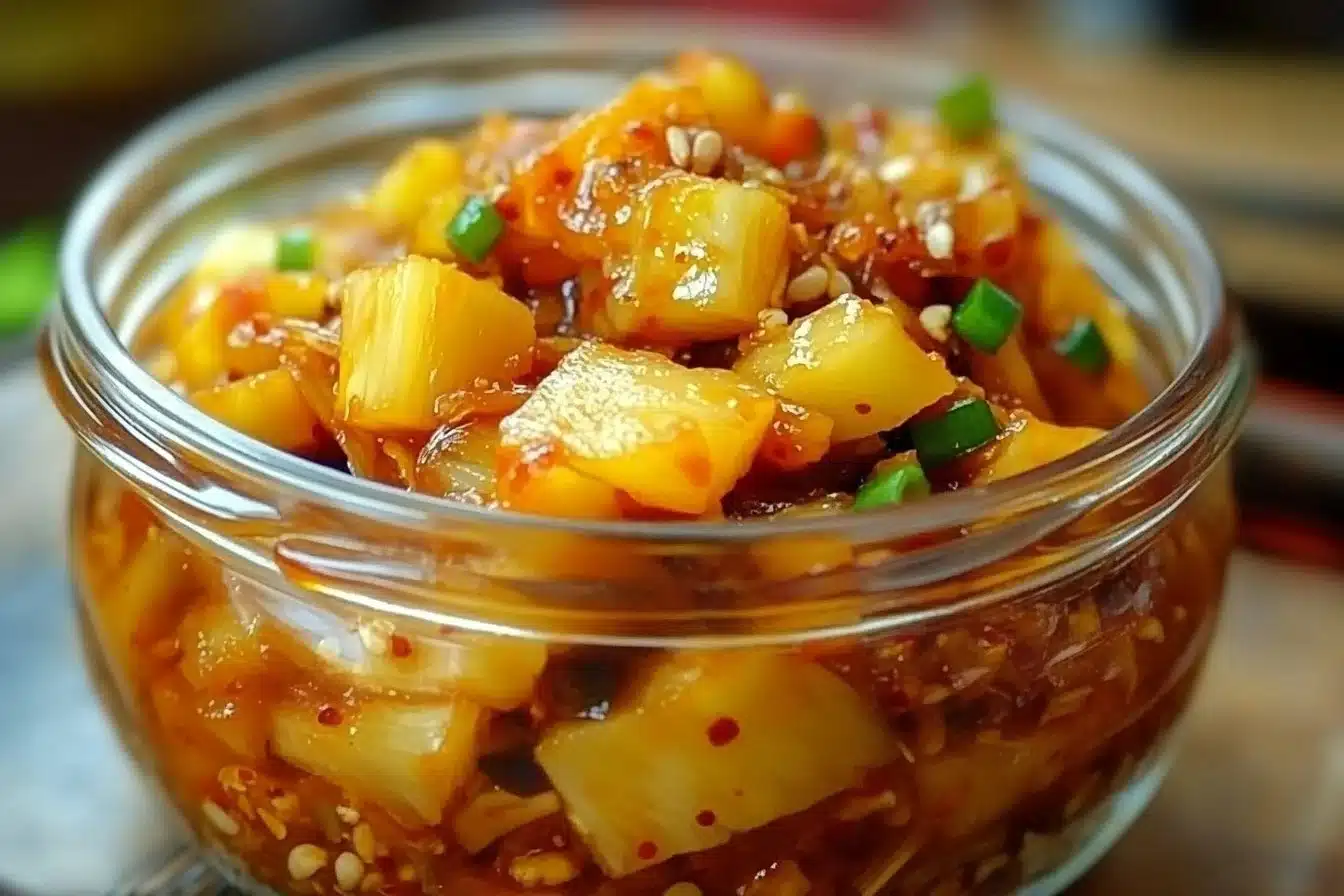
The first time I opened the jar and that bright pineapple scent rose up, the whole kitchen felt like a Sunday morning all over again, warm and full of small talk. My children came running because the smell was sweet and a little spicy, and we all stood around the counter tasting tiny spoonfuls between bites of rice. If you like the lively taste of pineapple in many forms, you might enjoy pairing it with other bright flavors like a cooling pineapple spinach ginger smoothie after a spicy meal to soothe the palate.
The Story Behind Our Favorite Fermented Pineapple Kimchi
There is a particular light that pours through my kitchen window when I make this recipe, late in the morning when the house is still quiet. I first mixed pineapple into a classic kimchi rhythm the year my youngest learned to climb onto the counter to see what I was doing. The first batch tasted like a surprise party in my mouth, with the fruit lending a gentle sweetness that softened the heat and made everyone ask for more.
I remember how my mother would laugh and tell me that family recipes are like living things; they change a little each time. This Fermented Pineapple Kimchi is one of those living recipes in our home. I keep a small jar in the fridge most weeks, reaching for a tangy bite to brighten a bowl of stew or to tuck inside a sandwich.
When my sister visited, she spooned pineapple kimchi over grilled fish and closed her eyes in that way that means she’s remembering something she loves. Food like this connects the now with the remembered, the present meal with a lifetime of small comforts. It made our family table softer and louder at the same time.
I often tell friends that if you are new to fermenting, this recipe is a gentle place to start. The fruit gives a friendly face to fermentation, and the process is forgiving. As you make it more often, you will notice little adjustments that suit your family’s taste and that will become your own rituals.
For me, the best part is sharing it. Whether it goes alongside rice, tacos, or roasted vegetables, that jar feels like a little act of love. I hope that when you try it, it finds a special place in your home too, the way it found one in mine and in the small moments that thread our days together.
How to Make Fermented Pineapple Kimchi
“Every time I stir this pot, it smells just like Sunday at home.”
The rhythm of making this kimchi is steady and simple, almost like folding a letter to a dear friend. Start with bright yellow pineapple that gives off a citrus perfume when you cut it, and listen to the soft, wet sound as the fruit hits the bowl. The kitchen fills with warm, gingery steam as you grate and press, and there is a comfort in the small, repetitive motions.
You will notice the pineapple releases a clear, sweet liquid as it sits with salt, pooling at the bottom of the bowl. That liquid is part of the magic, carrying flavors and welcoming the natural bacteria that will turn simple fruit into something tangy and lively. As you spoon the spice mix into the bowl, the color deepens and the scent sharpens, a bright and bold contrast to the fruit.
When you pack the jar, you will press the pineapple until it seems to sigh and make room for itself. The tight pack keeps air out and helps the ferment find a consistent rhythm. Then there is the waiting, which is part of the pleasure, checking the jar each day and noticing how the scent becomes deeper and subtly more complex.
If you love playful contrasts, try a cooling drink after a spicy bite, like a light fruity blend that balances heat with freshness, such as my refreshing pink pineapple smoothie. Small pairings like that make a meal feel thoughtful and whole. Keep your tools clean, your hands steady, and your curiosity open when you taste along the way.
Ingredients You’ll Need
1 ripe pineapple, peeled and chopped
2 tablespoons sea salt
1 tablespoon grated fresh ginger
4 cloves garlic, minced
1-2 tablespoons gochugaru (Korean red pepper flakes), adjust to taste
1 tablespoon fish sauce (or soy sauce for vegetarian version)
1-2 green onions, chopped
A little extra note you can try: a whisper of honey if your pineapple is less sweet, for balance.
If you love a cozy aroma, a tiny pinch of warm spice like cinnamon can be a playful experiment.
For richness in cold months, a small spoon of toasted sesame oil after fermenting brings a nutty warmth.
I list these ingredients like I gather my thoughts before cooking, one small item at a time. The pineapple needs to be ripe but not mushy, sweet enough to sing against the salt and spice. The ginger should be fresh, bright in scent, and the garlic should be chopped finely so it mixes smoothly and gives that deep, savory note.
Gochugaru brings a red, smoky heat that is sweeter and more complex than plain chili powder. Start with less if you are unsure and add more to taste; fermentation will soften some of its bite but not remove the heat entirely. Fish sauce lends a savory umami note that ties the fruit to the kimchi world, while soy sauce is a kind and thoughtful swap for a vegetarian table.
The green onions add crunch and a mild lift, like little green notes that sing through each bite. Sea salt is essential; it pulls the juice out of the pineapple and creates the brine that the good bacteria love. The ingredient list is small and honest, which is part of why this recipe feels approachable every time I make it.
Step-by-Step Directions
In a large mixing bowl, combine chopped pineapple and sea salt, mixing well. Let sit for about 30 minutes. As the salt works, you will see clear juice gather at the bottom, a bright pool that smells like fresh fruit and salt.
In a separate bowl, mix the ginger, garlic, gochugaru, and fish sauce (or soy sauce). Stir until glossy and fragrant, and breathe in the spicy, garlicky perfume that rises. Taste a tiny bit to check the heat and the balance between salty, spicy, and sweet.
After the pineapple has released some moisture, add the spice mixture and green onions. Fold gently until every piece is kissed with spice and the colors are lively and even. Notice the little ribbons of juice clinging to the fruit, a promise of the ferment to come.
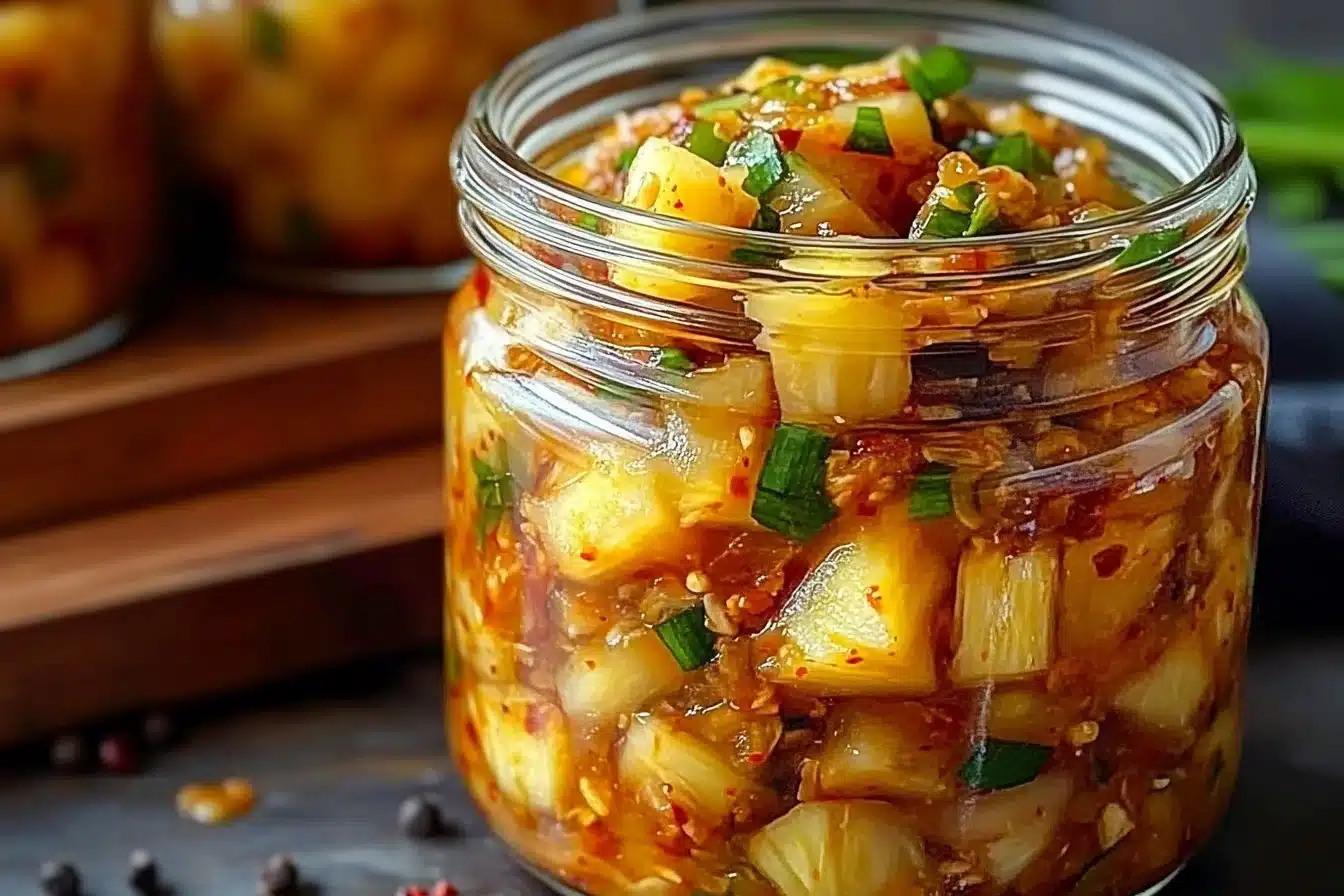
Pack everything tightly into a clean glass jar, leaving some space for the ferment to expand. Press down firmly so the brine rises and covers the pineapple; it should sit under its own liquid. If anything peeks above the juice, slide in a clean weight or a small piece of cabbage leaf to keep it submerged.
Seal the jar and let it sit at room temperature for 1 to 3 days, tasting daily until you reach the desired fermentation. You will see tiny bubbles and feel a gentle fizz when you taste it; the scent will shift from bright to rounded and a little tangy. Trust your taste, not just the clock, because room temperature and pineapple sweetness change the timing.
Once fermented, store it in the refrigerator and enjoy it within a few weeks. The chill slows the process but lets the flavors keep slowly mending into one another. Share the first jar with friends, and keep an open notebook if you want to fine tune levels of heat or salt in later batches.
Bringing Fermented Pineapple Kimchi Together
I like to plate a small bowl of this kimchi next to a steaming pot of rice and a simple protein, so each eater can choose how they want the bright, tangy flavor to join the rest of the meal. The pineapple’s sweetness makes a perfect contrast to salty or fatty foods, cutting through richness and making every bite lighter. When I serve it at family meals, people instinctively reach for it as a tiny, surprising condiment that wakes up the whole plate.
For a weekend brunch, set out a jar of pineapple kimchi next to scrambled eggs and warm bread. The contrast between soft eggs and crisp pineapple is a happy one, and the kimchi adds a layer that makes a simple meal feel like a special event. Children are often curious about the sparkly, almost fizzy texture, and I let them taste with a gentle spoon so they learn to notice the different notes.
On busy weeknights, I tuck a spoonful into a bowl of stew or over roasted vegetables. The fruit softens the stewed flavors and adds a bright note that makes reheated food taste earthier and more alive. I keep a small jar in the fridge for this exact purpose; it feels like a secret that improves leftovers.
This kimchi also plays beautifully with grilled meats; try it with charred chicken or pork and notice how the pineapple’s acidity cuts the smoke and adds a little zip. For a fresh option, mix chopped kimchi into a green salad or add it to a grain bowl with quinoa, cucumber, and toasted seeds. The texture becomes a contrast: soft fruit, crisp onion, and a chewy grain, all in friendly conversation.
If you are planning a gathering, set out both sweet and savory items so people can experiment. I sometimes include a cooling drink like a fruity smoothie to help guests move between bolder bites, and the balance makes the meal feel full and comforting. Small pairings and thoughtful placement make food feel like a conversation around the table.
Serving Fermented Pineapple Kimchi With Family Warmth
We have a small ritual when the jar opens at dinner; someone always asks for a small bowl, and the youngest gets the privilege of the first taste. It is a small moment that repeats a kind of family blessing, a passing of the jars from hand to hand with soft jokes and practical instructions. Food can be a language, and Fermented Pineapple Kimchi speaks of home, surprise, and shared hands in the kitchen.
If I serve it with fish, I like to spoon a little kimchi over warm flakes, letting the juices settle into the fish while it rests. The sweet and spicy mix makes even a plain fillet seem special. For sandwiches, a thin smear adds moisture and a crisp, bright note that lifts every bite.
For a casual picnic, pack a small jar and a set of forks, and arrange slices of roasted meat, cheese, and bread. The kimchi’s vivacity makes simple components sing together. In our house, a jar traveling in a picnic basket feels like a small promise that meals on the go can still be thoughtful.
When guests come, I tell them how the recipe began at home, and that it is forgiving for newcomers. Some people worry about fermentation, but the process is patient and kind if you keep the jar clean and the fruit submerged. Let it be a shared experience—invite someone to press the pineapple into the jar, to taste a spoon, to ask questions—these are the moments that make food a memory.
I sometimes pair the jar with a creamy side that my kids adore, like a mild yogurt sauce, which makes for a balanced bite. If you prefer bright, cooling drinks after a spicy serve, a fruity smoothie works well, and you can try a gentle pink pineapple blend that complements the kimchi’s notes, such as this light pink pineapple smoothie. These pairings turn a simple meal into something thoughtful and deliberate.
Storing Fermented Pineapple Kimchi for Tomorrow
Store the jar in the refrigerator once it reaches your preferred tang and texture, and it will keep developing gentle complexity over time. The cold slows fermentation, but flavors keep knitting together in small ways, so a jar at two weeks can taste different than the first day. I label jars with the date so I can remember when I started tasting and how long I let them rest.
Use a clean spoon each time to avoid introducing stray bacteria; kindness to the jar keeps the flavors safe and steady. If the brine drops a little in the jar, press the pineapple down again so it stays covered. If you ever see fuzzy mold on the top, discard that batch and clean your jar thoroughly before trying again.
When you are ready to eat a jar down to the last pieces, you can pour the leftover brine over salads as a lively dressing or use it to marinate meat gently before grilling. The liquid is full of character and can be a secret flavor booster in many dishes. I often save a small amount in a separate bottle for this purpose; it makes a humble meal feel carefully dressed.
To reheat foods topped with Fermented Pineapple Kimchi, add the kimchi after warming the main dish, so the texture stays bright and the flavors do not lose their edge. The kimchi is most lovely fresh and cold on top of a warm dish. If you want the pineapple gently warmed, add a spoonful near the end of reheating so it softens slightly without losing its lively character.
If you make this for gifts, package it in small jars, label with the date, and include a small note with suggested pairings. I find friends smile at the personal touch, and it is a way to share a piece of our kitchen with people we love. Remember that homemade gifts are softer in rules and heartier in meaning; they tell stories about the tables that shape us.
Little Troubleshooting and Tips for Better Flavor
If your kimchi seems too salty, next time dial the salt back a touch and give the pineapple a longer resting time to release more juice. Salt is a helpful guide in fermenting but it is something you can adjust to your taste and local climate. I keep a small notebook and jot down small changes so I remember how things turned out.
If the heat feels too fierce, drain a little of the brine and add more fresh pineapple or a bit of sugar to balance. Fermentation can mellow some heat but will not remove it entirely. Small adjustments early on save you from ending up with something too sharp for the people at your table.
If your kimchi is not fizzy, do not worry; some batches will bubble slightly, and some will be quieter. The natural bacteria in pineapple are different from those in cabbage, and temperature plays a large role. Taste for tang rather than bubbles; if it tastes pleasantly sour and lively, it is doing fine.
Always use clean, non-reactive jars for fermenting; glass is best because it is neutral and easy to clean. Avoid metal lids in long-term storage, as salt and acid can interact with metal. I keep a couple of wide-mouth jars specifically for fermenting so they are always ready.
If the top of your kimchi darkens slightly, it is usually just the ginger or garlic changing color, not a problem. Brightness in flavor remains, and often the deeper tones make the kimchi even more interesting. Trust your senses—smell, sight, and taste—more than fear. If anything seems off or smells rotten rather than tangy, it is safe to discard and start again.
Variations and Gentle Twists You Can Love
Try adding a few thin slivers of carrot for snap and a pretty orange note. The color is lovely against the pineapple’s yellow, and carrots keep a satisfying crunch. You can also add a small piece of daikon for an extra peppery crunch that pairs beautifully with the fruit.
If you want less heat, use half the gochugaru and add toasted sesame seeds at the end for a nutty flavor. The sesame gives depth without competing with the pineapple. For a smoked note, a small pinch of smoked paprika can be playful, but use it sparingly.
For a savory, rich version, fold in a spoon of miso after fermenting; it adds umami and rounds the edges. The miso should be added after the ferment to keep its character intact. If you are serving to children, reduce the chili and offer it alongside plain rice or yogurt to balance the spice.
If you prefer a milder kimchi, swap fish sauce for soy sauce and try a little rice syrup to deepen the sweetness. That makes the recipe fully vegetarian and keeps things bright and family-friendly. Small swaps like these help the jar find a place on tables with diverse diets.
You can also add herbs like mint or basil at the end for a fresh, summery note. They add a lift that pairs surprisingly well with pineapple, creating a flavor that feels light and celebratory. Try these herb sprigs in small amounts until you find the balance that sings for your family.
Scaling Up, Making Ahead, and Planning Meals
If you want to make several jars for the fridge, multiply the ingredients but keep the salt ratio similar to ensure a safe ferment. Large batches are hearty and make easy gifts or staples for the week. I often make three jars at a time for our family, and we use them over several meals in a variety of ways.
You can make this a day ahead to let the flavors settle, or make it three days before you need it for a deeper tang. Short ferments of one day are bright and lively, while three days give more complexity. I plan by how bold I want the flavor: yesterday’s jar will be sharp, last week’s jar will be rounded.
If you make ahead for a party, taste on the first day and again when it chills to see how it changes. That lets you know whether to open it more or less before guests arrive. I like to have a spare jar in the fridge when hosting, so I can replace the one on the table without worry.
When scaling, remember smaller jars ferment more quickly because they warm and cool faster. Keep an eye on them and taste regularly. The goal is a jar that is pleasantly tangy, not aggressively sharp, unless that is what you and your family prefer.
Teaching Kids to Cook with Kimchi
I love to involve kids in the gentle parts of the process, like pressing pineapple into the jar or sprinkling the gochugaru. Their small hands and big curiosity make the kitchen feel lively and new. I talk to them about the smells and textures, asking them to tell me what the ginger smells like or how the pineapple juice looks.
Let children taste small spoonfuls to learn their reactions; some love it, and some need time to build an appetite for fermented flavors. I keep their first portions small and pair them with things they already like. Learning about sour and spicy in a safe, encouraging way is part of growing a confident palate.
Assigning small, safe tasks gives kids a sense of ownership. Let them put labels on jars or help carry clean spoons. Over time, these small tasks become family traditions that connect them to the kitchen and to memories you are building together.
If you are nervous about their exposure to spice, reduce the gochugaru for their jars and keep a bolder jar for adults. This way everyone has something they enjoy. It keeps meals inclusive without losing the joy of sharing something homemade.
Common Questions I Hear at the Table
How long should I ferment my pineapple kimchi? Taste it after one day and then daily until the flavor is what you want. Temperature, pineapple ripeness, and saltiness affect timing, so trust your taste.
Does pineapple ferment differently than cabbage? Yes, fruit ferments a bit faster and can be sweeter initially. The sugar in pineapple encourages a lively fermentation, and the fruit’s texture changes differently than cabbage, often becoming softer.
Can I make this without fish sauce? Absolutely, use good soy sauce as a vegetarian swap. You can also try a splash of tamari for a gluten-free option. The goal is to add savory depth, and several options can do that kindly.
Is this safe? Yes, when you keep the fruit submerged, use clean jars, and store in the fridge once you reach your desired taste. If you see mold or an off smell, discard and try again. Fermenting is simple and safe when done with a few careful steps.
Why does the color darken sometimes? Ginger and garlic can change color over time, and the spices will settle differently as the liquid matures. That deepening is usually fine and often tastes more interesting. Keep an eye for true spoilage signs rather than color change alone.
Little Rituals That Make Fermentation Joyful
I wipe my counter, light a small tea light, and play quiet music when I start fermenting; small rituals make the process feel full and calm. The act of making food with intention changes the kitchen energy. Invite a friend or a child to join for the prep, and let conversation flow as you stir.
Labeling jars with a little note about what you did that day feels like writing a postcard to your future self. I sometimes note the weather or who I was thinking of while I mixed. These small memories come back when I open the jar, and they make the food taste like more than flavor.
Keep a small tasting spoon for the jar and a tiny plate where you put the first bite. Making the first taste an event honors the work and adds a moment of gratitude. It also helps you pay attention to how the flavor changes day by day.
Using Leftover Brine and Creative Ideas
Do not pour away the leftover brine; it can brighten salads and marinades. A spoonful of the brine in a vinaigrette adds depth and a lively cut. I sometimes use it to marinate tofu or shrimp briefly before a quick grill.
Mix small bits of the kimchi into mayonnaise for a sandwich spread that is both sweet and tangy. That spread livens up simple sandwiches in seconds. It is one of those small tricks that makes weekday meals feel special.
Chop the kimchi finely and fold into a warm grain bowl with avocado and roasted chickpeas. The fruit pieces soften and blend with the other textures, and the bowl becomes a satisfying, whole meal. It is a favorite quick lunch in our house.
If you have extra pineapple that you do not want to ferment, try freezing cubes to add to smoothies or to use in a future batch. Fresh fruit and fermented fruit can both have their moments on different days. Keeping the flow of fruit through your kitchen reduces waste and keeps meals interesting.
A Note on Equipment and Cleanliness
Use a non-reactive bowl and a glass jar with a tight lid, but not too tight while fermenting at room temperature. You want to keep air out but allow a gentle escape when bubbles form. I often loosen the lid slightly on day one and then seal fully when it goes into the fridge.
Sterilize jars with hot water and a gentle scrub before starting; the cleaner your jar, the happier the ferment. Simple soap and heat do the trick. I keep a jar brush handy for wide-mouth jars.
Avoid wooden spoons for packing because the wood can hold bacteria; a clean plastic or silicone tamper works well. Wash everything thoroughly afterward and dry it well for the next batch. Clean tools keep the process safe and easy.
Making This Recipe Your Own Over Time
Every batch will teach you something about your kitchen and your family’s taste. Some days you will like a softer, sweeter jar, and other times you will prefer a tart, bold jar that wakes the palate. Keep a jar of notes and adjust slowly so each change becomes a new memory.
I encourage you to label and date each jar and to write a single sentence about what you changed. After a few months, you will build a small library of jars and notes that show your own evolution in the kitchen. It feels like a map of your family’s table.
Share a jar with a friend and ask for their thoughts; food is how we talk to one another in small, generous ways. You will learn and be surprised by how different palates respond, and that sharing often leads to new ideas you would not have tried alone.
A Final Warm Thought for Your Kitchen
This Fermented Pineapple Kimchi is for the days you have a little time and want to make something that keeps giving. It is for the bright, ordinary weeknight and for the loud, full weekend table. Making it is a kind of small, steady generosity that grows into a pantry habit.
I hope you find the same small joys I have found in stirring, packing, and waiting for that first fizz. Let this recipe be a gentle invitation to play with flavors and to bring a piece of kitchen warmth to your family. Keep tasting, keep sharing, and let the jar sit where it can be seen and loved.
Print
Fermented Pineapple Kimchi
- Total Time: 30 minutes
- Yield: 4 servings 1x
- Diet: Vegetarian
Description
A lively and tangy pineapple kimchi that brightens up any meal with its refreshing flavors and probiotic goodness.
Ingredients
- 1 ripe pineapple, peeled and chopped
- 2 tablespoons sea salt
- 1 tablespoon grated fresh ginger
- 4 cloves garlic, minced
- 1–2 tablespoons gochugaru (Korean red pepper flakes), adjust to taste
- 1 tablespoon fish sauce (or soy sauce for vegetarian version)
- 1–2 green onions, chopped
- A whisper of honey (optional)
- A pinch of warm spice like cinnamon (optional)
- 1 tablespoon toasted sesame oil (optional, adds richness)
Instructions
- Combine chopped pineapple and sea salt in a large mixing bowl, mixing well. Let sit for about 30 minutes.
- Mix the ginger, garlic, gochugaru, and fish sauce (or soy sauce) in a separate bowl until glossy and fragrant.
- Add the spice mixture and green onions to the pineapple, folding gently until every piece is coated with spice.
- Pack everything tightly into a clean glass jar, pressing down firmly so the brine rises and covers the pineapple.
- Seal the jar and let it sit at room temperature for 1 to 3 days, tasting daily until you reach the desired fermentation.
- Store in the refrigerator and enjoy within a few weeks.
Notes
If you want less heat, use less gochugaru. The process is forgiving, so adjust based on your taste preferences.
- Prep Time: 15 minutes
- Cook Time: 0 minutes
- Category: Side Dish
- Method: Fermenting
- Cuisine: Korean
Nutrition
- Serving Size: 1 serving
- Calories: 80
- Sugar: 6g
- Sodium: 450mg
- Fat: 2g
- Saturated Fat: 0g
- Unsaturated Fat: 2g
- Trans Fat: 0g
- Carbohydrates: 16g
- Fiber: 2g
- Protein: 1g
- Cholesterol: 0mg
Keywords: fermented kimchi, pineapple kimchi, probiotic recipes, Korean side dish, healthy condiments