
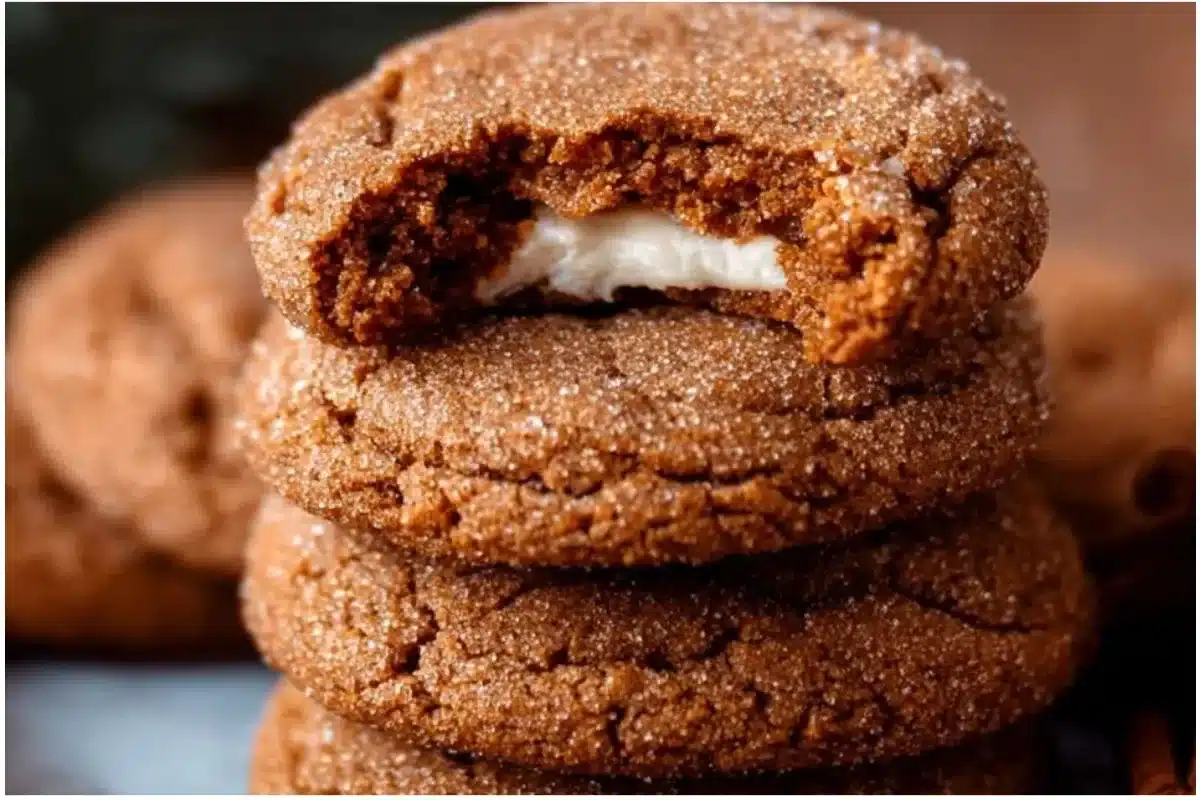
A soft, warmly spiced gingerbread cookie on the outside with a tangy, creamy cheesecake center—Gingerbread Cheesecake Cookies are the holiday mash-up you didn’t know you needed. They solve two perennial cookie-baking pain points: dry ginger cookies and cheesecake filling that spreads or cracks. In this guide I’ll show you how to build structure and moisture, balance spice and sweetness, and produce bakery-worthy cookies at home every time.
Inside you’ll find a detailed ingredient breakdown with the culinary science behind each choice, step-by-step instructions, troubleshooting tips that pros use, smart variations and swaps, plus storage and nutrition guidance. If you enjoy ginger-spiced baking, you may also like my spin on ginger treats like gingerbread crinkle cookies—they share technique and flavor inspiration.
Image prompt: “Gingerbread Cheesecake Cookies — close-up shot of warm, crackled gingerbread cookie with visible cream cheese center, soft texture, dusting of powdered sugar, holiday backdrop, natural light.”
Why Gingerbread Cheesecake Cookies work (and why you should make them)
Biting into a Gingerbread Cheesecake Cookie gives contrast: the cookie shell offers chew and spice, the center gives creamy acidity that brightens the molasses and molasses-like notes from brown sugar. Combining cookie dough and a cheesecake filling takes the best of both worlds while solving structural problems:
- The cookie dough acts as a crust that holds the cheesecake in a tidy portion, making them portable for cookie trays and gifts.
- The cheesecake is stabilized (you’ll learn how) so it doesn’t run, crack, or taste overly sweet.
- Spices layered into both cookie and filling create complexity without being cloying.
If you’re hunting for a holiday cookie that stands out next to classics like thumbprints and peppermint bark, this is it. It matches well with hot drinks and pairs with other seasonal cookies on a tray.
What makes a good Gingerbread Cheesecake Cookie? (Key qualities)
- Moist, tender cookie with crisp edges and soft centers.
- Bright, tangy cheesecake filling that retains a smooth, sliceable texture.
- Balanced spice profile — ginger forward, with cinnamon and warm notes of cloves or allspice.
- Attractive appearance: slightly crackled cookie surface with an exposed, creamy center.
- Easy to make in batches; freezer-friendly dough or baked cookies.
Next, let’s break down ingredients so you understand why each is used and how you can tweak them.
Print
Gingerbread Cheesecake Cookies
- Total Time: 90 minutes
- Yield: 24 cookies 1x
- Diet: Vegetarian
Description
A delightful mash-up of soft gingerbread cookies with a tangy cheesecake center, perfect for the holiday season.
Ingredients
- 2 cups (240 g) all-purpose flour
- 1 tsp baking soda
- 1/2 tsp fine salt
- 2 tsp ground ginger
- 1 tsp ground cinnamon
- 1/4 tsp ground cloves or allspice
- 1/2 cup (113 g) unsalted butter, room temperature
- 3/4 cup (150 g) packed brown sugar
- 2 tbsp molasses (unsulphured)
- 1 large egg, room temperature
- 1 tsp vanilla extract
- 8 oz (225 g) full-fat cream cheese, room temperature
- 1/3 cup (40 g) powdered sugar, sifted
- 1 large egg yolk, room temperature
- 1 tsp lemon juice
- 1/2 tsp vanilla extract
- Pinch ground cinnamon or ginger (optional)
Instructions
- Preheat oven to 350°F (175°C). Line baking sheets with parchment or silicone mats.
- Prepare the cheesecake filling by beating cream cheese until smooth. Add powdered sugar, egg yolk, lemon juice, vanilla, and optional spice; mix until combined. Chill in a piping bag for at least 10 minutes.
- Whisk flour, baking soda, salt, and spices in a bowl.
- Cream butter and brown sugar until fluffy (about 2-3 minutes). Mix in molasses, then add egg and vanilla until smooth.
- Gradually incorporate dry ingredients. Chill dough for 30-60 minutes to prevent spread.
- Form dough into balls (1.5-2 tbsp each) on baking sheet, flatten slightly, and add about 1 tsp cheesecake filling.
- Bake for 10-12 minutes until edges are set and tops are cracked. Let cool on sheet for 5 minutes before transferring to a wire rack.
- Dust with powdered sugar or sprinkle with flaky sea salt if desired.
Notes
Dough and baked cookies freeze well. Bake from frozen dough, adding 1-2 minutes to bake time.
- Prep Time: 25 minutes
- Cook Time: 10-12 minutes
- Category: Dessert
- Method: Baking
- Cuisine: American
Nutrition
- Serving Size: 1 cookie
- Calories: 180
- Sugar: 11g
- Sodium: 120mg
- Fat: 9g
- Saturated Fat: 5g
- Unsaturated Fat: 3g
- Trans Fat: 0g
- Carbohydrates: 22g
- Fiber: 1g
- Protein: 3g
- Cholesterol: 35mg
Keywords: gingerbread, cheesecake, cookies, holiday, dessert
Ingredient breakdown — science, function, and benefits
Understanding the role of each ingredient helps you make smart swaps and avoid common failures.
Cookie dough ingredients
- All-purpose flour (2 cups): Provides structure through gluten. For tender cookies, we use a modest amount of flour and rely on a balance of fats and sugars to shorten the protein network.
- Baking soda (1 tsp): A chemical leavening that reacts with acidic ingredients (like brown sugar or molasses) to give gentle rise and slight spread. It also contributes to browning.
- Salt (1/2 tsp): Enhances flavor and balances the sweetness.
- Ground ginger (2 tsp), cinnamon (1 tsp), ground cloves or allspice (1/4–1/2 tsp): Spices provide warmth and depth. Freshly ground spices are more aromatic—use them when possible.
- Unsalted butter (1/2 cup, room temperature): Fat for tenderness, flavor, and spread control. Room-temp butter creams with sugar to trap tiny air pockets.
- Brown sugar (3/4 cup, packed): Adds moisture and a molasses note. The molasses content complements ginger and helps cookies stay soft.
- Molasses (2 tbsp, unsulphured): Essential to gingerbread flavor. Also acidic, which helps baking soda react.
- Egg (1 large): Binds the dough and adds richness.
- Vanilla extract (1 tsp): Rounds the spice profile.
Cheesecake filling ingredients
- Cream cheese (8 oz, full-fat, room temperature): The central ingredient for body, tang, and mouthfeel. Full-fat gives the best texture and taste—low-fat fillings can be grainy.
- Powdered sugar (1/3 cup): Dissolves smoothly into cream cheese, avoiding graininess and keeping the filling silky. Use less than standard cheesecake to avoid oversweetening.
- Egg yolk (1 large): Stabilizes the filling and prevents it from becoming too soft; yolk adds richness and emulsification.
- Lemon juice (1 tsp): Brightens the filling and helps balance the sweetness. Acid also teams with egg to provide stability.
- Vanilla extract (1/2 tsp) and a pinch of cinnamon or ginger: Echo spice from the cookie for continuity.
Why use an egg yolk in the filling?
Egg yolks contain lecithin, an emulsifier that stabilizes the fats in cream cheese and prevents separation. It also sets gently on baking so the filling holds its shape without becoming rubbery.
Sweetener choices
Powdered sugar in the filling ensures the texture remains smooth. Brown sugar in the cookie locks in moisture. If you swap sweeteners, expect changes to texture and spread.
Salt and acidity
Don’t skip salt—the contrast enhances spice and sweet. A small amount of lemon juice in the filling brightens the overall flavor and helps set the cheesecake through protein coagulation.
Dairy considerations
Full-fat cream cheese and butter make the best, most indulgent cookies. If you need a lighter version, use Greek yogurt in the filling (strained thick) as a partial swap—expect tangier, slightly less rich results.
Allergen notes and swaps
- Gluten-free: Replace all-purpose flour with a 1:1 gluten-free blend that contains xanthan gum. Texture will be slightly different but still excellent.
- Egg-free: Replace the cookie egg with a flax “egg” (1 tbsp ground flax + 2.5 tbsp water) but watch texture—cookies may be denser. For the cheesecake, using a little cornstarch (1–2 tsp) and extra powdered sugar can help set without eggs.
- Dairy-free: Use vegan cream cheese and plant-based butter. Chill thoroughly to help structure.
Now that you know why we use what we use, let’s walk through the method.
Equipment and prep
- Stand mixer or hand mixer (for consistent creaming)
- Mixing bowls (small and large)
- Parchment paper or silicone baking mat
- Baking sheets
- Cookie scoop (1.5–2 tbsp for cookie dough, 1 tsp for filling)
- Wire rack
- Small piping bag (optional) or spoon for filling
- Food thermometer (helpful but not required)
Prep notes:
- Bring cream cheese and butter to room temperature before mixing—this prevents lumps and creates a silky filling.
- Line your baking sheets in advance. You can use an oven thermometer to confirm accurate temperature.
Image prompt: “Baking sheet with rows of unbaked Gingerbread Cheesecake Cookies showing cookie dough mounds and dollops of cheesecake filling, top view.”
Step-by-step method with real cooking insights
Step 1 — Make the cheesecake filling first
Why: Cream cheese holds its structure best when mixed and slightly chilled before piping. Mixing it first prevents overworking the cookie dough while you prepare the filling.
Pro tip: Use a rubber spatula to scrape the bowl and beat at medium speed—avoid aerating the filling too much; you want smoothness, not volume.
Step 2 — Combine dry ingredients
Sifting isn’t necessary but whisking ensures even distribution of spices and leavening.
Step 3 — Cream butter and sugar properly
Creaming is where texture is born. Beat butter and brown sugar until the mixture is lighter in color. Brown sugar will make the cream a little denser than with granulated sugar, but the addition of molasses compensates and gives chew.
Step 4 — Add molasses last with the wet ingredients
Add molasses with the egg so it emulsifies into the mixture and the dough stays workable.
Step 5 — Chill the dough
Chilling accomplishes two things: it solidifies the butter so cookies don’t spread too much in the oven, and it relaxes gluten for a more tender bite. For crisper edges but still tender centers, 30–60 minutes is usually right. Longer is fine.
Step 6 — Form cookie mounds and add filling
Slightly flattening the dough before adding filling gives a nest that prevents the filling from merging into the dough during bake. Use a small scoop or piping bag for consistent portions.
Step 7 — Bake with attention to timing
Cookies continue to set after removal. Pull them when the edges are set and the filling is slightly puffed. Overbaking dries the cookie and makes the filling grainy.
Real insight: If your filling browns too quickly, tent the sheet briefly with foil in the last minute or two. Browning indicates higher heat on the surface; the center may still be fine.
Step 8 — Cool fully for ideal texture
Cheesecake filling firms as it cools. Cooling on the baking sheet for 5 minutes retains shape, then transfer to a rack to finish cooling.
Common mistakes and how to avoid them
Mistake: Filling runs out of cookie or becomes watery
Fixes:
- Use slightly thicker filling (chill it; add an extra 1–2 tbsp powdered sugar if needed).
- Make a border in the cookie dough by flattening the center a bit deeper but leaving ridge edges.
- Don’t overfill—1 tsp per cookie is usually sufficient.
Mistake: Cookies are dry or crumbly
Fixes:
- Don’t overbake. Remove while centers still look slightly soft.
- Use brown sugar and molasses as in the recipe to retain moisture.
- Do not overmix once flour is added—overdeveloped gluten makes cookies tough.
Mistake: Filling is grainy
Fixes:
- Ensure cream cheese is room temperature before beating.
- Use powdered sugar instead of granulated sugar to avoid undissolved crystals.
- Don’t overbake the cheesecake filling; heat causes whey separation.
Mistake: Cookies spread too much
Fixes:
- Chill dough longer or chill the filled cookie mounds briefly (10–15 minutes) before baking.
- Ensure your baking sheet isn’t greased; use parchment or silicone for predictable spread.
- Check oven temperature with an oven thermometer—too hot or inconsistent temps change behavior.
Pro tips to elevate the result
- Toast spices: Lightly toast ground ginger/cinnamon in a dry skillet for 30 seconds to bloom oils—do this only if you have freshly ground whole spices. It will deepen aroma.
- Brown-butter option: For deeper nutty flavor, brown the butter, cool to room temperature, then use it in place of softened butter. Reduce chilling time slightly so dough firms before baking.
- Contrast with texture: Add chopped crystallized ginger or finely chopped candied ginger to the cookie dough for chew and lemony-sweet heat.
- Decorative finishing: Brush a tiny bit of melted dark chocolate around the base of the cooled filling for a bakery look.
- Uniform cookies: Use two matching scoops—one for dough, one for filling—to keep sizes consistent for baking times and presentation.
Variations and swaps
Gingerbread Cheesecake Cookies are a base for creativity. Here are tested variations and logical swaps.
- Pumpkin Cheesecake Twist: Swap 1–2 tablespoons of the cream cheese filling with pumpkin puree and a pinch of pumpkin spice to transform these into pumpkin cheesecake cookies. Reduce added liquid and increase powdered sugar by 1–2 tbsp to compensate.
- Candy Cane Marshmallow: Offer a peppermint finish by folding 1/4 tsp peppermint extract into the filling and dusting crushed candy canes over the top after baking. Try them alongside festive options like candy cane cookies on a holiday platter.
- Chocolate-ginger: Add 2 tbsp cocoa powder to the cookie dough and swap molasses for dark treacle for a chocolate-ginger contrast.
- Gluten-free: Replace flour with a cup-for-cup gluten-free blend, add 1/4 tsp xanthan gum if the blend lacks it.
- Vegan: Use vegan cream cheese and plant-based butter. Add 2 tsp cornstarch to the filling as an egg replacement and chill longer.
When making swaps, keep texture goals in mind: preserve moisture in the cookie and stability in the filling.
(Internal link to pumpkin variation appears above; other internal links are distributed appropriately.)
Serving suggestions and pairings
- Serve warm with a cup of hot milk or a spiced coffee.
- Assemble a cookie board with darker, richer cookies (ginger chocolate) and bright peppermint bites to balance flavors.
- For gifting, stack in parchment-lined tins with pieces of candied ginger between layers to protect the filling.
If you love experimenting with holiday fruit flavors, pair the cookies with an apple crisp or a small plate of baked brie bites for contrast.
Storage, freezing, and reheating
Short-term storage:
- Room temperature: Store in an airtight container for up to 2 days. Keep parchment between layers to protect the filling.
- Refrigerator: Store up to 5 days. Bring to room temperature before serving for best texture.
Freezing:
- Unbaked dough: Portion cookie dough into mounds on a tray, freeze until solid, then transfer to a freezer bag. Bake from frozen, adding 1–2 minutes to the bake time.
- Baked cookies: Freeze fully cooled cookies in a single layer on a sheet until firm, then stack with parchment and store in an airtight container for up to 3 months.
Reheating:
- Oven: Rewarm frozen or refrigerated cookies at 325°F (160°C) for 5–8 minutes until slightly warm; this revives texture without overbaking the filling.
- Microwave: For just-warm servings, microwave on low power 8–12 seconds. Be careful—cheesecake can overheat and break.
Tip: For best texture after freezing, thaw in the refrigerator overnight then come to room temperature before serving.
Nutrition insights
These are indulgent cookies—here’s a realistic view for planning.
Approximate nutrition per cookie (assuming 24 cookies):
- Calories: ~160–200 kcal
- Fat: 9–12 g (from butter and cream cheese) — mostly saturated when using full-fat dairy
- Carbohydrates: 18–22 g
- Protein: 2–3 g
Health-focused adaptations:
- Reduce portion size by using smaller scoops (makes 36–48 smaller cookies).
- Use low-sugar powdered sugar replacement like Swerve erythritol for lower sugar filling—note texture shifts.
- Swap half the butter for unsweetened apple sauce for reduced fat; cookies will be softer and less rich.
- For slightly more protein and tang with fewer calories, substitute up to half the cream cheese with Greek yogurt (strained) in the filling—chill well to firm.
If you follow anti-inflammatory or spice-focused recipes, ginger is a beneficial spice; for smoothies and herbal pairings, see my lemon-ginger spinach smoothie for a complementary beverage.
FAQ — Schema-ready style
Q: Can I make these cookies ahead for a party?
A: Yes. Bake them up to 3 days ahead and store in the fridge. For longer storage, freeze baked cookies (up to 3 months) and thaw before serving. Unbaked dough can be frozen for months; bake from frozen.
Q: My cheesecake filling cracked—what happened?
A: Cracking is caused by overbaking or high oven temperature. Remove cookies when edges are set and filling still slightly soft; filling will firm as it cools. Avoid overwhipping the filling, which can incorporate air and increase cracking risk.
Q: Can I use reduced-fat cream cheese?
A: You can, but expect slightly less creamy texture and some graininess. To compensate, chill the filling longer and consider adding 1 tsp cornstarch to improve stability.
Q: Can these be made dairy-free?
A: Yes—use a firm dairy-free cream cheese and plant-based butter. Chill thoroughly before piping; texture will be slightly different but still tasty.
Q: How do I stop the filling from sinking?
A: Use the right ratio: one egg yolk in the filling helps set it. Don’t overfill the cookie nest, and bake right after forming to prevent over-settling of filling into the dough. Chill filled cookies briefly if filling is too soft.
Q: Is it okay to use store-bought gingerbread spice mix?
A: Yes—just adjust quantity to taste. If the mix contains extra sugar, reduce powdered sugar in the filling slightly.
Q: My cookies spread flat—why?
A: Likely due to warm dough, low flour-to-fat ratio, or oven temperature. Chill dough longer, ensure accurate measurements, and use a cooler baking sheet for each batch.
Q: What’s the best molasses to use?
A: Unsulphured molasses has a clean, sweet flavor and is my recommended choice for these cookies. Blackstrap will be very strong and bitter.
Troubleshooting quick guide
- Too dry cookie: decrease bake time, increase brown sugar by 1–2 tbsp, or add 1 tbsp molasses.
- Filling too soft: add 1–2 tbsp powdered sugar and chill before piping.
- Uneven baking: rotate sheet halfway through baking and avoid overcrowding.
Visual and plating ideas (image prompts)
- “Plated Gingerbread Cheesecake Cookies on a wooden board with a ribbon and evergreen sprigs, powdered sugar dusted, overhead shot.”
- “Cross-section close-up showing creamy cheesecake center and chewy gingerbread cookie, fork on the side.”
Pairings and seasonal context
Gingerbread Cheesecake Cookies are a holiday-season star but work across fall and winter. Pair with hot chocolate, mulled wine, or spiced coffee. For lighter pairing ideas across the year, check out cookie complements like fruit crisps or baked brie bites for a varied tray.
If you’re compiling a holiday menu, include a mix of textures—these creamy-centered cookies balance crunchy biscotti, buttery shortbread, and peppermint bark nicely.
Final encouragement
If you love the flavor contrast of spice and tang, this recipe gives you control and structure to scale up for cookie exchanges or to play with flavors. The technique of a stabilized filling in a cookie shell is transferable—try it with different spice cookies or fillings.
Conclusion
Gingerbread Cheesecake Cookies combine the comforting warmth of gingerbread with a silky, tangy cheesecake center. The method focuses on texture control—room-temperature dairy for smooth filling, chilled dough for controlled spread, and careful filling proportions for clean presentation. If you want more inspiration or alternative takes on this idea, see these related recipes for additional techniques and flavor ideas: Gingerbread Cheesecake Cookies – In Bloom Bakery and Gingerbread Cheesecake Cookies | Stress Baking.
If you baked these, save this page, share the recipe with friends, or leave a comment with your favorite substitution. Happy baking—and may your cookie trays be merry and bright.





2 thoughts on “Gingerbread Cheesecake Cookies”