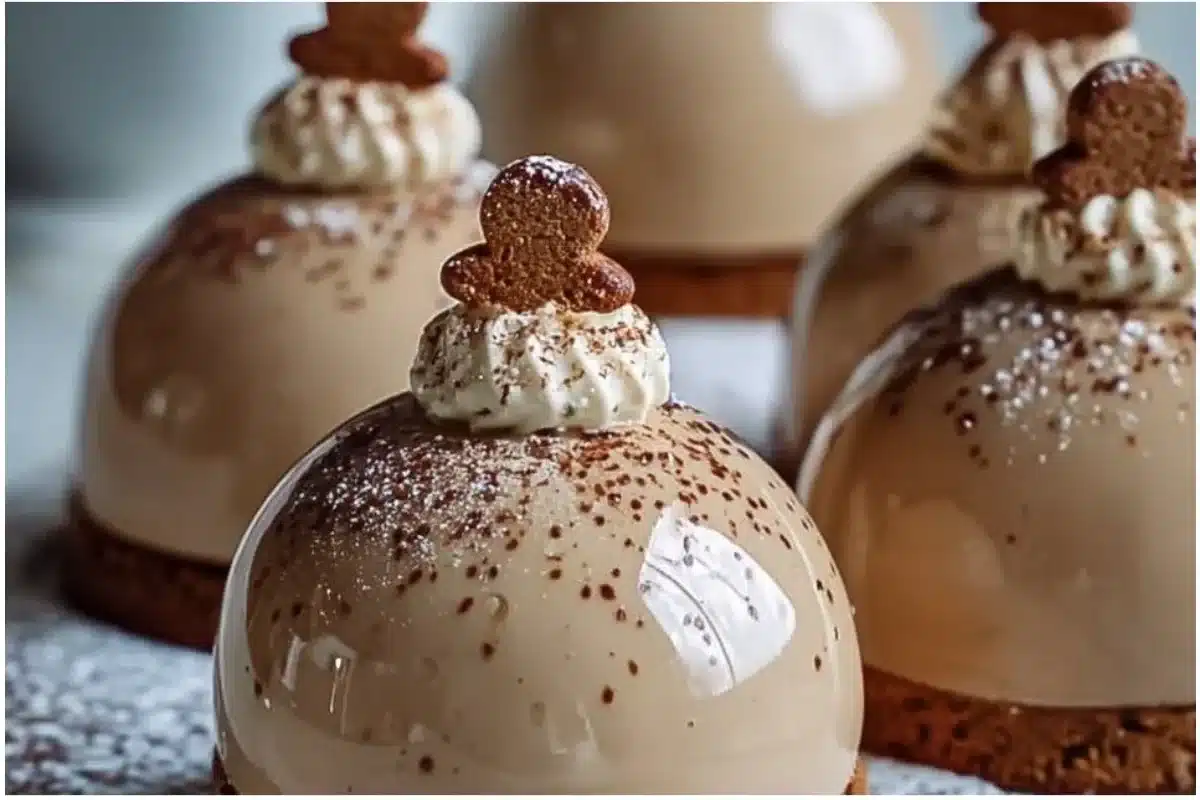
A refined holiday showstopper: delicate mousse infused with coffee and warm gingerbread spices, set in glossy domes and finished with crunch and caramel notes. If you love the cozy spice of gingerbread and the creamy lift of a latte, these Gingerbread Latte Mousse Domes give you a restaurant-quality dessert you can reproduce at home—without fuss, with tested techniques, and with tips to make them stable, elegant, and utterly delicious.
Why this recipe matters: many home mousse recipes we see either weep, taste flat, or collapse after unmolding. This version focuses on ingredient ratios, gelatin use, and assembly order so your domes hold their shape, have a silky mouthfeel, and deliver a real latte-spice profile. If you’re entertaining or want a small-batch holiday dessert, this is scalable, reliable, and gorgeous.
What are Gingerbread Latte Mousse Domes?
Gingerbread Latte Mousse Domes are individual molded entremets: a gingerbread-spiced mousse blended with espresso/coffee notes, usually set atop a thin gingerbread or biscuit base with a coffee or chocolate insert at the center. The domes are unmolded and finished with a shiny glaze (chocolate or neutral mirror glaze) and minimalist garnishes—crumbs, micro herbs, or a streak of molasses.
Why use domes? Silicone dome molds give clean curves that highlight a glossy glaze and make assembly simple. Serving individual domes is elegant and portion-controlled for events.
What makes this recipe different:
- Balanced coffee intensity so the “latte” element complements—not overpowers—the gingerbread spices.
- Stable mousse using minimal gelatin for a light, airy texture that unmolds cleanly.
- A crisp-textured base and coffee ganache insert for contrast.
- Practical glaze options (chocolate ganache or mirror glaze) with troubleshooting advice.

Gingerbread Latte Mousse Domes
- Total Time: 390 minutes
- Yield: 8 domes 1x
- Diet: Vegetarian
Description
A refined holiday dessert featuring gingerbread-spiced mousse infused with coffee, set in glossy domes, and topped with caramel notes.
Ingredients
- 150 g gingerbread cookies or firm biscuit crumbs (about 12–15 cookies)
- 60 g unsalted butter, melted
- 75 g heavy cream
- 75 g dark chocolate (60–70%)
- 1 tsp instant espresso powder or 12 g brewed espresso
- 300 g heavy cream (divided: 180 g for whipping, 120 g for custard)
- 4 large egg yolks (optional)
- 80 g granulated sugar
- 2 tbsp molasses
- 2 tsp ground ginger
- 1 tsp ground cinnamon
- 1/4 tsp ground cloves
- 1/8 tsp ground nutmeg
- 2 tbsp instant espresso dissolved in 15 g hot water (or 40 g brewed espresso)
- 6 g powdered gelatin (or 3 sheets leaf gelatin) + 40 g cold water to bloom
- 150 g dark chocolate (for glaze)
- 120 g heavy cream (for glaze)
- 20 g light corn syrup (or glucose)
- 10 g butter (optional, for sheen)
Instructions
- Pulse gingerbread cookies in a food processor and mix with melted butter; press into the bottom of silicone molds and chill.
- Heat heavy cream and espresso; pour over chocolate, whisk until smooth, cool and pipe small discs into molds; freeze.
- Bloom gelatin in cold water. Heat 120 g cream with sugar, molasses, and spices until steaming. If using yolks, temper yolks, return to heat and cook until thickened. Stir in bloomed gelatin and espresso. Cool to 30–35°C, then fold in whipped cream carefully.
- Pipe mousse into molds halfway, insert frozen ganache discs, top with more mousse, smooth, and freeze until solid.
- Unmold domes, glaze with warm chocolate ganache or mirror glaze, and chill to defrost slightly before serving.
Notes
For a refined finish, decorate with crystallized ginger and chopped pecans. Use precise timings for blooming gelatin and cooking temperatures for best results.
- Prep Time: 45 minutes
- Cook Time: 0 minutes
- Category: Dessert
- Method: Freezing
- Cuisine: American
Nutrition
- Serving Size: 1 dome
- Calories: 350
- Sugar: 20g
- Sodium: 100mg
- Fat: 24g
- Saturated Fat: 14g
- Unsaturated Fat: 8g
- Trans Fat: 0g
- Carbohydrates: 30g
- Fiber: 1g
- Protein: 4g
- Cholesterol: 90mg
Keywords: holiday dessert, mousse, gingerbread, latte, festive treat
Flavor and ingredient philosophy
This dessert layers three main experiences:
- Warm spice foundation (ginger, cinnamon, molasses)
- Silky, coffee-forward mousse (espresso or strong coffee, cream, egg yolks optional)
- Textural contrast (crunchy biscuit or gingerbread base and optional coffee ganache core)
We use ingredients chosen for clarity of flavor:
- Fresh ground spices and good-quality molasses give authentic gingerbread depth.
- Espresso or concentrated coffee provides the “latte” backbone without added sweetness.
- Heavy cream whipped to soft peaks gives aeration and richness.
- Gelatin stabilizes the mousse just enough to hold domes but avoids a gummy texture.
For festive inspiration, these domes pair wonderfully with simple shortbreads or holiday cookies—if you love gingerbread treats, try making these with a batch of chewy ginger treats like these gingerbread crinkle cookies to serve alongside.
Ingredient breakdown: science and benefits
Understanding why each ingredient is used helps you adapt the recipe and avoid common mistakes.
- Heavy cream (whipping cream, 35% fat): Whipping aerates the mousse and provides richness. Fat also helps carry flavors—coffee and spices taste rounder in a fat matrix.
- Egg yolks (optional): Classic mousses use yolks whisked and tempered for richness and body. In this recipe we offer a yolk and a yolk-free variant. Yolks provide emulsification and a silkier texture but require careful tempering. For yolk-free, increase gelatin slightly.
- Gelatin (leaf or powdered): Stabilizes the mousse so it will unmold cleanly. Use bloom ratios carefully—too much gelatin makes mousse rubbery; too little will weep or collapse.
- Espresso/strong coffee: Use freshly brewed espresso or concentrated brewed coffee. Instant espresso powder is a practical backup. Coffee introduces acidity and bitterness that balances sweet and molasses notes.
- Molasses and brown sugar: Molasses is essential for authentic gingerbread flavor. Brown sugar adds caramel notes and moisture.
- Ground ginger, cinnamon, cloves, nutmeg: Freshly ground or recently opened spices are stronger. Ground ginger lands the “gingerbread” profile; a pinch of ground cloves and nutmeg adds complexity.
- Dark chocolate (optional for ganache/coat): Adds depth and a glossy finish when used in a ganache glaze.
- Cocoa butter/neutral glaze: For a shiny mirror glaze or neutral glaze, the right balance of gelatin and sweetened condensed milk (or corn syrup) creates shine.
- Biscuit base (gingerbread crumb or sable): Provides crunch and form under the dome.
Pro tip: Blooming gelatin in cold liquid and then gently warming ensures even dispersion. Never boil gelatin—it loses setting power at high temperatures.
Equipment and molds
- Silicone dome molds (2–4 oz capacity) — flexible for easy unmolding
- Mixing bowls (metal glass or stainless)
- Hand mixer or stand mixer with whisk attachment
- Small saucepan
- Thermometer (instant-read) for tempering and gelatin temperatures
- Offset spatula and piping bags for neat filling
- Fine sieve for spices and glaze smoothing
- Baking sheet and parchment for bases
Why silicone domes? They allow for glossy glazes and easy unmolding. If using rigid molds, line them with plastic wrap for removal.
Recipe card: Gingerbread Latte Mousse Domes
Yields: 8 domes (about 3–4 oz each)
Active time: 45 minutes | Chilling/set time: 6–8 hours (overnight best)
Ingredients
For the base:
- 150 g gingerbread cookies or firm biscuit crumbs (about 12–15 cookies)
- 60 g unsalted butter, melted
For the coffee ganache insert (optional):
- 75 g heavy cream
- 75 g dark chocolate (60–70%)
- 1 tsp instant espresso powder or 12 g brewed espresso
For the gingerbread latte mousse:
- 300 g heavy cream (divided: 180 g for whipping, 120 g for custard)
- 4 large egg yolks (optional; see yolk-free variant below)
- 80 g granulated sugar
- 2 tbsp molasses
- 2 tsp ground ginger
- 1 tsp ground cinnamon
- 1/4 tsp ground cloves
- 1/8 tsp ground nutmeg
- 2 tbsp instant espresso dissolved in 15 g hot water (or 40 g brewed espresso)
- 6 g powdered gelatin (or 3 sheets leaf gelatin) + 40 g cold water to bloom
For the glaze (chocolate mirror/glossy ganache):
- 150 g dark chocolate
- 120 g heavy cream
- 20 g light corn syrup (or glucose)
- 10 g butter (optional, for sheen)
Tools
- Silicone dome mold (8 cavities), piping bag, whisk, spatula
Instructions (summarized)
- Make base: blitz cookies + melted butter, press into silicone mold bottoms or small rings on a tray, chill.
- Prepare coffee ganache: warm cream + espresso; pour over chocolate, emulsify, cool slightly—pipe small discs into chilled dome molds; freeze.
- Make mousse: bloom gelatin in cold water. Heat 120 g cream with sugar, molasses, and spices just until steaming. If using yolks: temper yolks with a small amount of hot cream, return to pan and cook gently to 82–84°C while stirring (custard). Remove from heat, stir in dissolved gelatin and espresso. Cool to 30–35°C, then fold in whipped cream (soft peaks). Pipe into silicone domes halfway, place frozen ganache insert, top with more mousse, smooth, freeze until set.
- Unmold frozen domes and glaze with warm chocolate ganache or mirror glaze. Decorate and chill to defrost slightly before serving.
Full step-by-step method below with exact timings and pro tips.
Step-by-step method with real cooking insights
Step 1 — Prepare the base
- Pulse 150 g of firm gingerbread cookies or preferably a slightly crisp gingerbread in a food processor until fine crumbs.
- Stir in 60 g melted unsalted butter until moistened and the mixture holds when pressed.
- Press a thin layer (about 5–7 mm) into the bottom of each silicone dome cavity or form small discs on a parchment-lined tray using a cookie cutter ring slightly larger than the dome’s flat base. Chill in fridge to firm.
Insight: Thin bases minimize heaviness and let the mousse shine. If you prefer more texture, toast chopped pecans at 160°C/320°F for 8 minutes and fold into crumbs.
Step 2 — Make the coffee ganache insert (optional but recommended)
- Heat 75 g heavy cream with 1 tsp instant espresso powder (or 12 g brewed espresso) until steaming—not boiling.
- Pour over 75 g chopped dark chocolate. Let sit 30–60 seconds, then whisk until glossy.
- Pour into a shallow tray and chill until firm, then cut discs that fit the dome interior; alternatively use a mold to pipe small discs. Freeze these discs on a tray.
Insight: Freezing the ganache insert makes assembly clean and prevents it from sinking into the mousse. The ganache should be pliable when freezing, not aerated.
Step 3 — Bloom and prepare gelatin
- Sprinkle 6 g powdered gelatin over 40 g cold water (or hydrate 3 sheets leaf gelatin in cold water) and let bloom for 5–10 minutes.
- Warm gelatin gently (microwave 8–12 seconds or over a bain-marie) until liquid. Keep warm.
Why gelatin? It stabilizes mousse to hold shape. Measure carefully; scale your batch up or down proportionally.
Step 4 — Make the flavored custard base
Option A — With egg yolks (recommended for silkier texture)
- Whisk 4 egg yolks with 80 g sugar until homogenous.
- Heat 120 g heavy cream with 2 tbsp molasses, 2 tsp ground ginger, 1 tsp cinnamon, 1/4 tsp cloves, and 1/8 tsp nutmeg just until steaming (80°C)—don’t boil to avoid curdling flavors.
- Temper the hot cream into the yolks slowly while whisking (add 1/3 first, mix, then add the rest).
- Return mixture to saucepan and cook gently, stirring, until it registers 82–84°C (or thick enough to coat the back of a spoon)—this is a classic custard.
- Remove from heat, stir in the bloomed gelatin and 15 g hot dissolved instant espresso (or 40 g brewed espresso). Mix until smooth.
Option B — Yol k-free (safer)
- Combine the 120 g cream, molasses, sugar, and spices in a saucepan and heat until steaming.
- Remove from heat and stir in bloomed gelatin and espresso. Cool to 30–35°C before folding in whipped cream.
Insight: Tempering prevents curdling and creates a stable emulsion. Cooking to 82–84°C pasteurizes yolks and thickens the custard. Use a thermometer.
Step 5 — Whip the cream and fold
- Whip 180 g heavy cream to soft peaks (don’t overwhip). Soft peaks will hold shape but still integrate smoothly.
- Cool the custard to about 30–35°C (warm but not hot)—this is important so the gelatin stays liquid but doesn’t collapse whipped cream.
- Fold one-third of whipped cream into the custard to loosen it, then gently fold the remaining cream in two additions, using a spatula with sweeping strokes to keep air.
Technique tip: Use an angled spatula and fold with broad strokes; don’t stir aggressively.
Step 6 — Fill the molds and assemble
- Pipe or spoon about half the mousse into each silicone dome cavity atop the chilled base.
- Press a frozen coffee ganache disc into the center of each dome, leaving a small gap to top with more mousse.
- Cover with remaining mousse, smooth the surface, and tap molds gently to remove large air pockets.
- Freeze domes overnight or for at least 6 hours until solid.
Pro tip: For perfect domes, pipe mousse slightly over the rim to allow a little shrinkage during freezing, then level with an offset spatula.
Step 7 — Unmold and glaze
- Warm your glaze (see options below) to about 35–40°C for chocolate ganache glaze or 30–35°C for mirror glaze.
- Freeze domes fully; pop out using a small offset or by gently flexing the mold.
- Place domes on a wire rack over a tray and pour glaze evenly—work quickly for a smooth finish.
- Transfer to a chilled plate. Allow domes to defrost in the fridge for 1–2 hours before serving.
Glazing insight: Temperature balance matters. If glaze is too hot, mousse will defrost and the dome shape suffers. Too cool and glaze will not form a smooth coat.
Glaze options (practical)
Simple chocolate ganache glaze (easy, reliable)
- 150 g dark chocolate + 120 g heavy cream + 20 g corn syrup. Heat cream + syrup, pour over chopped chocolate, emulsify, add 10 g butter for shine. Strain and use at 35–40°C.
Neutral mirror glaze (for high shine and colored glazes)
- Use sugar, water, sweetened condensed milk, gelatin, and white chocolate following standard mirror glaze ratios. Add cocoa for chocolate variants and butter for shine. Requires stirring and straining; use at 30–35°C for best results.
Dusting and raw finish (low-stress)
- Skip glaze. Freeze and unmold, then dust with cocoa powder and press a sprinkle of crushed gingerbread or crushed pistachio on one side for contrast.
For a full mousse glazing tutorial and alternatives, see a related mousse-focused recipe like our Chocolate Peppermint Mousse Pie—techniques for ganache and glazing translate well.
Common mistakes and how to avoid them
- Mousse too soft or weeping: Underbloomed gelatin, insufficient chilling, or whipped cream overbeaten. Fix: measure gelatin carefully, chill fully, and use soft-peak whipped cream.
- Lumpy custard: Temper yolks slowly, strain custard if necessary.
- Glaze runs or dulls: Glaze too warm or not emulsified. Cool glaze to recommended temperature and strain to remove lumps.
- Ganache insert sinking: Insert not frozen or mousse too soft during assembly. Freeze inserts and work quickly.
- Spices taste weak: Use fresh spices; toast ground spices lightly (10–20 seconds in a dry pan) for extra aroma.
Variations and swaps
- Chocolate-gingerbread: Add melted dark chocolate to the mousse base (reduce cream slightly) for a mocha-gingerbread dome.
- Boozy option: Stir 1–2 tbsp of spiced rum or coffee liqueur into the custard before folding—reduce milk volume slightly to maintain texture.
- Vegan version: Replace gelatin with agar-agar (use tested agar conversion; it sets differently—about 4–6 g agar per equivalent batch), and use coconut cream whipped for volume. Note: agar gives a firmer set and requires careful boiling to activate.
- Egg-free: Use the yolk-free path described above; increase gelatin by ~10–15% for similar body.
- Nutty: Add a pistachio praline or hazelnut crunch layer between base and mousse for texture (see pistachio ganache ideas and pistachio cream techniques on WeCook’s pistachio pages).
- Mini tart variant: Instead of domes, pipe mousse into pre-baked tart shells lined with cookie crust for a different presentation.
If you enjoy gingerbread desserts, try pairing this mousse experience with other ginger-forward treats like our chewy gingerbread brownies for a dessert spread.
Decoration ideas
- Crystallized ginger slivers
- Toasted chopped pecans or pecan praline
- Thin tuile or micro cookie shard
- A dusting of cinnamon-sugar
- Small coffee powder dust or cocoa on a stencil for patterns
- Edible gold leaf for holiday glamour
Keep decoration minimal to let the dome’s silhouette and glaze shine.
Storage and shelf life
- Freeze: Unfinished domes (in molds or already glazed) freeze well up to 1 month if wrapped airtight. For best quality, consume within 2 weeks.
- Refrigerate: After glazing, store domes in the refrigerator and consume within 3–4 days.
- Do not reheat mousse: Mousse texture deteriorates with heat. Serve chilled or at slightly less-cold temperature (remove from fridge 20–30 minutes before serving).
- Transport: For parties, keep in a cooler or insulated bag with ice packs. Place domes on a flat tray to avoid sliding.
Practical tip: Freeze domes for transport and glaze on-site if you need the perfect glossy finish at the event.
Nutrition insights
Approximate nutrition per 1 dome (3–4 oz) — depends on exact ingredients and additions:
- Calories: 300–420 kcal
- Fat: 22–32 g (mostly from cream and butter)
- Carbohydrates: 18–30 g (sugars from sugar, molasses, and glaze)
- Protein: 4–6 g (from cream and any yolks)
Health considerations:
- High in saturated fats and sugars—treat as an occasional indulgence.
- To reduce calories: use a lighter mousse (replace some cream with whole-milk Greek yogurt for tang and protein) but expect a firmer texture and different flavor.
- For keto adaptation: use sugar substitutes, reduce or omit the base, and use higher-fat cream—gelatin and cocoa-based glazes can work with erythritol sweeteners (test for flavor).
For balanced dessert pairings, serve a small dome with a bright fruit compote or spiced apple slices to cut richness. For more healthy dessert ideas, see our lighter options like coconut chia seed pudding (not an internal link requirement—optional reading on the site).
Pro tips from a pastry chef
- Use a thermometer. Temperature is everything here—from tempering yolks to glaze temperatures.
- Chill layers thoroughly between steps. It simplifies assembly and prevents collapsing.
- Strain custard and glaze through a fine sieve—this eliminates spice bits and gives cleaner surfaces.
- Taste and adjust coffee/spice ratio before folding in whipped cream. Whipped cream muffles some flavors; adjust slightly stronger in the base than you think necessary.
- Keep a small amount of mousse in the fridge to test texture before filling all molds—if it’s too loose, fold in a little more whipped cream or adjust gelatin next batch.
- Freeze inserts flat so they sit evenly in domes; a lopsided insert causes domes to wobble.
Frequently Asked Questions (FAQ) — schema-ready style
Q: Can I make these domes without gelatin?
A: Yes—you can use agar-agar for a vegan set or increase yolks and chill longer for a looser set, but gelatin gives the best, clean unmold. Agar has different setting behavior—test conversions and expect a firmer texture.
Q: How long should I freeze before glazing?
A: Freeze until completely solid—6–12 hours or overnight. Fully frozen domes glaze more cleanly.
Q: Can I use instant espresso powder instead of brewed espresso?
A: Absolutely. Dissolve instant espresso in hot water and add to the custard. Instant is more concentrated and shelf-stable.
Q: How do I prevent glaze from frosting after glazing?
A: Chill domes in the refrigerator after glazing; avoid open-air fridges where moisture can condense. Use glazing temperatures recommended and keep domes cold.
Q: Can I assemble domes ahead for a party?
A: Yes. Freeze domes fully and store airtight (up to 2 weeks). Thaw in the refrigerator for 2–4 hours before serving.
Q: Is there an egg-free version?
A: Yes—see the yolk-free path in the instructions. Increase gelatin by about 10–15% to maintain body, or use a stabilizer like commercial stabilizing powders designed for mousse.
Serving suggestions
- Small portions, plated with a quenelle of spiced mascarpone or lightly sweetened whipped cream.
- Pair with hot beverages: the domes complement a cardamom latte or a simple drip coffee.
- For a holiday buffet, arrange domes on a mirrored tray with sprigs of rosemary for aroma and visual contrast.
If you’re creating a dessert table, the domes look elegant next to other festive sweets like our chocolate-ginger pairings or cookies; try presenting a small sampling alongside chocolate-peppermint mousse for a striking contrast.
Troubleshooting quick guide
- Dome collapses after unmolding: increase gelatin slightly next time and ensure full freeze before unmolding.
- Bitter coffee flavor: reduce espresso or add a touch more molasses or brown sugar to balance.
- Grainy custard: strain cooked custard and whisk vigorously; ensure egg yolks are tempered.
- Glaze not shiny: add a little butter or corn syrup and strain; ensure proper temperature.
Inspiration and pairing ideas
- Serve a slice of apple crisp or a small portion of warm spiced compote for temperature contrast.
- Complement with nutty flavors—pistachio praline or crushed pecans—because they pair naturally with molasses and coffee notes.
- For a cocktail pairing, a lightly spiced rum or coffee liqueur works well. For non-alcoholic, a spiced apple cider is a great match.
If you enjoy festive desserts, we also have a collection of holiday treats on the site—try variations like our seasonal cookie recipes for a coordinated platter: gingerbread brownies for dense, chewy bites that match the flavor profile.
Conclusion
These Gingerbread Latte Mousse Domes blend the warm nostalgia of gingerbread with the sophisticated lift of a coffee mousse. They reward careful technique—temperature control, proper gelatin bloom, and staged assembly—with a dessert that looks professional and tastes balanced: spicy, sweet, and coffee-smooth.
If you want an inspiration gallery or alternate technique reference, check out this stepped version at Gingerbread Latte Mousse Domes – A Gourmet Holiday Dessert … (https://emmascakestudio.com/christmas-desserts/gingerbread-latte-mousse-domes/) for another visual approach. For additional recipe variations and community-tested ideas, see Gingerbread Latte Mousse Domes – Yeyfood.com: Recipes, cooking … (https://yeyfood.com/gingerbread-latte-mousse-domes/).
Cook, experiment, and share—these domes are designed to be both a teaching exercise in mousse technique and a delightful centerpiece for your holiday dessert table. If you try them, save this recipe, take photos, and tag us—feedback helps refine technique for other home bakers.