I’ve made this Irish soda bread at least 20 times and here’s what I learned. The first few loaves came out tough, crumbly, or strangely flat. One batch looked perfect on the outside but turned gummy in the center when I sliced it for my kids. That is when I realized soda bread is fast, but it is not “dump and hope.” The flour, buttermilk, and baking soda need the right balance and a gentle hand.
Once you understand that balance, this becomes the kind of bread you can pull together in ten minutes on a busy weeknight. No yeast, no long rise, and no mixer. Just a warm loaf on the table in under an hour. If you do not keep buttermilk in the fridge, I will show you how to make a quick version at home that works beautifully. Chef Joudia Elise here from wecookrecipe.com, and this Irish soda bread recipe is simpler than it looks, I promise.
What You Will Learn
The classic Irish soda bread ingredients and what each one does for texture. The buttermilk and baking soda trick that makes the crumb soft, not dry. How to mix the dough so it rises tall without turning tough. A side-by-side comparison of traditional soda bread, brown bread, and American-style raisin loaves. The five mistakes that ruin Irish soda bread and exactly how to avoid them.
What Is an Irish Soda Bread Recipe?
Traditional Irish soda bread is a quick bread that relies on baking soda and acidic buttermilk for lift instead of yeast. The classic version uses just four ingredients: flour, baking soda, salt, and buttermilk. You stir everything together, shape a round loaf, cut a deep cross in the top, and bake it right away. There is no kneading, no rising time, and no special equipment required. That is why Irish families historically baked it daily to go alongside soups and stews.
An Irish soda bread recipe mixes all-purpose or a blend of white and whole wheat flour with baking soda, salt, and tangy buttermilk, then bakes the dough at 400°F for about 35 to 40 minutes until the crust is deeply golden and the bottom sounds hollow when tapped. The texture should be crisp on the outside and tender and slightly moist inside, with a tight but not heavy crumb. You eat it sliced thick with butter, jam, or alongside hearty soup. No yeast and no proofing make it a staple “emergency bread” you can have on the table in about an hour.
There are two main families of soda bread. The simplest is the four-ingredient traditional loaf. American-style loaves often add sugar, butter, raisins, and sometimes caraway seeds, turning it into more of a rustic tea bread. This recipe lands in the middle: simple enough to feel authentic, but with just enough butter to keep the crumb soft for my kids’ sandwiches the next day. When they ask for a slice with jam after dinner, I know we have the balance right.
Ingredients
I’ve tried this with only white flour, a 50/50 mix of white and whole wheat, and even a batch with a little oat flour from our oat trick breakfast guide. The version below is the one my family keeps coming back to: soft, gently tangy, and easy to slice. For a simple look at how grains and breads fit into a balanced plate, the USDA MyPlate grains guide is a helpful reference.
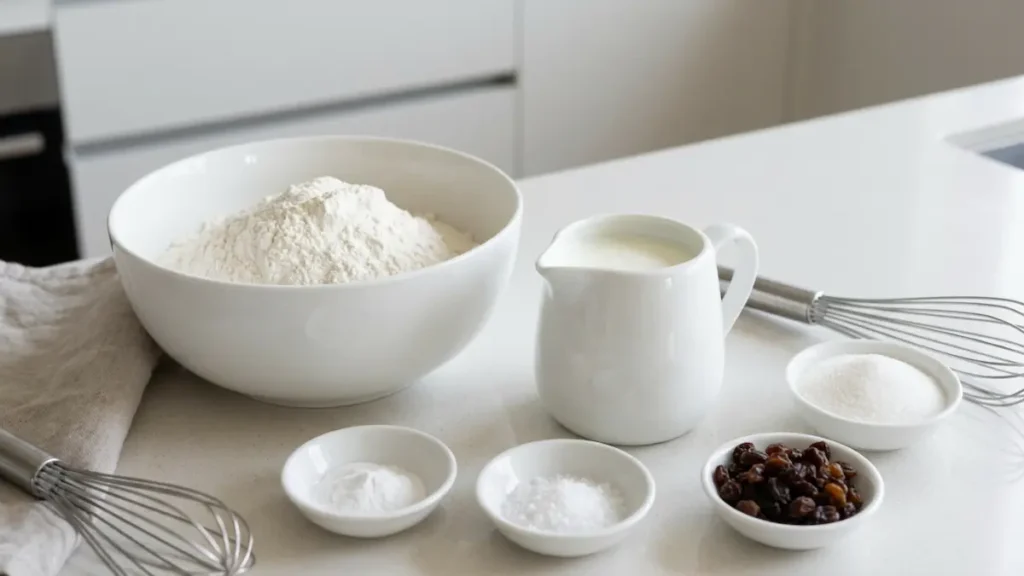
Dry Ingredients:
3 1/2 cups all-purpose flour (you can swap 1 cup for whole wheat flour), 1 teaspoon baking soda, 1 teaspoon fine salt, 1–2 tablespoons granulated sugar (optional, for a slightly softer, lightly sweet loaf).
Wet Ingredients:
1 3/4 cups cold buttermilk, plus up to 2 tablespoons extra if the dough feels dry.
Optional Add-Ins:
1/2–3/4 cup raisins or currants, 1 tablespoon softened butter brushed on top after baking, 1 teaspoon caraway seeds if you love that classic deli flavor. I usually keep it plain so it works with both jam and soup, then make a sweeter raisin version when we want more of a treat.
How to Make Irish Soda Bread
Step 1: Preheat and Prep the Pan
Set your oven to 400°F and give it time to fully preheat while you mix the dough. Lightly grease a cast iron skillet or a baking sheet with butter or a neutral oil. I like using a 10-inch cast iron pan because it helps the loaf crisp on the bottom and makes it feel like a little event at the table.
Step 2: Mix the Dry Ingredients Gently
In a large bowl, whisk together the flour, baking soda, salt, and sugar if using until everything looks evenly combined. If you are adding raisins or currants, toss them in now so they get lightly coated with flour and do not sink. This whole step should take about 30 seconds. Overmixing here is the first place people accidentally make the bread tough.
Step 3: Add the Buttermilk and Bring the Dough Together
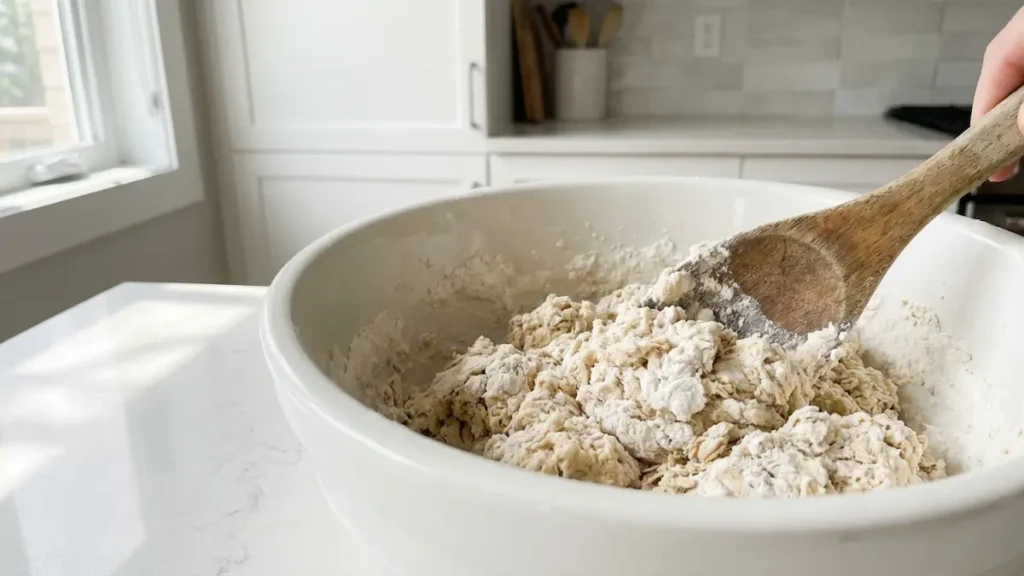
Make a well in the center of the bowl and pour in most of the cold buttermilk. Use a wooden spoon or your hand like a claw to draw the flour into the liquid, turning the bowl as you go. The dough should come together in a shaggy, slightly sticky ball. If there are still dry pockets at the bottom, sprinkle in the last few tablespoons of buttermilk. Stop as soon as everything holds together. The dough should look rough, not smooth.
Step 4: Shape, Score, and Get It into the Oven
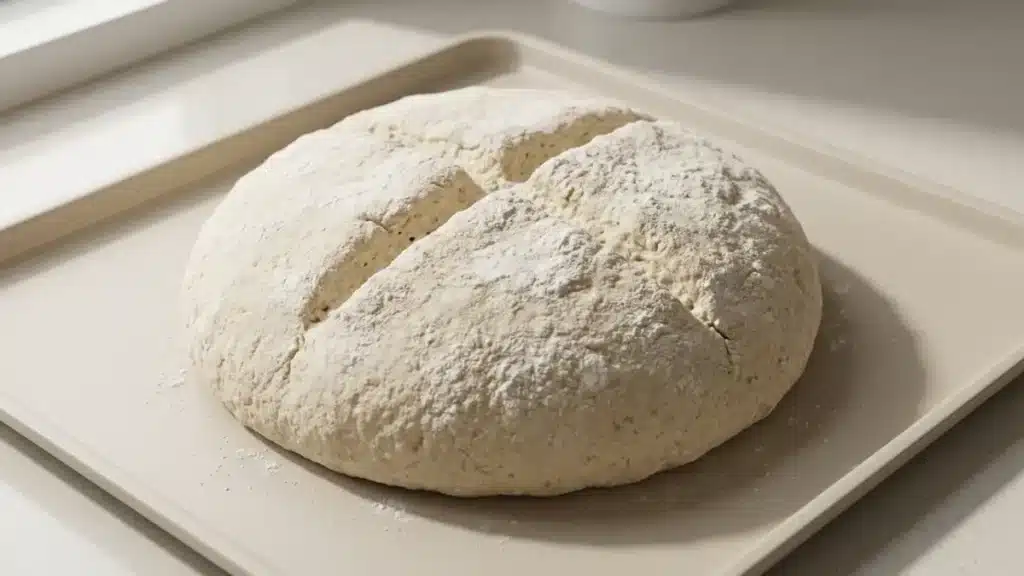
Turn the dough out onto a lightly floured surface. With floured hands, gently shape it into a round about 7 inches across and 1 1/2 to 2 inches high. Do not knead like yeast bread, just fold it over itself once or twice to smooth the surface. Place the round in your prepared pan. Using a sharp knife, cut a deep X across the top, about 1/2 inch to 3/4 inch deep. This helps the heat reach the center and gives you that classic soda bread look.
Step 5: Bake, Check for Doneness, and Cool
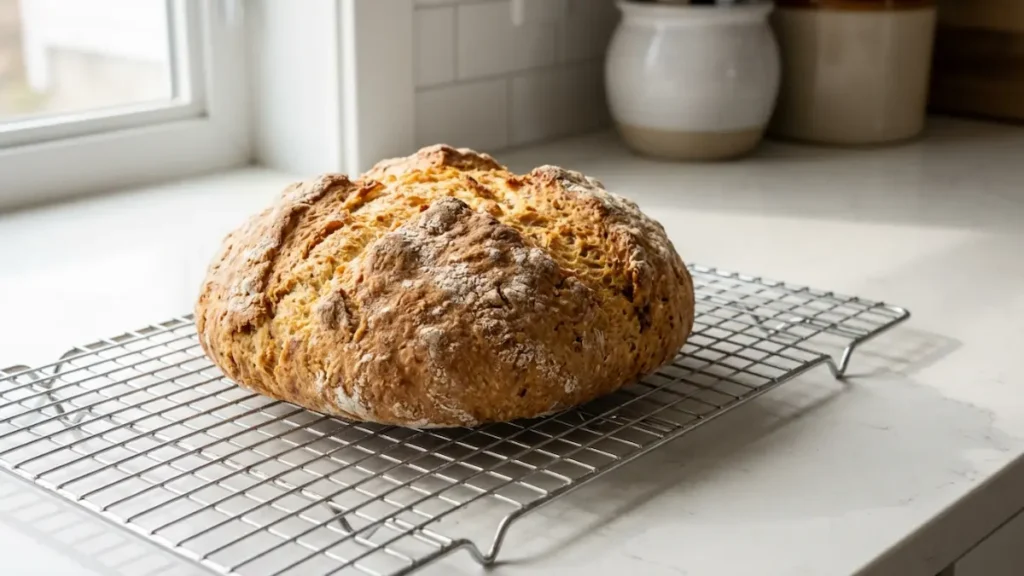
Bake at 400°F for about 35 to 40 minutes. The loaf is done when the crust is deeply golden and the bottom sounds hollow when tapped, or when an instant-read thermometer inserted into the center reads around 195°F. Let the bread cool on a wire rack for at least 20 minutes before slicing so the crumb can set. I know it is hard to wait with that warm, toasty smell filling the kitchen, but slicing too soon makes the center gummy.
Easy Irish Soda Bread Recipe (No Yeast, Ready in 1 Hour)
- Total Time: 55 minutes
- Yield: 1 loaf (about 10 slices)
- Diet: Vegetarian
Description
Traditional Irish soda bread made with buttermilk and no yeast. A crisp crust, tender crumb, and simple ingredients come together in under an hour for busy family dinners.
Ingredients
3 1/2 cups all-purpose flour (you can swap 1 cup for whole wheat flour)
1 teaspoon baking soda
1 teaspoon fine salt
1–2 tablespoons granulated sugar (optional, for a slightly softer, lightly sweet loaf)
1 3/4 cups cold buttermilk, plus up to 2 tablespoons extra if the dough feels dry
1/2–3/4 cup raisins or currants (optional)
1 tablespoon softened butter, for brushing on the warm loaf (optional)
1 teaspoon caraway seeds (optional, for classic deli flavor)
Instructions
1. Preheat the oven to 400°F. Lightly grease a cast iron skillet or baking sheet.
2. In a large bowl, whisk together flour, baking soda, salt, and sugar if using. Stir in raisins or currants if you like a sweeter loaf.
3. Make a well in the center and pour in most of the cold buttermilk. Use a wooden spoon or your hand like a claw to pull flour into the liquid until a shaggy, slightly sticky dough forms.
4. If dry pockets remain at the bottom of the bowl, sprinkle in the last few tablespoons of buttermilk and mix just until everything holds together. Do not overmix.
5. Turn the dough out onto a lightly floured surface. With floured hands, gently shape it into a round about 7 inches across and 1 1/2 to 2 inches high. Do not knead like yeast bread.
6. Place the round onto the prepared pan. Use a sharp knife to cut a deep X across the top, about 1/2 to 3/4 inch deep.
7. Bake for 35–40 minutes, until the crust is deeply golden and the bottom sounds hollow when tapped or an instant-read thermometer in the center reads about 195°F.
8. Transfer the loaf to a wire rack and cool for at least 20 minutes before slicing. Brush the warm crust with softened butter if desired.
Notes
Serve thick slices warm with butter, jam, or alongside creamy soups and stews.
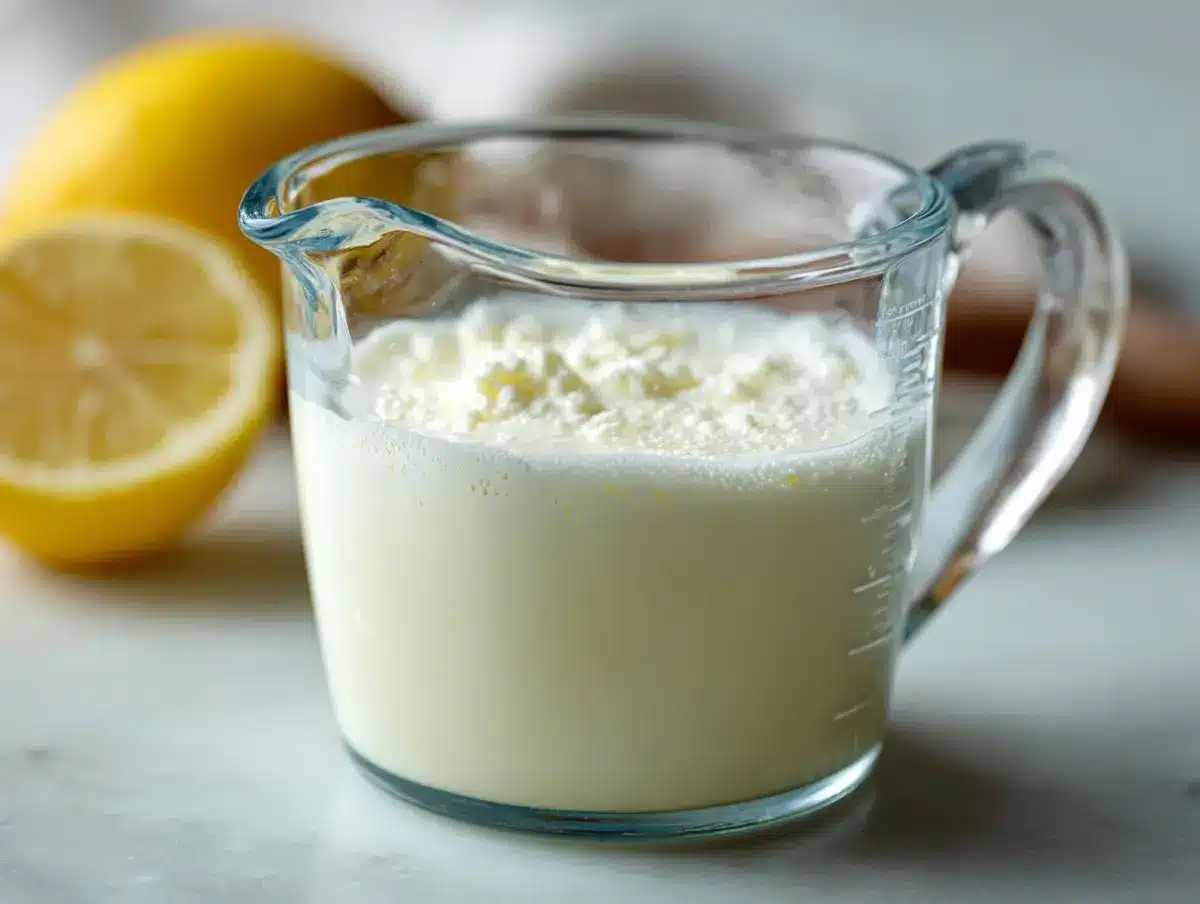
If you do not have buttermilk, make a quick version by stirring 1 tablespoon lemon juice or vinegar into 1 cup of milk, then letting it sit 5–10 minutes.
For a heartier texture, swap up to 1 cup of the all-purpose flour for whole wheat flour and add a tablespoon or two more buttermilk if the dough feels dry.
Leftovers are wonderful toasted for breakfast with honey or jam the next morning.
- Prep Time: 15 minutes
- Cook Time: 40 minutes
- Category: Bread
- Method: Bake
- Cuisine: Irish
Nutrition
- Serving Size: 1 slice
- Calories: 190
- Sugar: 2g
- Sodium: 330mg
- Fat: 2g
- Saturated Fat: 1g
- Unsaturated Fat: 1g
- Trans Fat: 0g
- Carbohydrates: 38g
- Fiber: 1g
- Protein: 6g
- Cholesterol: 5mg
Keywords: irish soda bread recipe, traditional irish soda bread recipe buttermilk, simple irish soda bread recipe, no yeast bread, irish brown bread recipe
Irish Soda Bread vs Brown Bread vs American-Style Loaf
Once you fall in love with this easy loaf, it helps to know where it sits among all the soda bread variations you see around St. Patrick’s Day. Here is how traditional soda bread compares to Irish brown bread and sweeter American-style versions inspired by Irish recipes. For a deeper dive into whole grain benefits and fiber, the Harvard T.H. Chan whole grains guide outlines how whole wheat and oats support digestion and fullness.
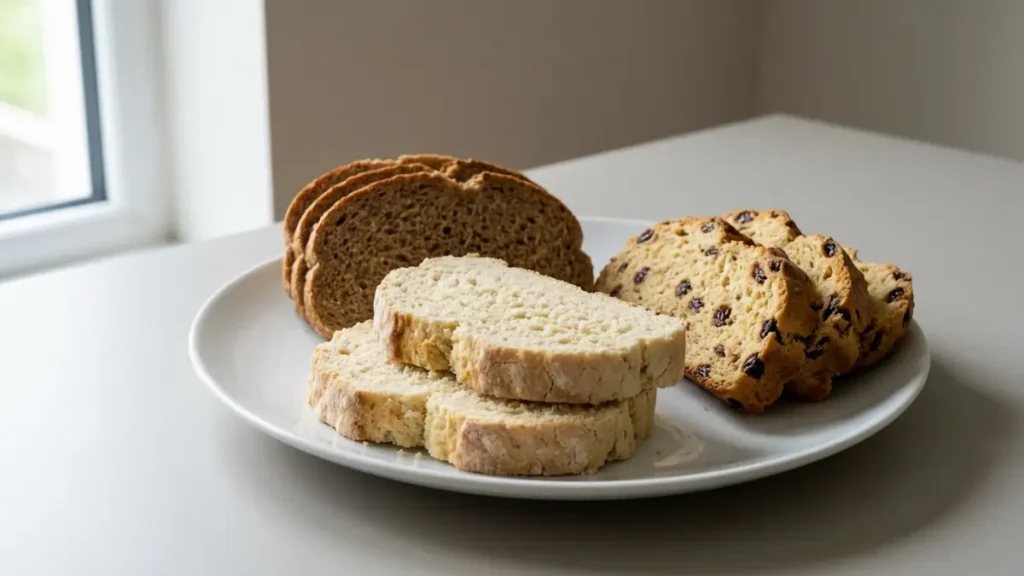
| Type | Flour | Sweetness | Texture | Best For |
|---|---|---|---|---|
| Traditional Irish Soda Bread | All-purpose or mixed with some whole wheat | Very low (little or no sugar) | Crisp crust, tender but sturdy crumb | Soups, stews, everyday table bread |
| Irish Brown Bread | Mostly whole wheat or coarse wholemeal | Low | Hearty, slightly denser, more nutty flavor | Breakfast toast, smoked salmon, cheese boards |
| American-Style Soda Bread | All-purpose flour | Medium (more sugar, often raisins) | Softer, more cake-like | Tea time, brunch, holiday dessert tables |
Why Irish Soda Bread Stays Soft with Buttermilk
The magic of Irish soda bread is what happens between the baking soda and the buttermilk. Baking soda is a base that needs acid to activate. Buttermilk brings both acidity and moisture, so when you stir them together, tiny bubbles of carbon dioxide form inside the dough. Those bubbles expand quickly in the hot oven, giving you lift and a tender crumb without a long rise. Using cold buttermilk slows the reaction just enough so more of that lift happens in the oven instead of the mixing bowl.
The second reason this loaf stays soft is minimal handling. Quick breads like soda bread want you to work fast and stop early. Overmixing develops gluten the same way kneading yeast dough does, but here there is no long ferment to relax it again. A few extra stirs can shift your loaf from pleasantly chewy to tough. Aim for a shaggy dough that barely comes together. If you want extra softness, brushing the warm crust with a tablespoon of butter after baking traps a little steam and keeps the crust from getting too hard, similar to the towel-over-bread trick many Irish bakers use at home.
Finally, flour choice matters. All-purpose flour gives a classic, versatile crumb. Swapping in some whole wheat flour brings more flavor and fiber, but going all whole wheat without adjusting the liquid can make the loaf dry. Whole wheat absorbs more buttermilk, so if you use a 50/50 mix you may need an extra tablespoon or two of liquid. A quick check: when you press the raw dough with a fingertip, it should feel soft and slightly tacky, not dry or stiff.
Irish Soda Bread for Everyday Family Meals
In our house, Irish soda bread is less about St. Patrick’s Day and more about rescue dinners. When soup is on the stove and the kids suddenly ask for “real bread,” this is what I reach for. It pairs beautifully with creamy soups like our creamy vegetable soup and hearty stews like our hearty soup. It also makes wonderful next-day toast for breakfast with a drizzle of honey.
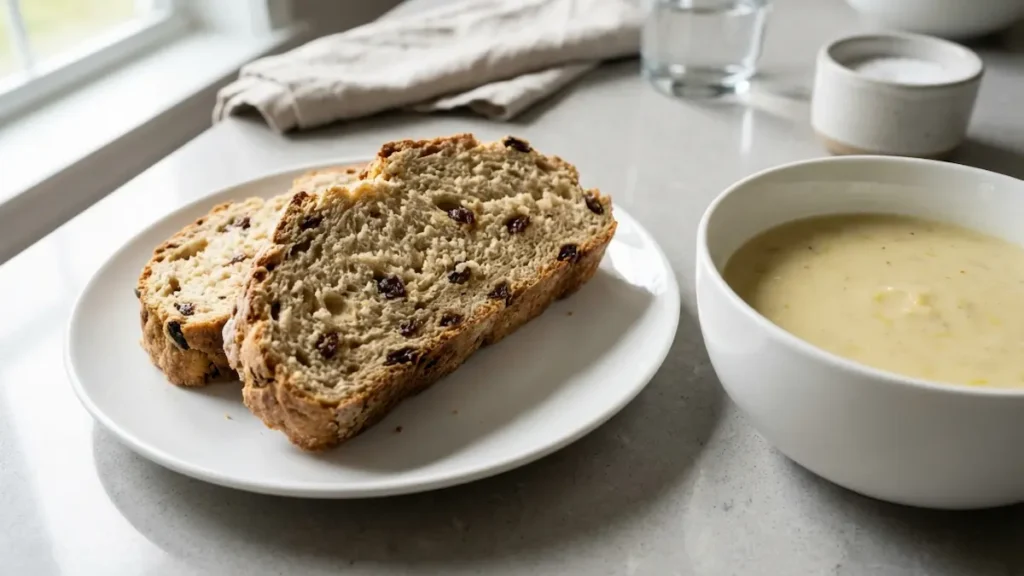
If you do not keep buttermilk in the fridge, you can still make this recipe tonight. Our step-by-step guide on how to make buttermilk from milk walks you through the simple vinegar-or-lemon plus milk trick I use all the time. Once you know that shortcut, Irish soda bread turns into a true pantry bread you can pull together anytime. I’ve made this 20 times with homemade buttermilk, and it works just as well as store-bought in this loaf.
5 Mistakes That Ruin Irish Soda Bread
These are the exact mistakes I made before this recipe became a calm, reliable part of our dinner routine.
Mistake 1: Overmixing the dough. The dough should look slightly shaggy, not silky smooth. Overmixing develops gluten and turns the crumb dense and tough. Stir just until no big dry pockets remain, then stop. If you find yourself kneading in the bowl, you have gone too far.
Mistake 2: Adding too much buttermilk. When the dough feels a bit sticky, it is tempting to pour in more liquid to get everything to cooperate. Too much buttermilk makes the loaf spread and bake up gummy. Add the last few tablespoons slowly, only if pockets of dry flour remain. The dough should be soft and slightly tacky but still able to hold a round shape.
Mistake 3: Using warm buttermilk. Warm liquid activates the baking soda the moment it hits the bowl, which means some of the lift is gone before you even get the bread into the oven. Cold buttermilk keeps the reaction calmer until the heat of the oven hits, giving you better rise. I take mine straight from the fridge; no need to bring it to room temperature.
Mistake 4: Baking at the wrong temperature. Too low and the bread dries out before it browns. Too high and the crust burns while the center stays raw. Stick with 400°F and make sure your oven is fully preheated. If the crust is browning too quickly near the end, you can tent the loaf loosely with foil. For general home-oven baking tips and temperature safety, the FDA safe food handling guide is a good kitchen reference.
Mistake 5: Slicing the bread too soon. I used to cut into the loaf as soon as it came out of the oven because my kids were hovering nearby. Every time, the center looked a little doughy, even though it was fully baked. Letting the bread cool at least 20 minutes gives the crumb time to set so slices stay neat and moist instead of smearing and drying out. It is the hardest part of the recipe, but it makes a huge difference.
If you enjoy learning from my kitchen experiments, our 3-ingredient banana oatmeal cookies include the exact tweaks I had to make so they stay soft without any added sugar, and they pair wonderfully with a slice of warm soda bread and tea.
Frequently Asked Questions
What is the secret to a soft soda bread?
Is there a difference between soda bread and Irish soda bread? How do you make the perfect Irish soda bread? What is the best flour for Irish soda bread?
What is the secret to a soft soda bread?
The secret to soft soda bread is the balance of cold buttermilk, just enough baking soda, and very gentle mixing. Use cold buttermilk so most of the lift happens in the oven, and stop stirring as soon as the dough comes together in a shaggy ball. Adding a little butter on top after baking or covering the warm loaf with a clean towel also helps soften the crust without losing that lovely chew.
Is there a difference between soda bread and Irish soda bread?
Yes. “Soda bread” can describe any quick bread that uses baking soda and an acid instead of yeast, including American-style loaves with more sugar and mix-ins. Irish soda bread specifically refers to the traditional Irish version made with flour, baking soda, salt, and buttermilk, sometimes with a little sugar or wholemeal flour added. The flavor is more savory and the texture is more bread-like than cake-like.
How do you make the perfect Irish soda bread?
Perfect Irish soda bread starts with fresh baking soda, cold buttermilk, and properly measured flour. Preheat the oven fully, mix the dough lightly until it just comes together, shape it into a round, and cut a deep cross in the top. Bake at 400°F until the loaf is golden and sounds hollow when tapped. Let it cool at least 20 minutes before slicing so the crumb can set.
What is the best flour for Irish soda bread?
All-purpose flour is the most forgiving choice for Irish soda bread and gives a soft, tender crumb. Many traditional Irish recipes blend white and wholemeal flour for a heartier texture and more flavor, but going all whole wheat can make the loaf dense unless you add a bit more buttermilk. For your first loaf, use all-purpose flour, then experiment by swapping in one cup of whole wheat flour if you like a nuttier, more rustic bread.
The Bottom Line
Irish soda bread is one of those recipes that proves you do not need yeast or hours of rising time to put real bread on the table. A bowl, a spoon, and a few careful minutes are enough. Get the buttermilk cold, measure the baking soda accurately, mix gently, and bake hot. Do that and you will pull a golden, crackly loaf from the oven that slices beautifully and disappears faster than any store-bought bread.
My kids ask for this every single week now, usually with soup or as thick toast with jam and a cup of boiled apple tea. If you want something cozy to sip alongside your slice, try our warm boiled apple tea next. It turns a simple weeknight dinner into a little family ritual.