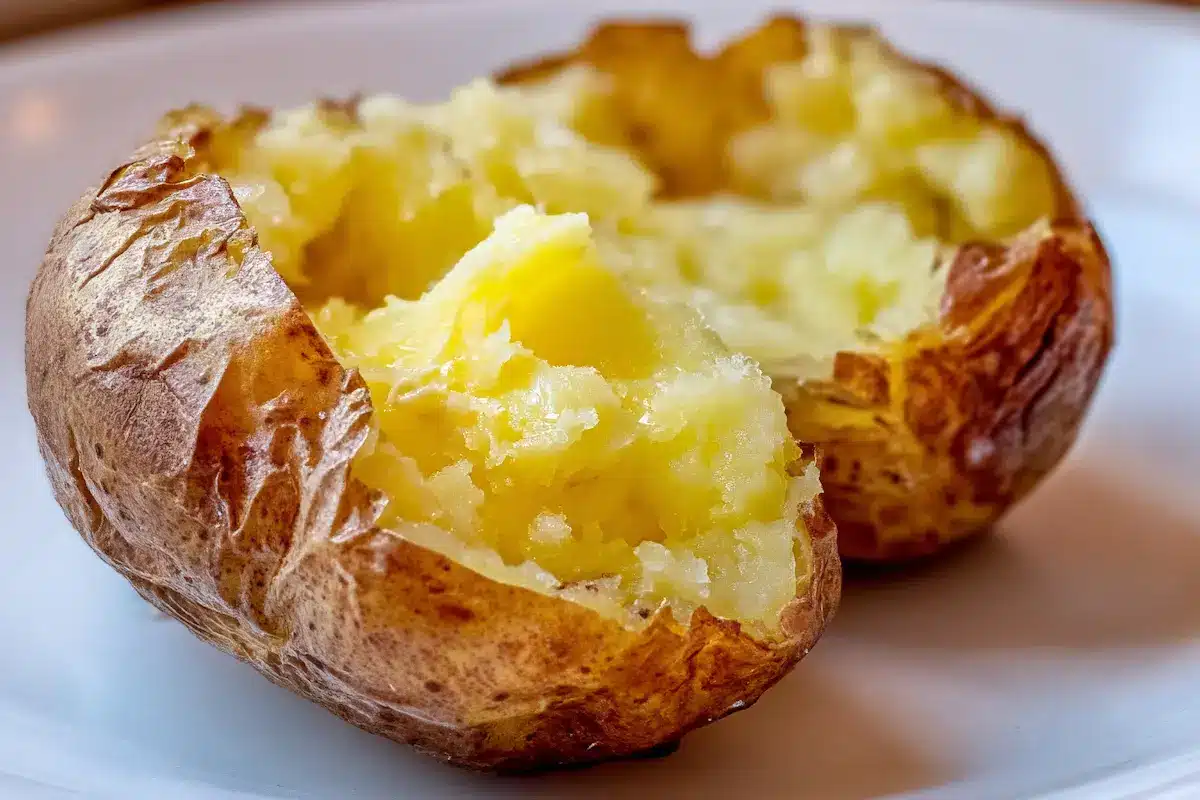
A classic jacket potato is a British-style baked potato with crackling crisp skin and a fluffy interior, usually served split open and piled high with simple fillings like butter, cheese, beans or tuna. In the UK, this cosy dish is an everyday favourite, filling enough to be a full meal yet simple enough for busy weeknights.
In this guide, you’ll learn how to make an English jacket potato in the oven, how to cook fluffy baked spuds in the air fryer and on the barbecue, plus ideas for generous toppings and British jacket potato fillings. We’ll walk through a French-inspired recette jacket potatoes thon (tuna topping) and easy recette loaded potatoes, then look at whether baked potatoes fit into blood sugar and cholesterol-friendly eating plans, with links to NHS and scientific guidance.
If you love potato sides, you may also enjoy our recipes for duchess potatoes, roasted sweet potato rounds and cozy potato soup as warm companions to this comforting dish.
Key takeaways
- For the crispiest skin, bake dry potatoes at a fairly high temperature and salt the outside generously.
- Use floury baking varieties such as russet, Maris Piper or King Edward for a fluffy centre that doesn’t go waxy.
- Air fryers and barbecues give you the same fluffy interior with different textures and flavours.
- Toppings like beans, tuna, cottage cheese and salad make this meal more filling and help balance blood sugar.
- Keeping the skin on increases fibre, which supports digestion and heart health.
Classic English jacket potato (oven method)
For a traditional British baked potato with a crisp “jacket”, the key is dry, well-scrubbed spuds, a generous rub of oil and salt, and enough time at a fairly high oven temperature so the skins go really crunchy while the inside steams to fluffy perfection. Cookbooks in the UK typically recommend floury baking potatoes such as Maris Piper or King Edward baked directly on the oven rack or a tray for roughly 1 to 1½ hours, depending on size.
Ingredients

- 4 medium baking potatoes (all similar size)
- 1–2 tablespoons olive oil or neutral oil
- Sea salt
- Freshly ground black pepper (optional)
- Butter (or dairy free alternative), to serve
Ingredient notes & substitutions
Potatoes: Choose floury, starchy varieties for the best texture. Russet, Maris Piper and King Edward all work beautifully. Waxy types like Charlotte or baby potatoes roast well but do not give the same fluffy interior when you cut them open.
Oil and fat: A thin coating of oil helps the skin crisp and carry salt and seasoning. You can use olive oil, sunflower oil or avocado oil. For extra richness, finish with butter or a dairy-free spread right after baking so it melts into the centre.
Seasoning: Plain salt and pepper are classic, but you can rub the skins with garlic powder, smoked paprika or dried herbs if you like a little more flavour. Keep the seasonings fairly simple so they do not fight with your toppings.
Step by step method (oven)
- Heat the oven to 200 °C (400 °F), or 220 °C / 200 °C fan for extra crisp results.
- Scrub the potatoes well and dry thoroughly with a clean tea towel. Any surface moisture will fight against crisp skin.
- Prick each one 5–6 times all over with a fork to let steam escape and prevent bursting.
- Rub the potatoes with a little oil so the skins go golden and crisp, then sprinkle generously with sea salt.
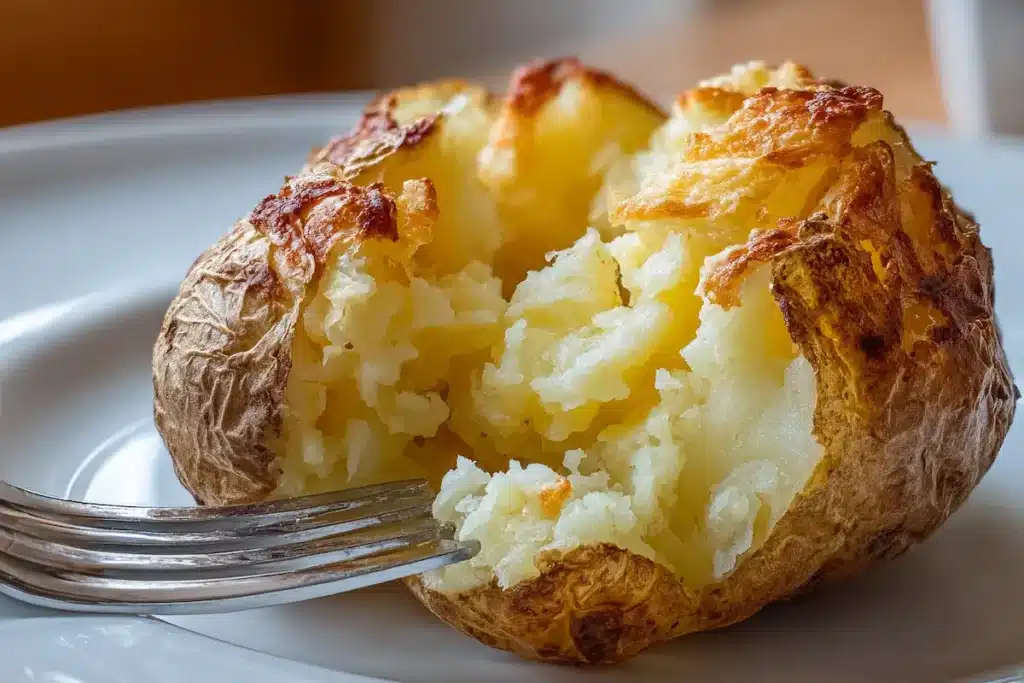
- Place them directly on the oven rack or on a baking tray and bake for about 60–75 minutes, depending on size, until the skins are very crisp and the centres are soft when you squeeze them with an oven glove or pierce with a knife.
- To serve, slice a cross on top of each potato, squeeze the ends to fluff the inside, add a knob of butter, season and top with your favourite fillings.
If you enjoy elegant sides made from the same kind of fluffy interior, try our duchess potatoes recipe made with piped mashed potato.
Oven timing tips
Smaller potatoes can be ready in as little as 50 minutes, while very large ones may need up to 90 minutes. If the outside is browning too quickly, move the tray to a lower shelf. If the skins are not crisp enough by the time the flesh is soft, give them a final 10-minute blast at a slightly higher temperature.
You can also par-cook the spuds in the microwave for 5–8 minutes, then finish them in the oven for 25–30 minutes. The texture is slightly different but still fluffy, and this shortcut is handy when you want a midweek dinner on the table faster.
Print
Jacket Potato Recipe: Crispy British Baked Potatoes Guide
- Total Time: 70 minutes
- Yield: 4 servings
Description
Easy jacket potato recipe with crispy skins and fluffy centres. This British-style baked potato is perfect for family dinners, with simple toppings and air fryer or barbecue options.
Ingredients
4 large russet potatoes, scrubbed and dried
2 tablespoons olive oil or neutral oil
1 teaspoon kosher salt, plus more to taste
4 tablespoons unsalted butter, divided
Freshly ground black pepper, to taste
Optional toppings: shredded cheddar cheese, baked beans, tuna salad, chopped chives
Instructions
1. Heat the oven to 400 °F. Line a baking sheet with foil if you like easier cleanup.
2. Scrub the potatoes under cool water, then dry them completely with a clean kitchen towel.
3. Prick each potato all over with a fork 5–6 times so steam can escape while they bake.
4. Rub the potatoes all over with olive oil, then sprinkle with kosher salt so the skins get flavorful and crisp.
5. Arrange the potatoes directly on the oven rack or on the prepared baking sheet, leaving a little space between each one.
6. Bake for about 60 minutes, or until the skins are very crisp and a knife slides easily into the centre. Extra large potatoes may need 10–15 minutes more.
7. Transfer the potatoes to plates. Slice a cross on top of each one, then gently squeeze the ends to fluff the inside.
8. Add 1 tablespoon butter to each jacket potato, season with salt and pepper, and finish with your favourite toppings such as cheese, beans or tuna salad.
Notes
For extra crispy skins, bake the jacket potatoes directly on the oven rack and give them an extra 10 minutes if they still feel firm in the centre.
Leftover jacket potatoes keep in the refrigerator for up to 2 days. Reheat in a 375 °F oven or air fryer until hot in the middle.
Turn this jacket potato recipe into loaded potatoes by scooping out the flesh, mixing it with cheese and scallions, then stuffing and baking again until golden.
Serve with a simple green salad or steamed vegetables to balance the meal.
- Prep Time: 10 minutes
- Cook Time: 60 minutes
- Category: Dinner, Side Dish
- Method: Bake
- Cuisine: British
Nutrition
- Serving Size: 1 jacket potato
- Calories: 270
- Sugar: 2g
- Sodium: 25mg
- Fat: 12g
- Saturated Fat: 7g
- Trans Fat: 0g
- Carbohydrates: 37g
- Fiber: 4g
- Protein: 4g
- Cholesterol: 20mg
Keywords: jacket potato, jacket potatoes air fryer, english jacket potato, british jacket potato fillings, jacket potatoes barbecue, baked potato recipe, crispy baked potatoes, loaded potatoes recipe, tuna jacket potato, easy jacket potato
Jacket potato recipe in air fryer (jacket potatoes air fryer)
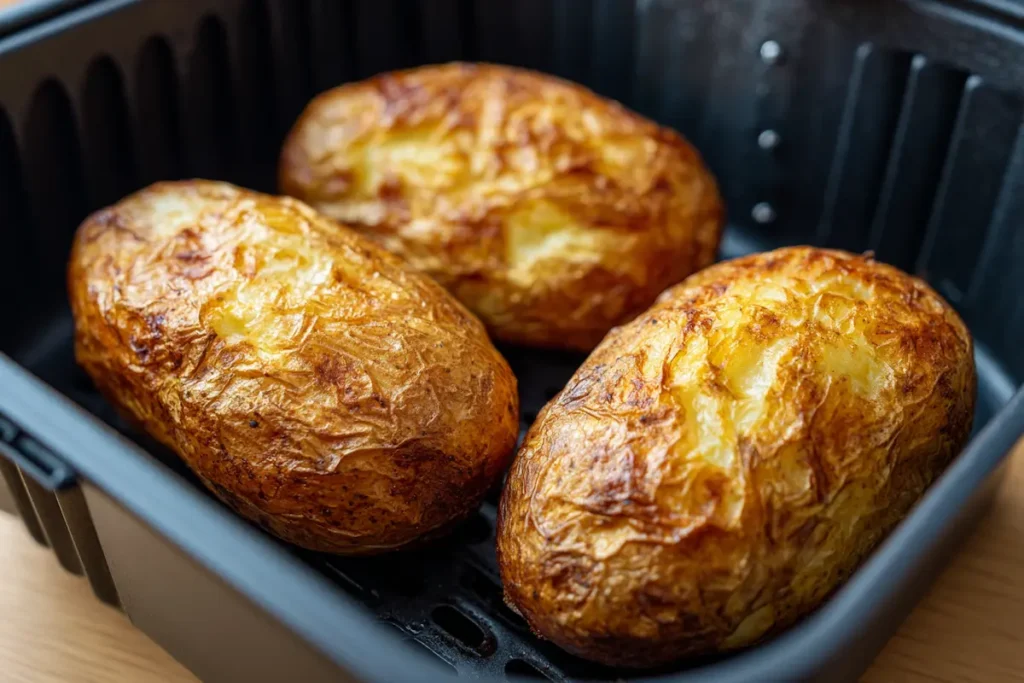
If you’re short on time, an air fryer version gives you crispy skins and tender centres with less waiting. Many home cooks in the UK cook baking potatoes at about 180–200 °C in the air fryer for 45–55 minutes, flipping halfway, and you can cook several at once, which is perfect for family dinners.
Basic air fryer baked potatoes
- Wash, scrub and dry 2–4 baking potatoes, then prick all over with a fork or skewer.
- Rub all over with a little olive oil and sprinkle with salt and pepper if you like.
- Place in the air fryer basket at 200 °C and cook for about 45–55 minutes, turning halfway, until the skins are crisp and a knife slides easily into the centre.
- Split, fluff and add fillings as you would for the oven method.
Some air fryer guides suggest starting at a slightly lower temperature such as 160 °C and checking doneness after around 50 minutes, especially if your potatoes are very large or your air fryer runs hot. Getting to know your own machine will help you find the sweet spot.
Jacket potatoes on the barbecue (jacket potatoes barbecue)
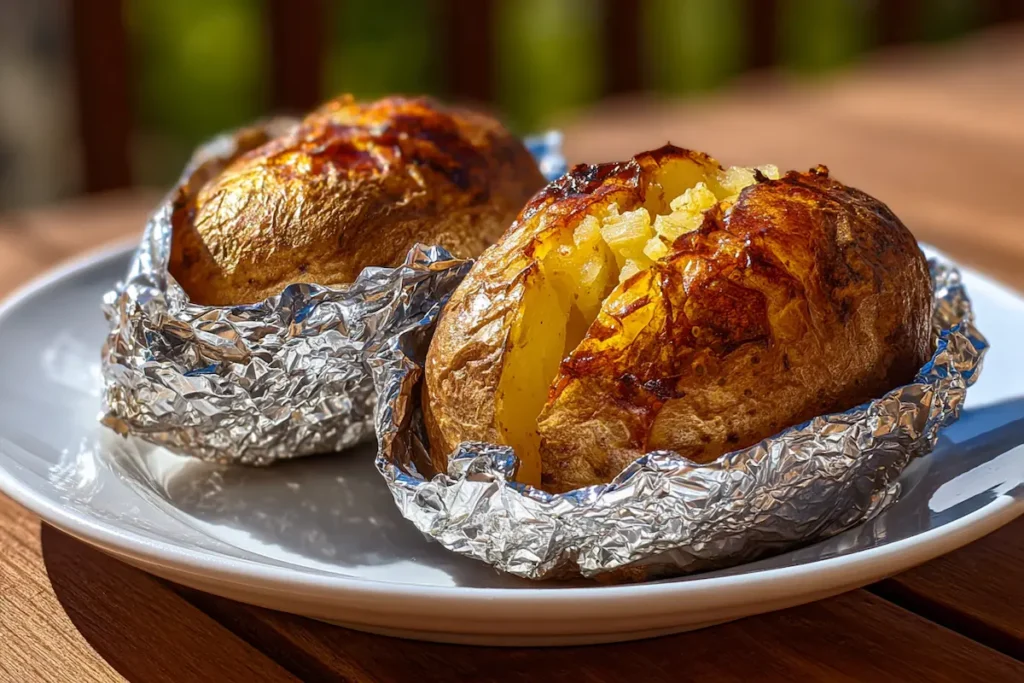
For summer gatherings or bonfire night, barbecue-baked potatoes are easy and delicious. The simplest approach is to wrap each one in foil and cook it in hot embers or over indirect heat on the grill for 45–60 minutes, turning occasionally, until the inside is soft and the skin is crisp.
BBQ baked potatoes (foil method)
- Heat your barbecue until you have very hot embers and no tall flames, or set up a grill for indirect heat at roughly 180–200 °C (350–400 °F).
- Scrub and dry 4 baking potatoes, prick with a fork, then rub with butter or oil and a pinch of salt.
- Wrap each potato tightly in two layers of foil to protect it from scorching and seal in moisture.
- Bury the wrapped potatoes in the embers or place them over indirect heat on the grill, turning every 20–30 minutes, for about 45–60 minutes until very tender.
- Carefully unwrap, slice open and top with butter, cheese, ham or baked beans for a classic bonfire treat.
When you cook on the grill, aim for indirect heat and moderate temperatures so the skins do not burn before the centres are done. Moving the potatoes to a cooler zone if they brown too fast will help you keep both texture and flavour under control.
British jacket potato fillings and loaded potatoes
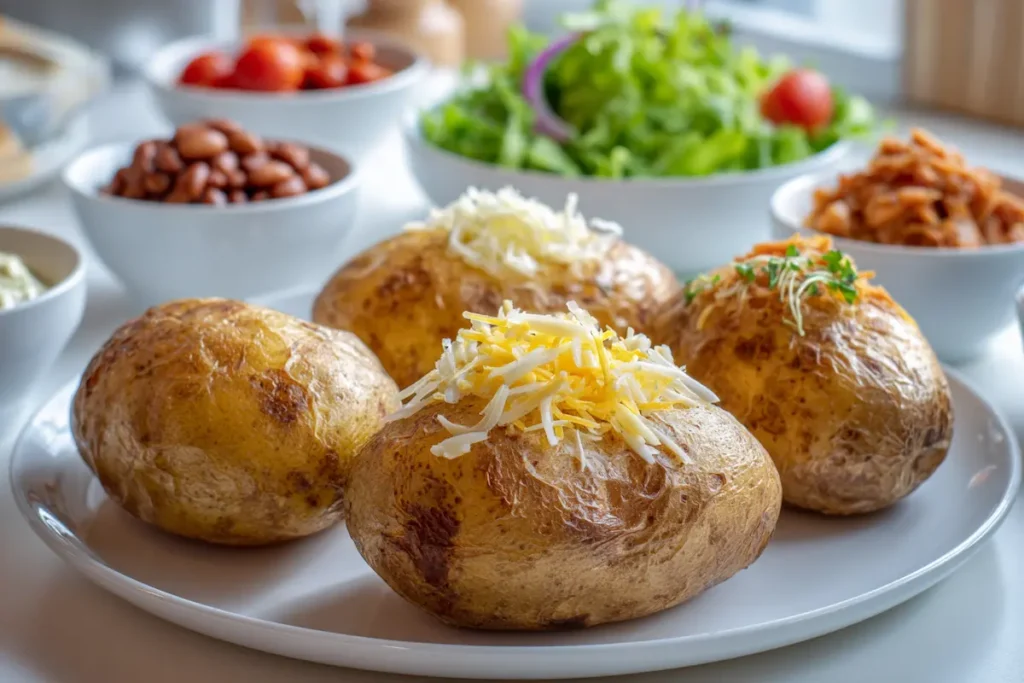
What makes this dish special is the toppings. In the UK, traditional British jacket potato fillings include butter, cheese and baked beans, tuna mayo, coleslaw and various cheesy or meaty mixes, while some recipes turn them into loaded potatoes by scooping out and mixing the flesh with extra ingredients before baking again.
Classic fillings
- Cheese and beans: A knob of butter, grated cheddar and hot baked beans create a filling, budget-friendly meal that is loved in British cafés and school canteens.
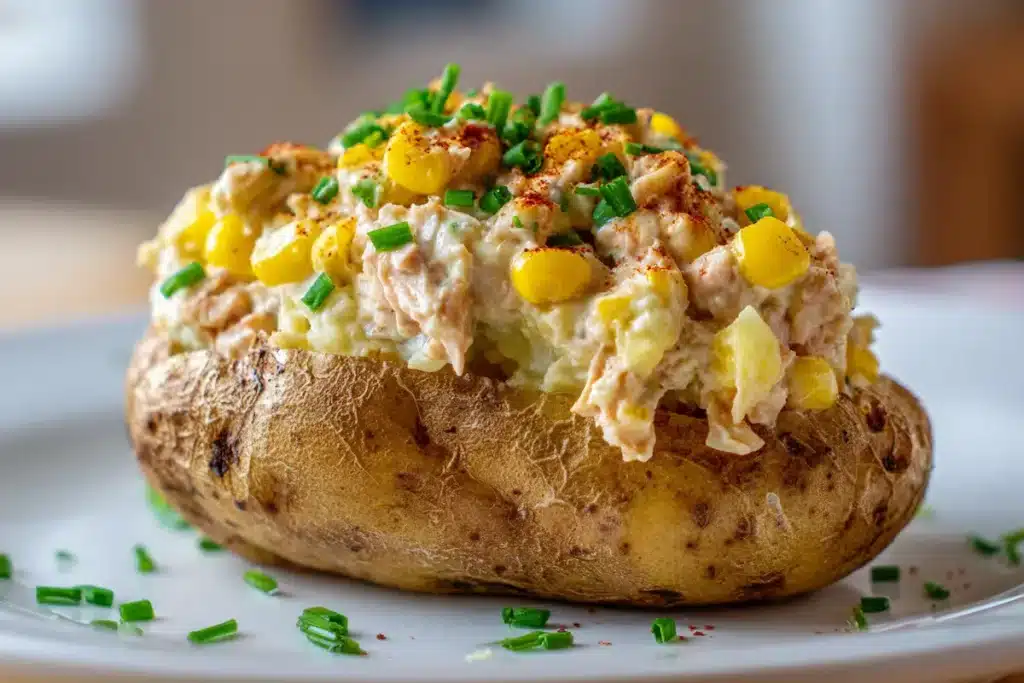
- Tuna sweetcorn (recette jacket potatoes thon): Mix canned tuna with a little mayo, sweetcorn and seasoning, then pile onto the fluffed potato for a protein-rich, French search–friendly recette jacket potatoes thon idea that also helps lower the glycaemic impact thanks to added protein.
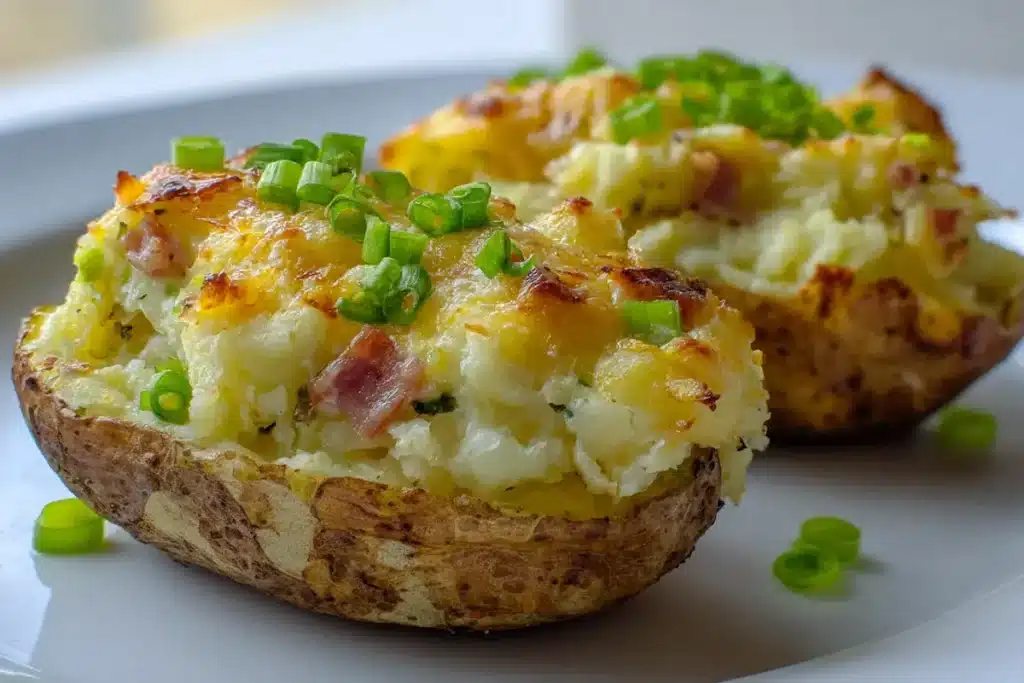
- Cheesy loaded potatoes: Mash the scooped-out potato with cream cheese or cheddar, spring onion and a little milk or butter, then spoon back into the skins and bake again until golden for an easy recette loaded potatoes style side.
- BBQ or chilli toppings: Try leftover chilli, BBQ pulled meat or veggie chilli, then finish with cheese and a spoonful of yogurt.
For more potato-forward comfort food, you can try our creamy potato soup, or combine baked potatoes with a side of ground beef and sweet potato for a heartier meal.
Serving ideas & batch cooking
These potatoes are just as good for lunch the next day. Bake a full tray, let the extras cool, then chill them and reheat in the oven or air fryer with fresh toppings. You can also scoop out the centres and use them as the base for fishcakes, mashed potato pancakes or a quick hash with leftover vegetables and eggs.
For packed lunches, chill the cooked potatoes, slice them open, add a spoonful of tuna, cottage cheese or bean salad and wrap in foil. They will stay soft and satisfying, and you can enjoy them at room temperature or reheat briefly in a microwave at work if you have one available.
Are jacket potatoes healthy?
Plain baked potatoes with the skin on can be a nutritious part of a balanced diet, especially when cooked with minimal added fat and topped with protein and fibre-rich ingredients. The NHS classifies potatoes as a starchy carbohydrate and highlights them as a source of energy, fibre, B vitamins, potassium and vitamin C, particularly when eaten with the skins. You can read more on the official page about starchy foods and carbohydrates.
Official healthy eating guidance suggests choosing potatoes that are boiled, baked, mashed or roasted with only a small amount of fat or oil and limited salt, rather than fried options like chips. Leaving the skin on increases fibre, which helps digestion and contributes to lowering cholesterol and supporting heart health. You can find more practical advice in NHS-linked PDFs such as “Lowering your cholesterol – first steps” (PDF), which emphasises fibre-rich foods including baked or boiled potatoes with their skins.
Because potatoes are high in starch and have a relatively high glycaemic index, they can raise blood sugar, especially in large portions or when eaten alone. Research on potato intake and type 2 diabetes risk finds that higher intakes, particularly of fried potatoes, are linked with a modestly higher risk, while balanced diets rich in whole grains and vegetables are protective. Dietitians often recommend combining a modest portion of baked potato with lean protein, healthy fats and non-starchy vegetables to keep meals satisfying and more blood-sugar friendly.
Meal prep and portions for everyday life
Potatoes are one of the easiest foods to batch cook, and understanding portions helps you enjoy them regularly without overdoing carbohydrates. Many diabetes and heart-health leaflets suggest visual guides such as using your fist or the palm of your hand to estimate a reasonable serving of starchy foods like bread, rice or potatoes. For most adults, one medium baked potato with the skin, paired with plenty of vegetables and some protein, fits comfortably into a balanced plate.
If you are counting carbohydrates for diabetes management, portion tools can make life easier. NHS trusts often provide printable charts that group foods into small, medium, large and extra-large carbohydrate portions so you do not need to weigh every meal. One example is the “Carbohydrate list for small, medium, large and extra large portions” (PDF), which includes baked potatoes alongside pasta, rice and bread and can be a handy fridge reference if you are learning carb awareness.
For people living with type 2 diabetes, national and local services also publish full booklets on healthy eating patterns. Resources like the NHS Lanarkshire leaflet “Eating Healthy with Diabetes” explain how to spread starchy foods evenly across the day, team them with protein and vegetables and keep an eye on weight, all of which can easily include a medium-sized baked potato as part of main meals.
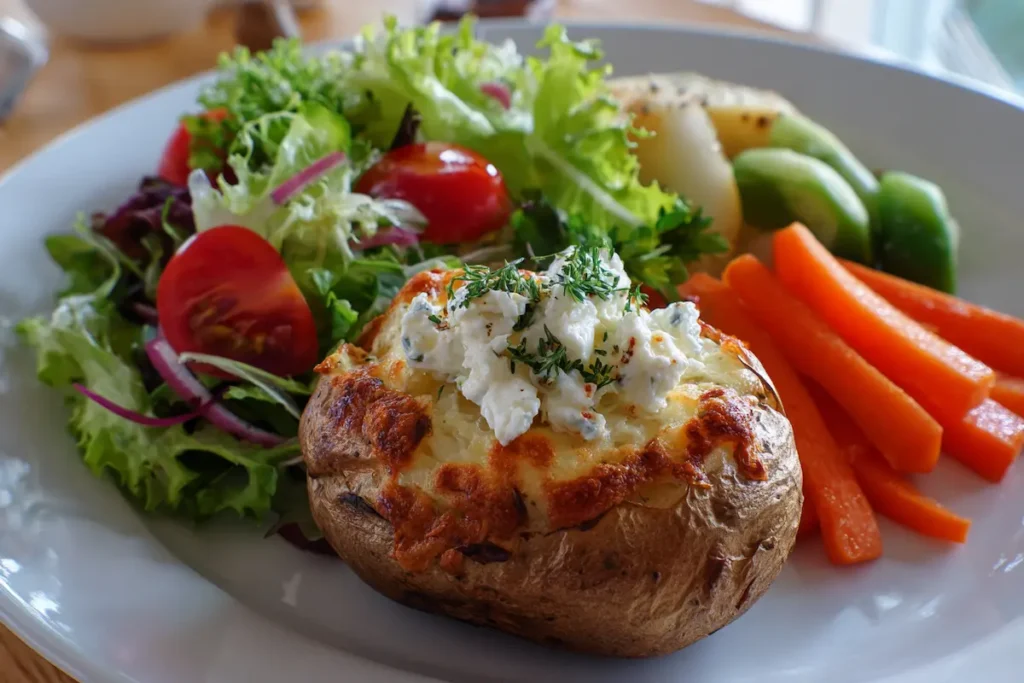
In practice, that might look like building your dinner plate so that roughly one third is potatoes or other starchy carbohydrates, one third is vegetables or salad and one third is lean protein such as fish, beans or chicken. This pattern makes your favourite comfort food feel satisfying while still fitting into long-term health goals.
5 mistakes to avoid with jacket potatoes
- Using the wrong type of potato. Waxy varieties stay firm and can taste dense inside. For a fluffy centre, stick with baking potatoes such as russet, Maris Piper or King Edward, and try to choose ones that are all roughly the same size so they cook evenly.
- Skipping the drying step. Putting damp potatoes straight into the oven leads to soft skin. After washing, always dry them thoroughly with a clean towel and give them a moment in the open air so the surface is completely dry before you add oil and salt.
- Overloading on high-saturated-fat toppings. Butter, cheese and bacon are delicious, but piling them on heavily can work against heart and cholesterol goals. Heart-health leaflets such as hospital diet sheets on cholesterol lowering show how choosing lean protein, beans, extra vegetables and smaller amounts of cheese can make meals kinder to your arteries while still feeling indulgent.
- Portions that are too big for your needs. A huge baking potato with lots of rich toppings can be more energy than you need in one sitting, especially if you are also having dessert or snacks. Using the portion guides mentioned above, or comparing your serving to the size of your fist, can help you serve enough to feel satisfied without slipping into unhelpful overeating habits.
- Reheating improperly. Leaving cooked potatoes at room temperature for long stretches or reheating them until only lukewarm can increase food safety risks. Cool leftovers quickly, refrigerate within two hours and always reheat until they are steaming hot in the centre, preferably in the oven or air fryer rather than undercooking them in the microwave.
FAQs about jacket potatoes
How to cook the best jacket potatoes?
The best results start with floury baking potatoes, scrubbed and dried very well, then pricked all over, rubbed with oil and salt and baked at around 200 °C (400 °F) for 60–75 minutes until the skins are crisp and the insides are fluffy. Splitting them in a cross and gently squeezing before adding butter and fillings gives you that classic British texture.
Are baked potatoes good for diabetics?
Baked potatoes are a starchy food, so people with diabetes need to watch portion size and overall carbohydrate intake. Large studies, including research published in The BMJ, suggest that higher potato intake, especially fried potatoes, may modestly increase diabetes risk, while meals built around vegetables, whole grains and lean proteins are protective. Always follow the advice of your diabetes team.
What is the difference between a baked potato and a jacket potato?
A baked potato and a jacket potato are essentially the same dish: a whole potato baked with the skin on until tender. The main difference is language and style. “Jacket potato” is the common British term and usually implies extra crisp, well salted skins and hearty fillings like cheese and beans, while “baked potato” is more common in North America and often uses toppings such as sour cream, bacon and chives.
Are jacket potatoes good for cholesterol?
Plain baked potatoes with the skin on can support healthy cholesterol levels as part of an overall heart-friendly diet, mostly because the skins provide fibre, which helps reduce LDL cholesterol. NHS-linked cholesterol advice encourages eating at least 30 g of fibre per day from wholegrains, fruit, vegetables and potatoes with their skins, alongside other lifestyle changes.
Can jacket potatoes fit into a heart healthy diet?
Yes, they can fit into a heart-focused eating pattern when they are baked or air fried, the skins are left on and toppings are chosen carefully. Using beans, tuna, cottage cheese, yogurt and vegetables keeps saturated fat lower than options loaded with butter, cream and processed meats. Heart charities often highlight fibre-rich, minimally processed starchy foods as better choices than fried potatoes.
How should I store leftover jacket potatoes?
Allow cooked potatoes to cool quickly, then refrigerate them within two hours in a covered container. They can usually be kept in the fridge for up to two days and reheated thoroughly in the oven or air fryer until steaming hot all the way through. Avoid leaving cooked potatoes at room temperature for long periods, because that increases food safety risks.
Conclusion
A well made jacket potato is one of those simple recipes that feels like a full meal: crispy outer layer, fluffy middle and whatever comforting toppings you love. Once you understand the basics dry potatoes, enough time in the oven or air fryer, and smart fillings you can turn the same method into easy weeknight dinners, barbecue sides or packed lunches.
If you are watching blood sugar or cholesterol, the key is to think about the whole plate rather than just the potato. Keep portions moderate, leave the skin on for fibre and pair it with lean protein, vegetables and lighter toppings. From there, you can explore fun twists like tuna sweetcorn, bean and cheese or loaded potato fillings while still keeping your meal balanced. When you are ready for more cosy ideas, browse our potato collection starting with creamy potato soup for another family favourite.
Disclaimer
The information in this article is for general cooking and nutrition education only and is not a substitute for professional medical advice, diagnosis or treatment. It should not be used to make decisions about your diabetes, cholesterol, heart health or any other medical condition.
Always speak with your doctor, diabetes team or a registered dietitian before making major changes to your diet, especially if you have diabetes, high cholesterol, heart disease or other health concerns. Never ignore or delay seeking professional medical advice because of something you have read online.
Use of any recipes or tips on this website, including these baked potato ideas, is entirely at your own risk. The authors and publishers of this site do not accept responsibility for any loss, injury or damage that may result from following the information provided.