The warm, bright scent of lemons blooming in the oven is one of those small, steady comforts that means home to me. I remember carrying a warm tart into the dining room as my kids wiped their hands on their shirts and laughed, the table a little messy and shining with afternoon light. The crust crackled when we sliced it and the lemon filling sighed, glossy and smooth, and for a moment everything felt gentle and right. If you like a drink with your dessert, a chilled Brazilian Lemonade Mocktail often lives in our fridge when we make this tart, and its sweet, milky citrus makes the whole meal feel like a small celebration.
Why Lemon Curd Tart Still Feels Like Home
A lemon curd tart is simple, but the kind of simple that holds memory. My first tart was an experiment on a cloudy afternoon when I had more lemons than plans. The kitchen smelled of sugar and lemon zest, and as the curd thickened I thought of my mother stirring custard on a little stool so she could reach the pan. That memory guided my hands then and still guides them now.
Food in our house always followed a rhythm. We would cook a savory dinner, sometimes something slow and garlicky like a roast or a pan of asado that my husband likes to make with zucchini and lemon, and then I would reach for something bright and clean for dessert. That contrast—heavy, salty main course and a bright, tart finish—feels balanced and whole. When friends come by and we serve a plate of warm bread and the main dish like asado chicken with lemon zucchini, someone inevitably asks for something sweet after dinner. A lemon curd tart fits that ask every time.
This tart has a way of slowing people down. The first spoonful is sharp and lemony, then it softens into buttery creaminess on the tongue. Kids crowd the table to see the shine on top. Grownups take quiet seconds to savor the brightness. That mix of noise and hush makes this tart feel like a true family moment, not a staged one.
The Story Behind Our Favorite Lemon Curd Tart
I learned to make curds because I wanted a dessert that held up through a family meal. I wanted a filling that could be made ahead and still taste fresh, and a crust that would crack with a satisfying sound. My early attempts had curd that split or that stayed too thin, but with practice I found the rhythm: low heat, constant stir, and patient attention.
One winter I made this tart after a long day of errands. The kids were restless, the house was messy, and I felt like I had nothing left. As the lemon curd came together, the kitchen changed. The room filled with a citrus perfume that shifted the day’s mood. By the time we ate, everyone was calmer. That is the kind of small miracle food can do. It does not fix everything, but it offers a moment of comfort and connection.
I like to think of this tart as forgiving. It does not demand perfect folding or measured silence. You can use a store-bought crust when time is short, or take the long way and make crust from scratch on a rainy afternoon. Both ends lead to the same place: a warm, lemon-scented slice and a table full of stories.
How to Make Lemon Curd Tart
“Every time I stir this pot, it smells just like Sunday at home.”
Making lemon curd is mostly about rhythm and attention. I cook the curd over medium-low heat and stir in a small, steady circle until the mixture thickens and becomes glossy. The sound of the spoon is soft against the pan, and the citrus aroma grows stronger. When butter melts into the warm curd and the heavy cream folds in, the curd becomes rich and smooth.
There is a point where the curd will feel almost like a thin sauce, and then, in a few more heartbeats, it will thicken enough to coat the back of a spoon. That is when I lift the pan from the heat. After straining, the curd chills and finishes setting in the warm crust. If you like the idea of pairing lemon with a savory main, I often find similar comfort in dishes finished with butter and cream, like my go-to creamy lemon butter chicken, which uses that same tender technique to build flavor.
Planning your time
Start with a warm tart shell. While the shell bakes, zest and juice your lemons and separate eggs. The process moves quickly once the curd hits the pan, so have everything in place and within reach. A sieve close by helps you move fast. And if you make the crust in the morning, the whole afternoon feels easier.
Ingredients You’ll Need
1 recipe prebaked tart* (fully baked and still warm)
7 large egg yolks
2 large eggs
1 cup plus 2 tablespoons sugar
⅔ cup fresh lemon juice
¼ cup finely grated lemon zest
Pinch of salt
4 tablespoons unsalted butter (cut into 4 pieces)
3 tablespoons heavy cream (room temperature)
Lemon slices for garnish
A little note on ingredients and small swaps: I often add a splash of vanilla or a whisper of cardamom if I want a cozy aroma, but it is not necessary. Fresh butter gives this its richness. Room temperature cream blends easily and keeps the curd silky. If you like to serve something cool and colorful beside a lemon tart, a pitcher of butterfly pea lemonade makes the table look festive and bright.
Step-by-Step Directions
After baking the tart shell, keep the oven at 375° F. Place the warm shell on a rack and breathe in the lemon-sweet air as you move to the stove.
In a medium bowl, whisk together the egg yolks and eggs until combined. Whisk with a steady, calm rhythm that feels almost meditative.
Add sugar and whisk again. Make sure the sugar dissolves a little into the eggs so the curd will be smooth and not grainy.
Add the lemon juice, lemon zest and salt, then whisk once more (no over-whisking in these steps–just about 10 seconds per addition). The mixture will brighten and smell sharp and fresh.
Transfer mixture to a nonreactive saucepan (stainless steel or enamel, not aluminum or copper). Add the butter pieces and cook over medium-low heat, stirring constantly. Use a wooden spoon or a flexible spatula and keep the motion small and consistent.
Lemon curd is finished when it reaches a thin, sauce-like consistency, about 5 minutes. Stir until glossy and slightly thickened; the edges will look lifted and the center will coat the spoon.
Immediately pour the lemon curd through a fine mesh sieve into a nonreactive bowl. Stir in the heavy cream, then transfer the mixture to the warm prebaked tart shell (see notes). This step keeps the curd silky and removes any stray bits that might have cooked too fast.
Place the filled tart shell on a baking sheet and bake it for 10 to 15 minutes. The tart is done when the edges are set and the center jiggles slightly when gently shaken. The filling will be shiny and opaque and the top will hold a little bounce.
Allow the tart to cool to room temperature, then chill the tart in the refrigerator for 1 hour. Cooling lets the curd finish setting and keeps each slice neat when you cut it.
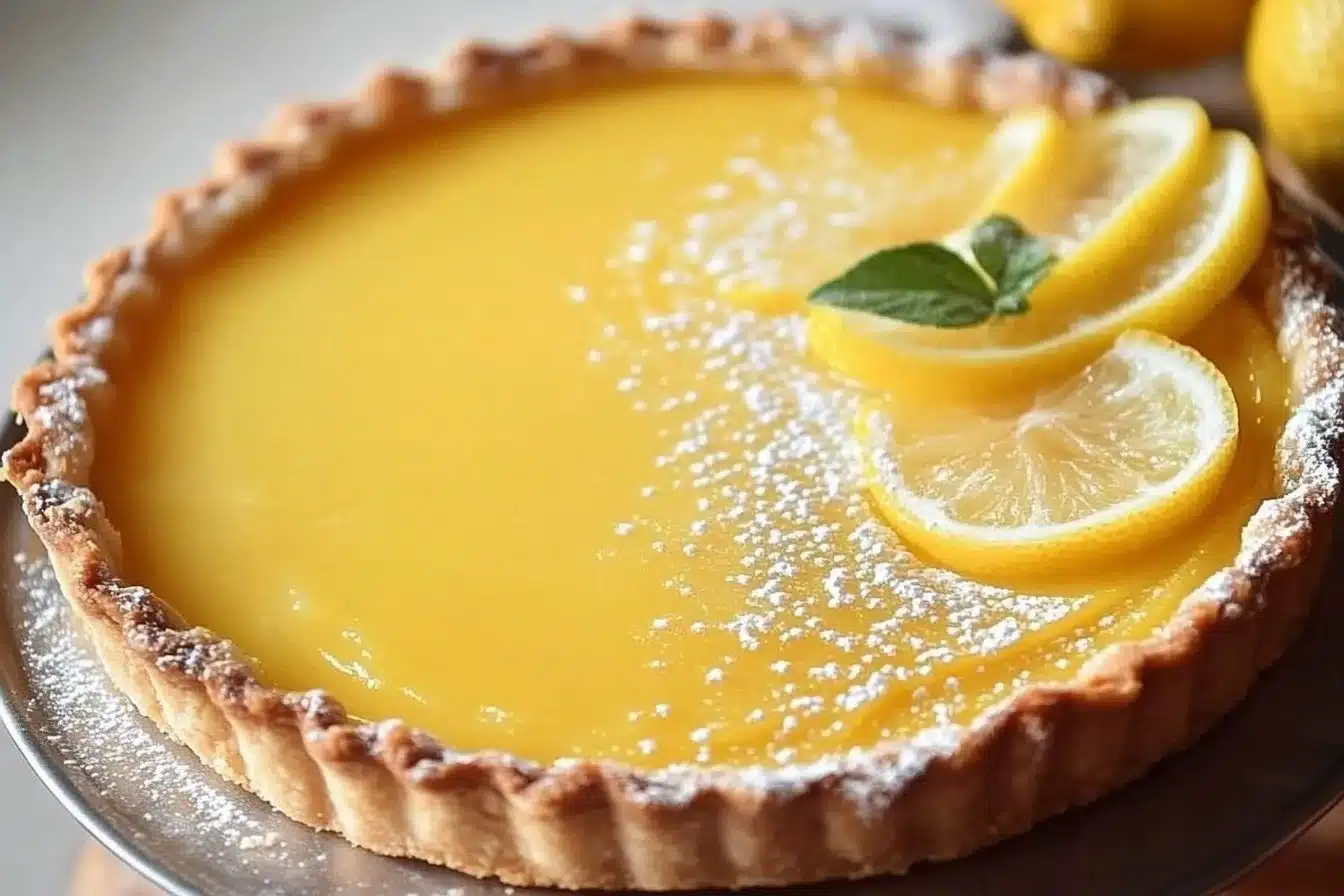
Remove the rim from the tart pan, garnish the tart, slice and serve. Add thin lemon slices or a small dusting of fine sugar if you like, and watch faces light up.
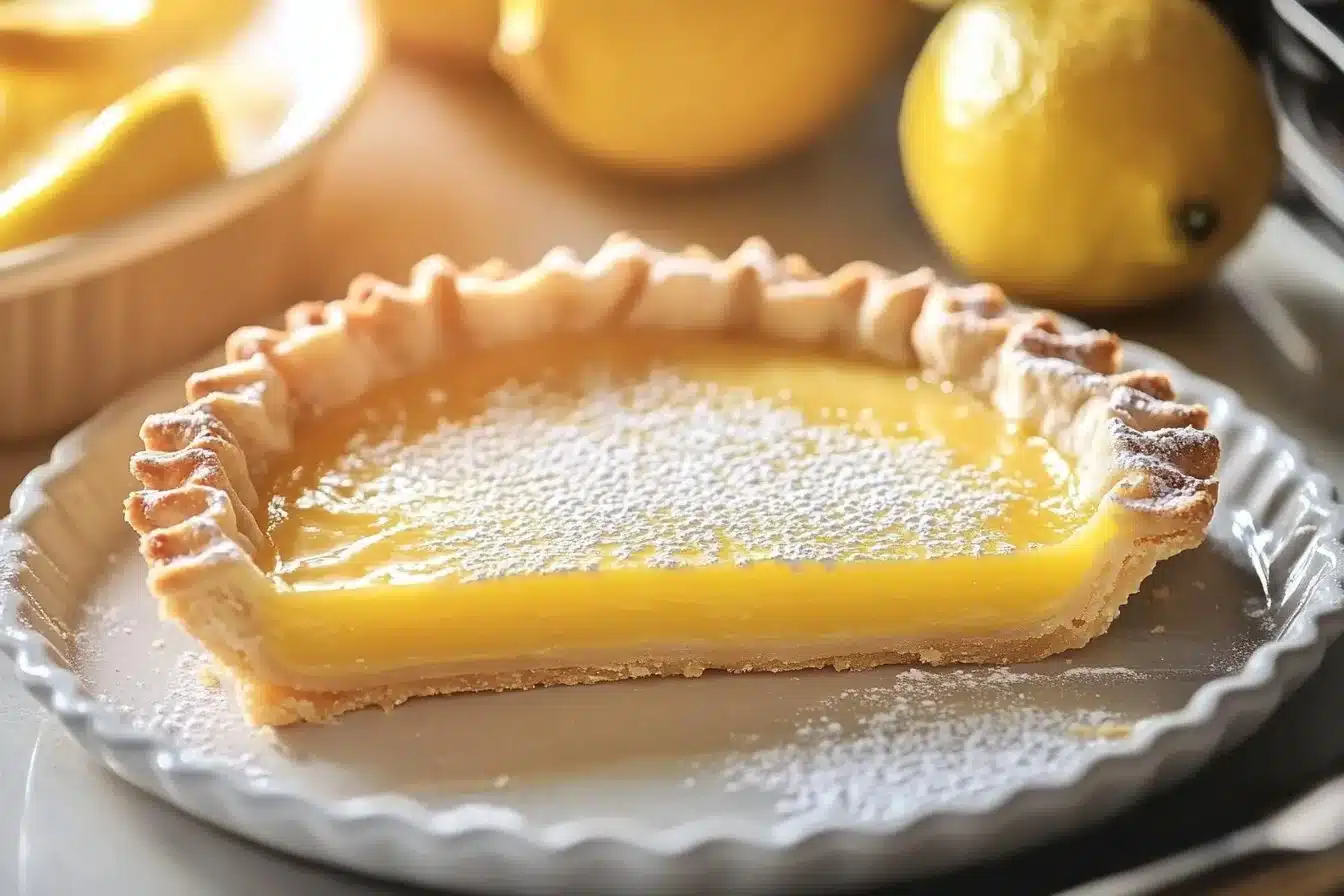
Bringing Lemon Curd Tart Together
The finish matters as much as the cooking. Once the tart is out of the oven, the scent fills the kitchen like someone opening a window to spring. Wait for the tart to cool a little before you slice. If you try to serve it too hot, the filling can be loose and the slices will smear. A chilled hour makes every slice clean and the texture silkier.
I often slide the tart onto a simple white plate so the color pops. Use a sharp knife warmed under hot water and wiped dry for the neatest slices. I make small slices when we have company because the flavor is bright and a little goes a long way. For quiet nights, we keep the slices generous and fork around the table slowly.
Small tools that make a difference
A good fine mesh sieve will pay for itself ten times over in smooth curds and custards. A flexible spatula helps you get every bit of curd into the shell. A tart pan with a removable rim makes the presentation clean and easy. These are small comforts that make the process easier and the result prettier.
Serving Lemon Curd Tart With Family Warmth
We usually serve this tart after a family-style dinner. The table is full of plates and a soft mix of voices. Someone always asks for a small scoop of whipped cream, and someone else prefers it unadorned so the lemon sings alone. I like to set the tart in the center and let people choose their plate and portion. Little traditions matter here: a certain spoon for the children, a chipped china plate for my husband, and a small flourish of lemon slice on the edge.
Pairing drinks and sides is part of how we make the dessert feel like an event. For a summer gathering I might bring out a pitcher of iced tea or a playful drink like 3-ingredient tartar sauce is not a drink of course, but in the same way that small, simple recipes can balance a meal, I often reach for small sauces or dressings for the savory courses that come before the tart. A crisp salad, a pot of coffee, and the bright lemon finish create a satisfying arc from savory to sweet.
When children are involved, we make it a mini ritual. They pick their plates and I let them arrange the lemon slice if they want. The table gets loud and warm and a little messy. Those are the meals that live in memory, all the little hands and the smiles over sugar and lemon.
Tips for Making It Beginner-Friendly
If you are new to custards and curds, do not be afraid. Work in a calm, clear space. Use a medium saucepan so you have room to stir without spilling. Keep the heat at medium-low and resist the urge to speed up the process with high heat. Curds thickened too fast will split or scramble.
If you feel nervous about the eggs, set a bowl of cold water nearby and a sieve ready to strain. If the curd seems to be heating unevenly, lift the pan off the heat briefly and stir. It will still come together with patience. Remember that most home cooks learn by doing. The more you make curd, the more you will learn the small moments when it shifts from thin to ready.
Variations and Small Changes
If you want a sweeter profile, reduce the lemon juice by a tablespoon and add an extra tablespoon of sugar. If you like more tartness, leave the lemon as written and serve smaller slices. You can add a tablespoon of orange juice for a soft citrus blend. A tiny pinch of finely ground cardamom gives a gentle perfume that I sometimes use in winter.
For a lighter custard, reduce the butter by one tablespoon and add a splash more cream. For a richer curd, add an extra yolk but keep careful watch while cooking. Every change will ripple through the texture and flavor, so make small adjustments and see how your family reacts.
Storing Lemon Curd Tart for Tomorrow
Cover the tart lightly with plastic wrap or a cake dome and keep it in the refrigerator. It will store well for up to three days and the flavors will mellow gently. The lemon brightens on the second day in a way that can surprise you, smoothing out the initial sharpness into a rounder, deeper finish.
If you have leftover slices, let them sit at room temperature for 10 minutes before serving so the butter and cream can soften slightly. Do not freeze the tart with the filling set in it; the texture changes and can become grainy. If you want to freeze the curd itself, chill it fully, then spoon it into a freezer-safe container and use within one month. When you thaw it in the fridge, stir it gently and it will come back to life.
If you are sharing this with a friend, tuck a note with reheating tips: remove from the fridge 10 minutes before serving and use a warm knife. Say that the second day is often the most loved, because the flavors settle into a soft, delicious balance that tastes like a quiet afternoon together.
Final Thoughts From My Kitchen
A lemon curd tart is a small thing that keeps giving. It asks for a little time and calm, and it rewards you and your family with a bright, buttery slice of home. I hope this recipe invites you in, whether you make it for a bustling weekend table or a quiet evening for two. Keep lemons on hand and butter in the fridge. Make the curd with patience, and let the kitchen fill with that lemon song.
Print
Lemon Curd Tart
- Total Time: 55 minutes
- Yield: 8 servings 1x
- Diet: Vegetarian
Description
A bright and buttery Lemon Curd Tart that brings warmth and family together with its rich, tart filling and crisp crust.
Ingredients
- 1 recipe prebaked tart (fully baked and still warm)
- 7 large egg yolks
- 2 large eggs
- 1 cup plus 2 tablespoons sugar
- ⅔ cup fresh lemon juice
- ¼ cup finely grated lemon zest
- Pinch of salt
- 4 tablespoons unsalted butter (cut into 4 pieces)
- 3 tablespoons heavy cream (room temperature)
- Lemon slices for garnish
Instructions
- Keep the oven at 375° F after baking the tart shell.
- Whisk together the egg yolks and eggs in a medium bowl until combined.
- Add sugar and whisk until dissolved for a smooth curd.
- Incorporate lemon juice, lemon zest, and salt, whisking briefly.
- Transfer the mixture to a nonreactive saucepan and add butter pieces, cooking over medium-low heat.
- Stir constantly until the curd thickens and reaches a sauce-like consistency, about 5 minutes.
- Pour the lemon curd through a fine mesh sieve into a bowl, stir in heavy cream, and transfer to the tart shell.
- Bake for 10 to 15 minutes until edges are set and center jiggles slightly.
- Cool to room temperature, then chill in the refrigerator for 1 hour.
- Slice and serve, garnishing with lemon slices if desired.
Notes
For added flavor, consider a splash of vanilla or a pinch of cardamom. Serve chilled for the best texture.
- Prep Time: 30 minutes
- Cook Time: 25 minutes
- Category: Dessert
- Method: Baking
- Cuisine: American
Nutrition
- Serving Size: 1 slice
- Calories: 350
- Sugar: 28g
- Sodium: 200mg
- Fat: 18g
- Saturated Fat: 10g
- Unsaturated Fat: 6g
- Trans Fat: 0g
- Carbohydrates: 40g
- Fiber: 1g
- Protein: 6g
- Cholesterol: 90mg
Keywords: lemon tart, dessert, family recipes, citrus, buttery, easy dessert