I can still smell it now: the bright, warm scent of lemon blooming through the house while the poppy seeds crackled softly against the wooden spoon. That day the cake came out of the oven golden and delicate, and my little one ran in from the yard with sticky hands to sneak a crumb. It felt like the kind of comfort that gathers people at the table, where stories are shared and time slows down for a while, and I think of that morning whenever I make Lemon Poppy Seed Cake. I often make it alongside simple weekend treats like banana pancakes, and the house fills with small, happy smells that stretch into the whole day.
Why This Lemon Poppy Seed Cake Still Feels Like Home
This cake came into our life on a cool spring afternoon when I wanted something sunny but gentle for a family birthday. I had a jar of poppy seeds from a market trip and a vase of lemons on the counter that smelled like the coast. I mixed them with butter and sugar, and the batter felt like a promise — soft, pale, and full of little black flecks that made me smile.
What makes this Lemon Poppy Seed Cake mean so much is how it stitches together little rituals. We slice it thin for breakfast with coffee, tuck a piece into a lunchbox with a note, and bring it to neighbors who just need a bit of sunlight. It does not shout; it comforts. It carries memories of hands floured together, of kids learning to crack eggs, and of quiet afternoons where the world slowed enough for a small slice of sweetness.
There is a rhythm to making it that reminds me of other family favorites, like the hearty plate of asado chicken with lemon zucchini we share on slow afternoons. I like to think this cake sits on that same shelf of recipes that are simple, honest, and made for sharing.
The Story Behind Our Favorite Lemon Poppy Seed Cake
I remember the first time I wrote down this recipe. It was on a torn piece of notebook paper while the children played in the next room, and the pencil kept getting sticky with sugar dust. The first few bakes were experiments in texture and timing. I learned how the butter needs to be soft, not melted, and how zest keeps its bright perfume if you add it at the right moment. I learned to trust small changes: a touch more lemon when the summer calls for brightness, or a little more buttermilk when I want the crumb to be tender.
This cake has traveled with me to picnics and to potlucks. It has been the answer to last-minute guests and a quiet companion to a lonely afternoon. Each time I made it, someone would ask for the recipe, and in giving it away I felt that gentle, hopeful exchange of care. That is why this cake is more than a list of ingredients. It is a small way to say you are welcome.
Bringing Lemon Poppy Seed Cake Together
“Every time I stir this pot, it smells just like Sunday at home.”
The making of this cake has a simple music to it. First, the butter and sugar come together in a pale ribbon, and you can hear the mixer hum while your kitchen fills with a buttery sweetness. Then the eggs add their silk, and the lemon zest drops in like a bright note. The dry mix, with poppy seeds folded in, feels grainy and promising. When you alternate the dry with the buttermilk, the batter comes alive, glossy and smooth, dotted with those tiny black seeds that give each bite a surprise.
You will notice the batter is not too thick; it should pour easily and settle into the pan like a small sun. When it bakes, the top will rise, become a soft gold, and the edges will pull slightly from the pan. The first breath when you crack the oven door is always my favorite. It is lemon and butter and warmth, and for a moment the kitchen hushes as everyone leans in.
Ingredients You’ll Need
2 cups all-purpose flour
1 cup granulated sugar
1/2 cup unsalted butter, softened
1 cup buttermilk
3 large eggs
1 tablespoon lemon zest
1/4 cup fresh lemon juice
2 tablespoons poppy seeds
1 1/2 teaspoons baking powder
1/2 teaspoon baking soda
1/4 teaspoon salt
Lemon glaze or cream cheese frosting (optional)
Note: a little extra vanilla if you love a cozy aroma.
Note: fresh butter gives this its richness.
Note: if you like a more pronounced lemon flavor, zest two lemons instead of one.
Note: curious about small ingredient swaps or how seeds behave in yogurt? I sometimes read about kitchen tricks like whether can chia seeds soak in yogurt when I plan a brunch spread.
The Simple Process Behind It
When I teach a friend how to make this Lemon Poppy Seed Cake, I tell them to move in small, calm steps. The process is not rushed. You soften the butter while you measure the flour. You zest the lemon and then fold it in so the oils stay bright. You check the oven a minute earlier than you think, because every stove has its own little temperament.
The batter looks plain at first and then suddenly sings with promise. If you listen closely, you can sense when it needs a final stir and when it is ready to be tucked into the oven. The little poppy seeds scatter through each slice like tiny confetti, and that texture gives the cake a subtle, nutty chew that pairs beautifully with the lemon.
Step-by-Step Directions
Preheat your oven to 350°F (175°C) and grease a 9-inch round cake pan.
Take a moment to butter the pan well and then dust it with a little flour, or line it with parchment if you prefer. This cake will pull away cleanly when you give the edges a gentle tap and wait for the warmth to ease it out.In a large mixing bowl, cream together the softened butter and granulated sugar until light and fluffy.
Beat until the mixture looks pale and slightly airy, scraping down the sides so no specks of butter hide. You want the sugar to dissolve into the butter so the cake feels tender rather than grainy.Add the eggs, one at a time, mixing well after each addition.
Each egg should blend in smoothly and make the batter glossy. Pause to taste a tiny bit if you like; it will taste of butter and sweetness, almost like a promise of the cake to come.Stir in the lemon zest and lemon juice.
The zest gives a bright perfume and the juice adds clean acidity that lifts the whole cake. Stir until the batter smells like fresh sunshine and the lemon hides evenly throughout.In another bowl, whisk together the flour, baking powder, baking soda, salt, and poppy seeds.
Whisking helps the seeds mix evenly and breaks up any small lumps in the flour. The poppy seeds float like tiny black stars that will dot every slice.Gradually add the dry ingredients to the wet mixture, alternating with the buttermilk, until well combined.
Start and end with the dry ingredients, and stir just until everything comes together. Mix until the batter is smooth and glossy, and the seeds spread through the batter in small, even pockets. Stop when there are no streaks of flour.Pour the batter into the prepared cake pan and smooth the top.
Use a spatula to level the surface so the cake bakes evenly. Tap the pan once on the counter to settle the batter and lift any air bubbles that might create big holes.Bake for 25-30 minutes or until a toothpick inserted into the center comes out clean.
Watch for the edges to turn a soft golden and for the center to spring back when pressed lightly. You should smell a warm lemony perfume filling the kitchen, and the top should be evenly colored.Allow the cake to cool in the pan for 10 minutes, then transfer it to a wire rack to cool completely.
The short rest in the pan helps the cake set, and the move to a rack keeps the bottom from getting damp. Breath in that first cool aroma and imagine the glaze you might pour over it.Once cooled, drizzle with lemon glaze or frost with cream cheese frosting if desired. Enjoy!
Make a simple glaze with powdered sugar and lemon juice for a bright shine, or spread a soft cream cheese frosting for a richer finish. Slice and serve with a warm cup of tea or coffee and watch faces light up.
How to Know When It’s Perfectly Baked
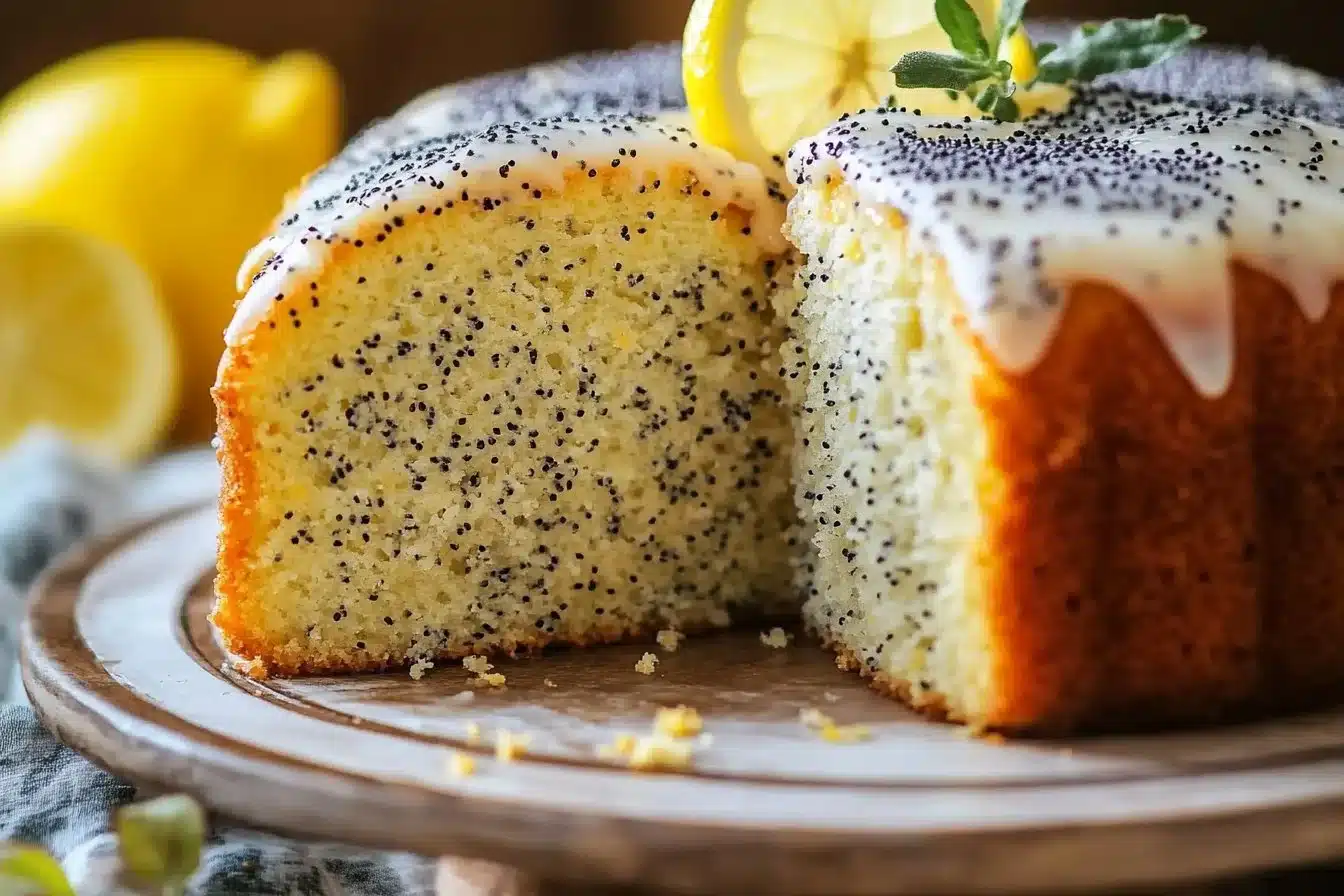
The truth is that ovens are like people: each has its own personality. Learn the small signs. The top should be a warm gold and spring back when you press it lightly. The edges will pull away a bit from the pan, and the center should not jiggle.
A toothpick inserted in the center should come out clean or with a few moist crumbs. If it comes out wet and batter-like, give it a few more minutes and check again. If the top is browning too fast, lower the oven rack or tent a piece of foil over the cake for the last part of the bake.
Serving Lemon Poppy Seed Cake With Family Warmth
We slice this cake thin for mornings, because a little goes a long way with its bright flavor. It also shines at a brunch when anyone can help themselves. I like to serve it on a simple plate with a scattering of powdered sugar, or under a light glaze that catches the sun in the window.
For a small party, place slices on a wooden board next to bowls of fresh berries, whipped cream, and a pot of strong coffee. The contrast of the cake’s soft crumb, the poppy seeds’ tiny bite, and the bright lemon is lovely with fresh drinks like a chilled Brazilian lemonade mocktail or a gentle iced tea. There is something about the pairing of citrus and sweet that makes every guest smile.
If you bring this cake to a picnic, wrap it in clean cloth and keep it cool to preserve the crumb. At home we sometimes enjoy it with a small scoop of yogurt or a side of warm ricotta. Those little touches make it feel like a gift when you place it on the table.
Tips for Plating and Small Traditions
I like to plate a slice near the center of a shallow bowl to catch any glaze that drips and to make the presentation feel cozy. Sprinkle a few extra poppy seeds on top, and add a thin twist of lemon peel for a fancy but simple touch.
We have a small tradition that whenever someone has a day that feels big or heavy, I bring a slice of this cake with a note. It is my way of turning a small act into comfort. You can do the same by wrapping one slice in parchment and tucking it into a lunchbox or leaving it on a neighbor’s doorstep.
For a child’s party, slice the cake smaller and arrange the pieces like a sunburst. It is playful and gives everyone a taste without too much sugar. For a grown-up evening, serve thicker slices with a dollop of crème fraîche and a drizzle of honey.
Storing Lemon Poppy Seed Cake for Tomorrow
If you will eat the cake within a day, keep it at room temperature on a cake plate covered with a loose lid or cloth. The crumb stays tender and the lemon stays bright when it breathes a little.
For longer keeping, store slices in an airtight container in the refrigerator for up to four days. The flavors often deepen in the fridge; the lemon becomes a bit more rounded and the crumb firms in a pleasant way. Bring a slice to room temperature before serving so the butter flavors come forward.
To freeze, wrap slices individually in plastic wrap and place them in a freezer-safe container. Thaw in the fridge overnight and warm gently in a 325°F oven for a few minutes if you want that just-baked feeling. I keep this trick in mind when I want to bake once and enjoy it over several weeks.
How to Save the Leftovers
Leftover cake has its own kind of charm. I toast thin slices to serve with morning coffee, or crumble them over a bowl of yogurt with fresh fruit for a simple, joyful breakfast. If you want something more playful, turn slices into a quick trifle layered with whipped cream and berries.
Another small favorite is to make a warm bread pudding from leftover pieces. Break into chunks, soak gently in a mix of milk and egg, add a touch of sugar and bake until set. The poppy seeds give the pudding a lovely texture and the lemon keeps it lively.
Variations and Flavor Twists
There are many gentle ways to make this cake your own. Add a teaspoon of almond extract for a soft, nutty note. Fold in a handful of fresh blueberries for a summery version, or swap half the all-purpose flour for whole wheat pastry flour for a heartier crumb.
If you like a brighter lemon, add an extra tablespoon of zest or a splash more juice to the glaze. For a richer finish, swap the lemon glaze for a cream cheese frosting and add a little lemon curd between layers if you decide to make this as a layer cake. Each change is small, but each brings a slightly different story to the table.
Sometimes I like to pair the cake with a cool, floral drink like butterfly pea lemonade when guests come over. The color and flavors create a playful contrast that always makes people smile.
Common Questions and Gentle Troubleshooting
Why did my cake sink in the middle?
It could be that your oven temperature was too low or that it was underbaked. Make sure to check with a toothpick near the end of baking and trust the signs: golden top, edges pulling away, and center that springs back.
Why is the crumb too dense?
This often means the butter was too cold or you overmixed once the flour went in. Work gently. Let the butter soften naturally and stir just until the dry ingredients disappear.
Why are the poppy seeds clumping?
Poppy seeds can clump if not evenly mixed with the flour first. Whisking the dry ingredients helps. If you ever want to experiment with textures, toast a teaspoon of seeds lightly in a pan for a few seconds for a nutty boost.
Why is the cake dry?
You might have overbaked it or used too much flour. Be gentle when leveling the flour in the measuring cup and check the cake a few minutes before the time is up. Adding a touch more buttermilk can help keep the crumb tender.
How to Make It Ahead for Gatherings
This cake is forgiving when planned ahead. Bake it the day before, then wrap it loosely in plastic wrap and keep it at room temperature. Add the glaze on the morning of the event so the top stays glossy. If you need it further ahead, freeze slices as described and thaw the night before.
If you will serve it at a brunch with other items, I like to plan a small variety: this cake, a bowl of yogurt with fruit, and a stack of warm pancakes or a savory main. For a nice contrast, consider bringing a bright drink like Brazilian lemonade mocktail to the table. It is refreshing and holds up well alongside citrus desserts.
Kitchen Tools that Help
You do not need fancy tools to make this cake. A good mixing bowl, a sturdy whisk or hand mixer, a spatula, and a reliable 9-inch pan will do. A microplane zester is a small gift to your kitchen, making lemon zest finer and more fragrant. A wire rack is worth its weight in gold for cooling; it keeps the bottom crisp and the cake from ending up soggy.
If you have a scale, weighing your flour gives consistent results. But if not, measure gently and level with the back of a knife. Small habits like this grow into confident baking.
A Note About Ingredients and Swaps
If you do not have buttermilk, make a quick substitute by stirring one tablespoon of lemon juice or vinegar into a cup of milk and letting it sit for five minutes. It will curdle slightly and act like buttermilk in the batter.
For dairy-free bakers, use a neutral oil in place of butter and choose a plant-based milk with a little lemon juice to simulate buttermilk. The texture will shift, but the cake will still be pleasant and citrusy.
If you want to add nuts, fold in a quarter cup of toasted almonds or pistachios for extra crunch. Small changes like these can make the cake feel new every time.
Bringing Lemon Poppy Seed Cake to the Table
When I carry this cake to a table, I think about how to create a simple, warm scene. A plain plate, a cloth napkin, and a small vase with a single lemon branch are enough. Invite people to pass plates and pour drinks. Let slices be small so everyone can have a taste of joy.
If children are present, let them spread a little frosting under supervision. These small acts make memories. If it’s a quiet afternoon, serve a slice with a mug and sit with whoever is near. That is how this cake is meant to be shared: slowly, with love, and with room for conversation.
A Gentle Baking Rhythm for Beginners
Start with a calm countertop and everything at hand. Read the recipe through once and then measure each ingredient before you start. This small practice reduces stress. When you cream butter and sugar, do so until pale, and when you fold flour, do so gently.
If the idea of baking feels large, know that mistakes become learning steps. If your first cake comes out a touch dry, try checking the oven earlier next time or measuring flour more carefully. Baking is practice and patience, both of which grow with each slice.
Pairings for a Sunny Table
This cake goes well with light, bright drinks and small savory bites. Try serving it alongside a bowl of fresh fruit, a plate of soft cheeses, or with a stack of warm pancakes for a festive brunch. I sometimes pair it with a delicate yogurt parfait for a breakfast that feels like a hug.
If you want to keep the flavors in the same family, choose citrus-accented drinks. For something floral and unexpected, a butterfly pea lemonade brings a color surprise that children and adults both love. For a richer touch, a small pot of strong coffee brings out the butter and crumb in each slice.
How I Teach Kids to Help
Small hands can do small jobs that matter. I ask my children to zest the lemon and to sprinkle the poppy seeds into the dry mix. They love measuring the sugar and tapping the pan to settle the batter. These tasks make them feel part of the process and teach them care.
I use this recipe to show them how teaspoons and tablespoons matter, how ovens are tools, and how patience changes outcomes. They learn that baking is a kind, measured act. Later, they will remember the smells and the way the batter looked, and those memories will sit in their own kitchens someday.
Final Invitation
If you try this Lemon Poppy Seed Cake, take a moment to breathe in its lemony steam while it cools. Slice it thin for a gentle morning treat or thick for a small celebration. Share it with friends, tuck a slice into a lunchbox, or bring it to someone who could use a little brightness.
Small recipes hold big stories. This cake has carried ours for years and found a place in many homes. If you ever want to pair it with something fun, try a playful floral lemonade or a bright mocktail to make the table feel festive. And when you bake it, know that you are making more than dessert. You are making a memory.
Print
Lemon Poppy Seed Cake
- Total Time: 45 minutes
- Yield: 8 servings 1x
- Diet: Vegetarian
Description
A bright and comforting cake filled with lemon zest and poppy seeds, perfect for family gatherings or a sweet breakfast treat.
Ingredients
- 2 cups all-purpose flour
- 1 cup granulated sugar
- 1/2 cup unsalted butter, softened
- 1 cup buttermilk
- 3 large eggs
- 1 tablespoon lemon zest
- 1/4 cup fresh lemon juice
- 2 tablespoons poppy seeds
- 1 1/2 teaspoons baking powder
- 1/2 teaspoon baking soda
- 1/4 teaspoon salt
- Lemon glaze or cream cheese frosting (optional)
Instructions
- Preheat your oven to 350°F (175°C) and grease a 9-inch round cake pan.
- Cream together the softened butter and granulated sugar until light and fluffy.
- Add the eggs, one at a time, mixing well after each addition.
- Stir in the lemon zest and lemon juice.
- Whisk together the flour, baking powder, baking soda, salt, and poppy seeds in another bowl.
- Gradually add the dry ingredients to the wet mixture, alternating with the buttermilk, until well combined.
- Pour the batter into the prepared cake pan and smooth the top.
- Bake for 25-30 minutes or until a toothpick inserted into the center comes out clean.
- Allow the cake to cool in the pan for 10 minutes, then transfer it to a wire rack to cool completely.
- Drizzle with lemon glaze or frost with cream cheese frosting if desired.
Notes
For a richer flavor, use fresh butter and consider adding extra lemon zest for more brightness.
- Prep Time: 15 minutes
- Cook Time: 30 minutes
- Category: Dessert
- Method: Baking
- Cuisine: American
Nutrition
- Serving Size: 1 slice
- Calories: 350
- Sugar: 22g
- Sodium: 250mg
- Fat: 16g
- Saturated Fat: 8g
- Unsaturated Fat: 8g
- Trans Fat: 0g
- Carbohydrates: 44g
- Fiber: 1g
- Protein: 5g
- Cholesterol: 70mg
Keywords: lemon cake, poppy seed cake, dessert, brunch, sweet treat