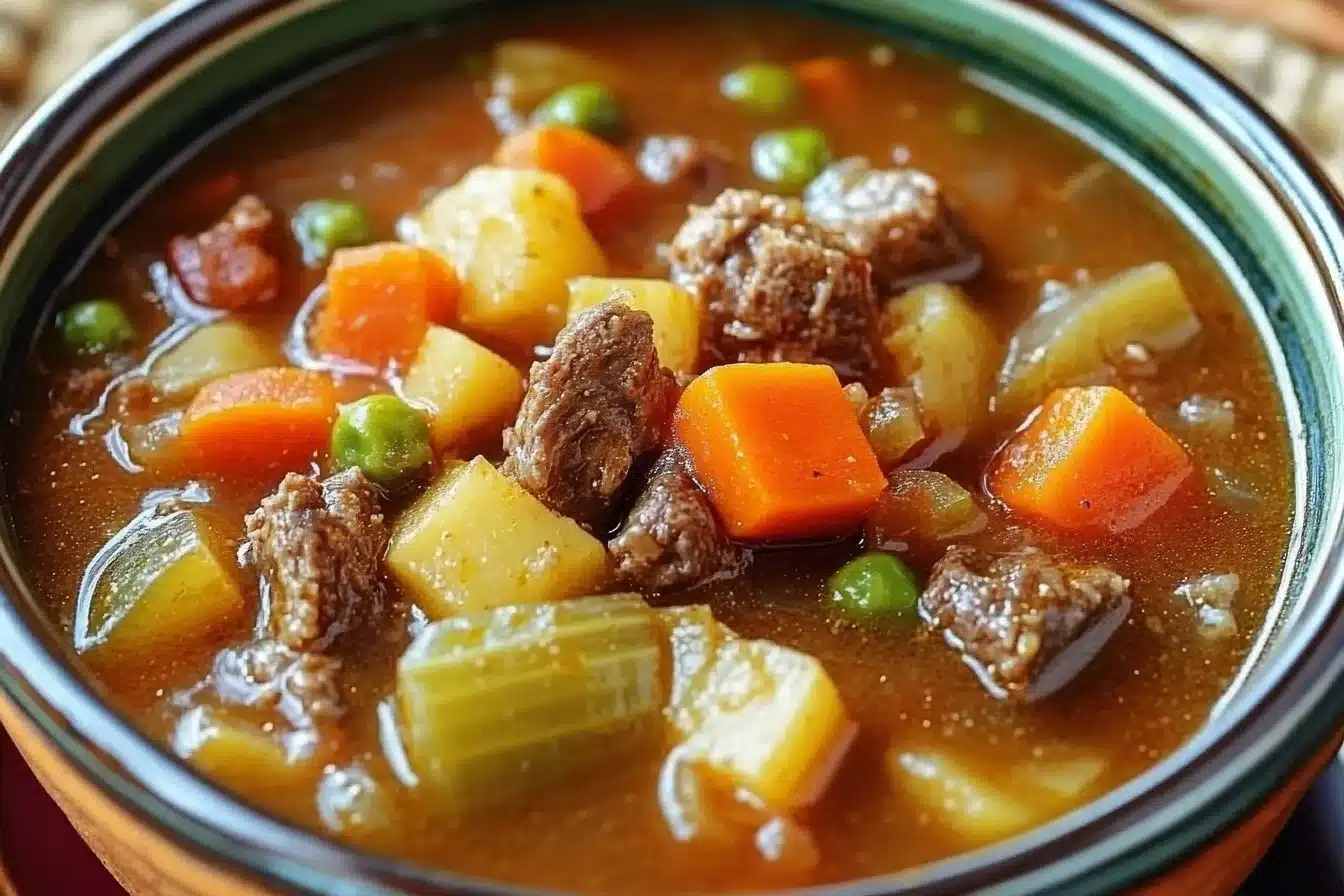
The smell of cinnamon and tomato and warm beef used to pull me out of the back bedroom and into the kitchen when I was a child, but for this soup it is simpler scents that hold me. My Mom’s Old-Fashioned Vegetable Beef Soup fills the house with the quiet music of a pot simmering, the soft hiss of a lid, and the slow sweet whisper of carrots and onions giving up their flavor. I can still hear my husband scooping up the first bowl and the kids arguing over who gets the first roll, and sometimes on a slow weekday I make this pot and the whole house remembers those afternoons. If you like soups that feel like a hug and you want a new twist after creamy favorites, you might also enjoy a creamy vegetable soup recipe that we turn to when we want something silky and smooth.
Why My Mom’s Old-Fashioned Vegetable Beef Soup Still Feels Like Home
When I think of this soup I see my mother standing at her old stove with flour on one hand and a wooden spoon in the other. She never used a recipe book for this comfort food. She used patience, good beef, and a little bit of love. The pot would steam all afternoon and our small kitchen would smell like warmth and safety.
This soup is the kind that folds memories into every spoonful. It is not fancy, and it does not try to be. Its power comes from slow cooking, from simple vegetables softened just right, and from the kind of beef that gives the broth a deep, honest taste. I make it on Saturday mornings now, and my kids crowd around to watch the pot until they can no longer wait.
There is something about the way the tomato soup blends into the beef broth that reminds me of my mom stirring and tasting, always nudging with a pinch of salt or a slow pour of broth. Everyone has a version of this. Some add barley, some finish it with parsley, and some like it with dumplings. For me the memory is in the texture of the potatoes and the brightness of the peas, and that is why I come back to this pot every season.
Bringing My Mom’s Old-Fashioned Vegetable Beef Soup Together
“Every time I stir this pot, it smells just like Sunday at home.”
Making this soup is a rhythm. You start with a sear, then you build flavors by layering aromatics and broth, and finally you let the pot sing while it simmers. The initial sizzle of the pot roast browning is the note that tells you the meal will be worth the wait. When the carrots soften and the potatoes begin to give, the soup’s body becomes obvious.
As the beef breaks down a little, the broth learns to carry vegetables the way a gentle voice carries a story. You will notice color change, from the raw sheen of raw carrots to a warm orange that glows in the bowl. The sound changes too. The pot moves from a confident boil to a calm simmer. At that point you know the flavors are getting cozy together.
This step is forgiving. If your beef needs more time the soup waits. If your vegetables are cut larger your soup will have a heartier bite. One practical kitchen tip I learned from my mother is to keep a ladle near the stove and taste often. Tasting is how you keep the memory of that Sunday in your own kitchen.
Ingredients You’ll Need
2 pounds pot roast (Use a pot roast with some marbling for tenderness.)
2 pieces russet potatoes, chopped (Chop evenly to ensure even cooking.)
1 bag frozen seasoning blend (Or just chopped onions.)
1 bag frozen peas
1 bag frozen green beans (Use fresh if preferred.)
1 bag frozen corn
4 large carrots, chopped
32 oz container beef broth
2 cans 10.75 oz tomato soup
1 can filled with water
to taste Salt and pepper (Adjust according to taste.)
A few warm notes to guide you. If you like a little sweetness add a small piece of peeled apple or a pinch of brown sugar to the pot. If you love a cozy aroma, a little extra vanilla in your baking nearby makes the kitchen smell homey while you cook. Fresh butter on warm rolls brings a silky, rich finish that the kids will fight over.
If you want to make this recipe with what is on hand, frozen vegetables work beautifully and cut down on prep. Fresh peas or green beans will keep the texture crisper, so add them later in the simmer toward the end. If your pot roast is large, cut it in half so it fits comfortably in your pot and browns evenly.
If you prefer a thicker broth, brown a spoonful of flour into the pot when you sear the beef and let it cook for a minute before adding the broth. For a lighter broth, use extra beef broth and hold back some tomato soup to stir in later. For readers who enjoy creamy soups, sometimes we switch to a smooth finish and serve alongside a creamy potato soup to make a cozy soup night.
Step-by-Step Directions
Preparation
Trim the pot roast of any large silver skin and pat it dry. Season the roast with salt and pepper on all sides and let it sit for ten minutes to come slightly closer to room temperature. This helps with a better sear and a richer base for the soup.
Chop the carrots into even pieces and peel and cube the russet potatoes to roughly the same size. Open the frozen bags and let them sit on the counter while you work, so they lose the deepest chill and cook more evenly. Keep your herbs or any extras handy for a smooth flow.
Set out your 32 ounce beef broth and two cans of tomato soup so everything is within reach. Fill one empty can with water to use as a measuring cup if you prefer. Have a heavy pot ready. A Dutch oven or a heavy-bottomed stockpot works best for steady heat and even cooking.
Cooking
Warm a heavy pot over medium-high heat until it is hot. Add a glug of oil and place the pot roast in the pot. Let it sear without moving for three to five minutes so a golden crust forms. When the edges turn golden and a rich smell rises, turn to sear the other sides.
Remove the roast and lower the heat to medium. Add the frozen seasoning blend or chopped onions to the pot and cook until they are glossy and soft. Stir so they do not catch and take a moment to scrape any brown bits from the bottom of the pot. Those bits are flavor.
Return the roast to the pot and pour in the beef broth and both cans of tomato soup. Add the water from the empty can to loosen the mixture. Bring the pot to a gentle boil and then lower to a steady simmer.
Cover the pot and let the roast simmer for one and a half to two hours, or until the meat becomes tender and easy to pull apart. Every thirty minutes check the pot and give it a gentle stir. Breathe in the aroma as the broth deepens and the kitchen warms.
Remove the roast and shred it with two forks. Taste the broth and adjust salt and pepper. Return the shredded beef to the pot and add the chopped potatoes and carrots. Simmer until the potatoes are just tender when pierced with a fork.
Stir in the bags of frozen peas, green beans, and corn. Cook for five to ten minutes more until the vegetables are heated through and bright. Taste once more and season as needed. When the vegetables float and the broth is a warm, balanced stew, the soup is ready.
Serving
Ladle the soup into wide bowls so there is room for crusty bread on the side. Place a pat of butter on warm rolls and offer salt and pepper at the table. Notice how the steam rises and the tomato and beef notes invite everyone to dig in.
For a touch of fresh brightness, chop a little parsley or chives and sprinkle them on top. This brings a cheerful color and a mild herb scent that lifts the bowl. A light dusting of black pepper cracked over the top gives a pleasant, warming bite.
If you like a creamier finish, add a spoonful of cream to each bowl or offer grated cheese for guests to melt into their soup. Serve family style and let everyone help themselves to seconds. There is comfort in passing bowls and in quiet conversations while the pot sits warm at the center of the table.
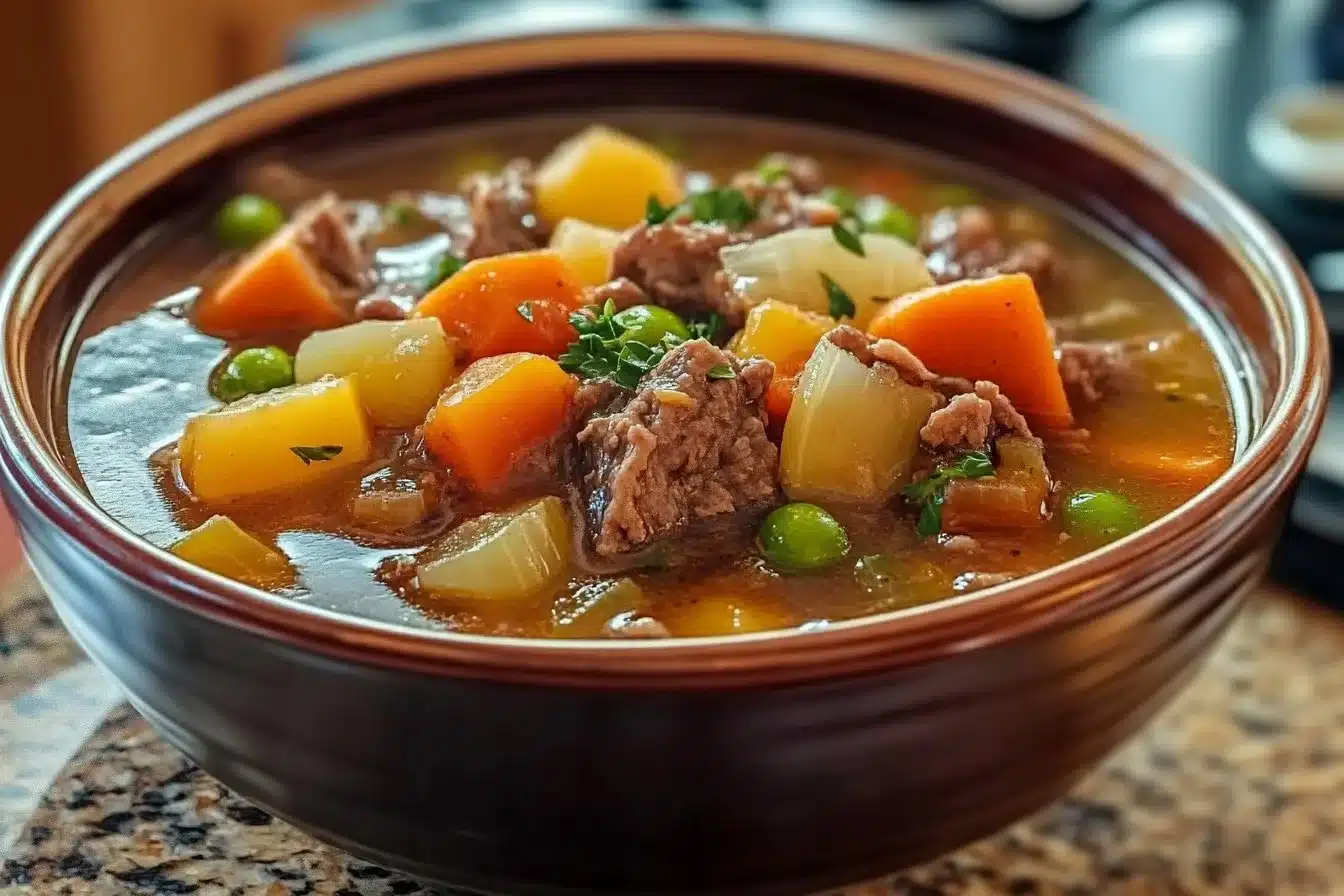
Serving My Mom’s Old-Fashioned Vegetable Beef Soup With Family Warmth
This soup wants to be shared. I set the table with simple plates and a big stack of rolls beside the pot. The kids get bowls and spoons and sometimes napkins at the ready, because a hot spoonful is always close to a big smile.
We often pair it with a crisp green salad to balance the rich broth. A small bowl of pickles or a jar of olives on the side adds a bright, vinegary bite that the adults love. If the day calls for comfort for many, I bake a pan of cornbread and let the sweet crumb soak up the broth.
There is a quiet tradition in my family where the youngest pours the drinks and the oldest helps with the bread. These small tasks make the meal feel like a ritual. We talk about our day and sometimes tell a story about Mom, who taught me to stir slowly and to always season as you go.
When guests come, I ladle generously and let them taste the slow-cooked beef and soft vegetables. I watch how a new person brightens with the first spoon and I feel the same comfort I felt as a child. If you want to plan a soulful dinner party, serve this soup with a platter of roasted root vegetables and a bowl of buttered noodles on the side for anyone who prefers a little pasta.
For a creative twist, some friends add a splash of vinegar or lemon juice to give a subtle lift. Others like to stir in a handful of cooked barley for a chewy texture that fills the bowl. Both versions are welcome, and I encourage you to make this pot your own.
In the same way we enjoy other autumn dishes, this soup pairs well with seasonal sides. When squash is in season we sometimes start with a roasted squash appetizer and the contrast of sweet and savory is delightful. If you love bold fall flavors, try this soup alongside a warm slice of squash bread or a simple pumpkin loaf for a full harvest meal. You might also be inspired by an autumn squash soup that complements the table with deep, nutty notes.
Storing My Mom’s Old-Fashioned Vegetable Beef Soup for Tomorrow
This soup gets better with time. When you cool it and refrigerate it overnight, the flavors settle and blend in the most comforting way. I always let the pot come toward room temperature before moving it to shallow containers so it cools quickly and safely.
Store the soup in airtight containers and keep it in the coldest part of your fridge for up to four days. If you have a lot left, portion it into freezer-safe containers and freeze for up to three months. I like to leave a little headroom in the container so the liquid can expand when frozen.
To reheat, warm the pot slowly over medium-low heat so the broth gently comes back to life. If the potatoes absorb too much liquid, stir in a splash of beef broth or water until the texture feels right. Taste and correct seasoning with a bit of salt or pepper before serving, because cold storage can mute the flavors.
If you are bringing this to a friend or sending it with a neighbor, include a little note about reheating and a suggestion to add a pat of butter at the very end. That final touch softens the soup and revives the richness as if it has been sitting on the stove all day. Leftovers are perfect for a quick lunch, an easy dinner, or a neighbor who needs comfort food and conversation.
A tip I learned is to freeze a portion already ladled into mason jars for single servings. When you want a quick bowl, take a jar from the freezer and pop it into a pot of simmering water until it thaws. This keeps your portions simple and the soup tasting freshly made.
Small Ways to Make It Yours
There are little choices that change the feeling of this soup without losing its soul. If you like a firmer bite, hold back the frozen peas until the last five minutes of cooking. If you want to deepen the broth, add a small spoon of soy sauce or Worcestershire sauce while the roast simmers.
For a lighter version, use all broth and omit the tomato soup. The dish becomes more of a clear beef and vegetable stew that still comforts. If you are cooking for picky eaters, keep the vegetables larger so they can visually pick what they like. That keeps dinner peaceful and the table friendly.
If you have extra time, brown some small pearl onions along with the seasoning blend. The sweet, caramel notes that develop when they cook slowly add a layer of flavor that feels special. Toasted barley, toasted rice, or even a handful of tiny pasta shapes make the broth heartier for cold days.
When my friends ask for ways to make this recipe more festive, I suggest a final splash of sherry or a handful of fresh chopped herbs. The sherry adds warmth and a soft fruit note while the herbs give bright color and lift the whole bowl. These are small, optional lifts that keep the original memory intact.
Why This Soup Still Matters
Food is how we remember people and places. My Mom’s Old-Fashioned Vegetable Beef Soup is a way to keep my mother’s hands in my kitchen. It is slow, patient, and plain in a way that becomes precious. Every time I make this pot I notice how the house settles and the conversation opens.
This soup teaches patience. It asks for watching, tasting, and small adjustments. It asks for company around a table. That is what home cooking has always meant to me. It is not about perfection. It is about practice, presence, and passing on comfort.
I hope this recipe brings your family the same warmth it has brought mine. If you make it, take a moment to breathe in the aroma before serving and remember whoever first taught you to stir. The smell will bring you back to a place where you felt safe and loved, and then you will be the one handing those memories on.
Print
Mom’s Old-Fashioned Vegetable Beef Soup
- Total Time: 150 minutes
- Yield: 8 servings 1x
- Diet: Non-Vegetarian
Description
A comforting vegetable beef soup filled with tender beef, hearty vegetables, and rich flavors, perfect for sharing with family.
Ingredients
- 2 pounds pot roast
- 2 pieces russet potatoes, chopped
- 1 bag frozen seasoning blend
- 1 bag frozen peas
- 1 bag frozen green beans
- 1 bag frozen corn
- 4 large carrots, chopped
- 32 oz container beef broth
- 2 cans (10.75 oz each) tomato soup
- 1 can filled with water
- Salt and pepper to taste
Instructions
- Trim the pot roast of any large silver skin and pat it dry. Season the roast with salt and pepper on all sides and let it sit for ten minutes.
- Chop the carrots and kub the russet potatoes into even pieces. Open frozen veggies and let sit to lose chill.
- Warm a heavy pot over medium-high heat with a glug of oil, then sear the pot roast for 3-5 minutes.
- Remove the roast, lower the heat to medium, and add the frozen seasoning blend, cooking until glossy.
- Return the roast, add beef broth, and both cans of tomato soup. Add water and bring to a gentle boil, then simmer.
- Cover and let simmer for 1.5 to 2 hours until meat is tender.
- Shred the roast with two forks, season the broth, and add chopped potatoes and carrots. Simmer until tender.
- Stir in frozen peas, green beans, and corn, cooking for an additional 5-10 minutes.
- Ladle into bowls and serve with warm rolls and a pat of butter.
- Optionally garnish with parsley or chives and serve with cream and cheese on the side.
Notes
This soup gets better as it cools, refrigerate overnight for enhanced flavors. Perfect for freezing in portions.
- Prep Time: 30 minutes
- Cook Time: 120 minutes
- Category: Soup
- Method: Simmering
- Cuisine: American
Nutrition
- Serving Size: 1 bowl
- Calories: 450
- Sugar: 6g
- Sodium: 800mg
- Fat: 15g
- Saturated Fat: 5g
- Unsaturated Fat: 8g
- Trans Fat: 0g
- Carbohydrates: 50g
- Fiber: 5g
- Protein: 30g
- Cholesterol: 90mg
Keywords: soup, comfort food, vegetable beef soup, family recipe, winter warming dish