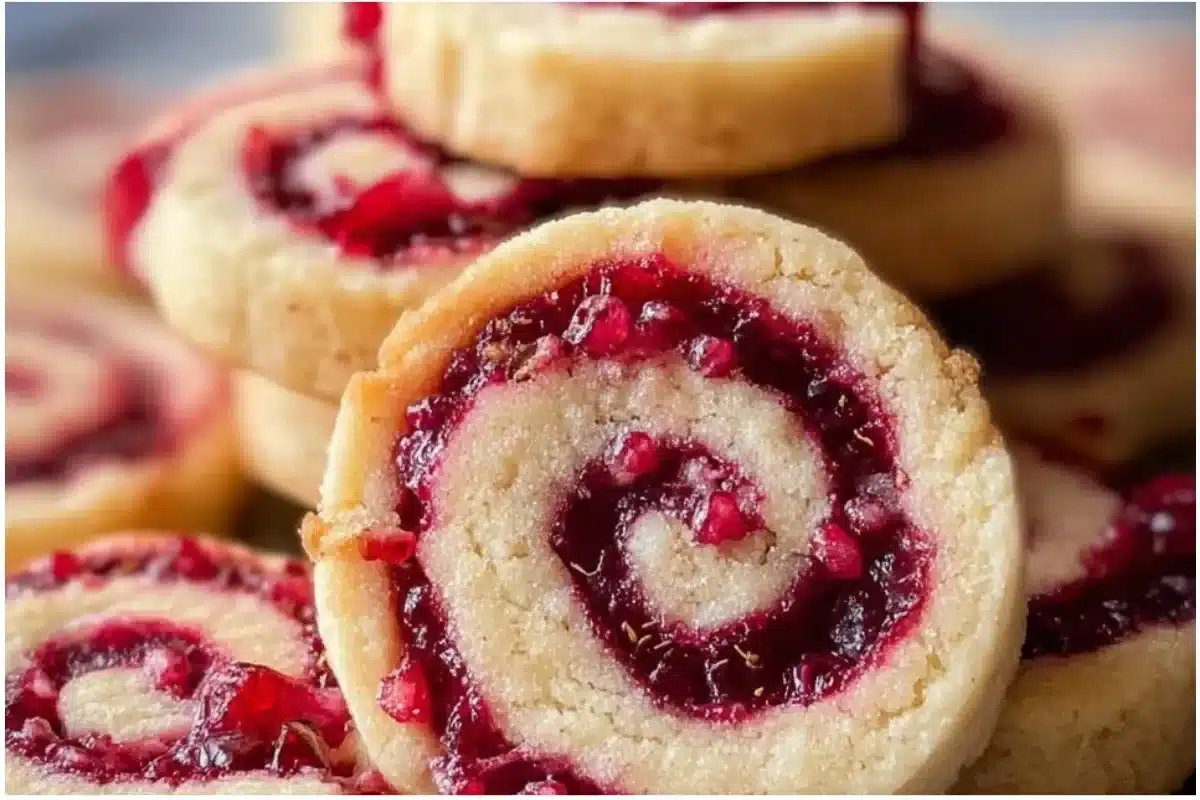
There’s a reason the phrase “buttery shortbread” turns heads: a tender, crumbly cookie that melts on the tongue is pure comfort. Add a bright ribbon of raspberry and you get Buttery Raspberry Swirl Shortbread Cookies — a crowd-pleasing cookie that balances rich, nutty butter with tart fruit, plus the visual drama of a swirl. This recipe delivers crisp edges, a tender snap, and glossy raspberry ribbons without fuss or fussy tools.
If you love classic shortbread but want a fresh, seasonal twist, this guide walks you through everything: ingredient choices and the science behind them, step-by-step technique with chef tips, common mistakes and how to avoid them, smart swaps, storage, nutrition, and FAQ. Whether you’re baking for a holiday tin or an everyday treat, you’ll leave confident these are the best raspberry swirl shortbreads you can make at home.
To get started, if you want a baseline primer on shortbread technique, check our shortbread basics here: Shortbread Cookies – Simple Guide.
Image prompt: A plate of golden, rectangular shortbread cookies with visible pink raspberry swirls, shot in natural light on a wooden table. Alt text: Buttery Raspberry Swirl Shortbread Cookies with glossy raspberry ribbons.
Why these are better than ordinary jam thumbprints
Many raspberry shortbread variants use a dollop of jam in the center. This swirl version distributes bright flavor across the cookie, giving a pleasing bite in every mouthful and an elegant look perfect for gifting. The method here prioritizes:
- Maximum buttery flavor with a tender, melt-in-your-mouth texture.
- Concentrated fresh raspberry flavor without overly sweet store-bought jam.
- A stable dough that keeps the swirl without bleeding during baking.
- Simple tools and predictable timing so your first batch succeeds.
Now let’s break down how and why.
Key flavor and texture objectives
- Butter-forward flavor: We use clarified or browned butter options and a slightly higher butter ratio to create richness.
- Tender, short crumb: Lower hydration and controlled mixing prevent gluten development and keep the cookies delicate.
- Clean raspberry swirl: A reduced raspberry purée and optional cornstarch stabilize the swirl so it holds through oven heat.

Buttery Raspberry Swirl Shortbread Cookies
- Total Time: 120 minutes
- Yield: 24 cookies 1x
- Diet: Vegetarian
Description
Tender, buttery shortbread cookies with a bright raspberry swirl. Simple technique produces perfectly shaped cookies with vibrant fruit flavor.
Ingredients
- 2 cups (240 g) all-purpose flour
- 1/2 cup (60 g) powdered sugar (plus extra for dusting)
- 1/2 cup (65 g) cornstarch
- 1/2 tsp fine sea salt
- 1 cup (225 g) unsalted butter, room temperature
- 1 tsp vanilla extract
- 1 tsp lemon zest (optional)
- 1 1/4 cups (150 g) fresh or frozen raspberries
- 3–4 tbsp granulated sugar (adjust to taste)
- 1 tsp lemon juice
- 1 tsp cornstarch mixed with 1 tbsp cold water (slurry) or 1/2 tsp powdered pectin
Instructions
- Make the raspberry purée: mash and heat fruit with sugar and lemon, add cornstarch slurry, simmer until thick, cool.
- Cream butter and powdered sugar until pale. Add vanilla and lemon.
- Fold in flour, cornstarch, and salt until combined. Chill dough briefly if soft.
- Pipe or spread a thin line of purée along the rolled dough log, then roll to enclose swirl. Chill.
- Slice chilled log into rounds, bake at 325°F (165°C) until edges set, cool completely.
Notes
For a deeper butter flavor, brown the butter before using. If you prefer an all-crisp cookie, replace half powdered sugar with granulated and omit cornstarch in dough.
- Prep Time: 30 minutes
- Cook Time: 12–16 minutes
- Category: Dessert
- Method: Baking
- Cuisine: American
Nutrition
- Serving Size: 1 cookie
- Calories: 150
- Sugar: 7g
- Sodium: 50mg
- Fat: 11g
- Saturated Fat: 7g
- Unsaturated Fat: 4g
- Trans Fat: 0g
- Carbohydrates: 15g
- Fiber: 1g
- Protein: 1g
- Cholesterol: 30mg
Keywords: cookies, raspberry, shortbread, dessert, baking
Ingredient breakdown — what each component does (and why it matters)
This section explains the ingredients you’ll use and the science behind them so you can improvise intelligently.
Unsalted butter (room temp): The most important ingredient. Butter provides flavor, tenderness, and structure. Using unsalted lets you control salt level precisely. For more depth, some bakers brown the butter briefly to add nutty notes — a lovely variation for these cookies.
Powdered sugar (confectioners’ sugar): Powdered sugar contains cornstarch which helps produce a tender, short crumb and a smoother dough. Granulated sugar yields a crisper, more crystalline texture; powdered sugar is our preferred base for that classic shortbread melt
All-purpose flour: The structure comes from flour. All-purpose is versatile; we rely on controlled mixing to prevent excess gluten. For an even more tender result, you can substitute up to 20% cake flour.
Cornstarch: Often added to shortbread formulas. Cornstarch reduces gluten formation and gives a delicate, sandy texture. It also helps the cookies keep their shape.
Salt: Balances sweetness and elevates butter flavor. Use fine sea salt or kosher dissolved into the dough.
Vanilla extract (or scraped vanilla bean): Adds depth and rounds the flavor. Vanilla plays well with the berry notes.
Lemon zest (optional): Brightens the cookie; a small amount enhances raspberry without overtly tasting lemon.
Fresh or frozen raspberries: Fresh gives the brightest flavor; frozen are fine if thawed and reduced. We make a concentrated purée to ensure flavor intensity without excess moisture.
Sugar for the raspberry purée: Balances the fruit’s acidity and helps the purée set a bit. If you prefer unsweetened fruit flavor, reduce sugar but expect less glossy swirls.
Cornstarch or pectin for the purée: Stabilizes the raspberry so it behaves more like a jam and not a thin sauce. Pectin can be used for a more natural gelling.
Ingredient tip: Using powdered sugar in the dough and a stabilized raspberry ribbon gives the best balance of tender shortbread and vibrant swirl.
For a baseline shortbread technique and comparison to other classic formulas, see our in-depth shortbread overview: Shortbread Cookies — Techniques & Tips.
The recipe: Buttery Raspberry Swirl Shortbread Cookies (recipe card)
Prep time: 30 minutes (plus 1 hour chilling)
Cook time: 12–16 minutes per sheet
Total time: ~2 hours (including cooling & chill time)
Yield: ~24 medium cookies (or 48 small sandwich-sized)
Difficulty: Intermediate
Ingredients:
- 2 cups (240 g) all-purpose flour
- 1/2 cup (60 g) powdered sugar (plus extra for dusting)
- 1/2 cup (65 g) cornstarch
- 1/2 tsp fine sea salt
- 1 cup (225 g) unsalted butter, room temperature (see notes)
- 1 tsp vanilla extract
- 1 tsp lemon zest (optional)
For the raspberry swirl:
- 1 1/4 cups (150 g) fresh or frozen raspberries
- 3–4 tbsp granulated sugar (adjust to taste)
- 1 tsp lemon juice
- 1 tsp cornstarch mixed with 1 tbsp cold water (slurry) OR 1/2 tsp powdered pectin
Equipment:
- Stand mixer or hand mixer
- Silicone spatula
- Baking sheet, parchment paper or silicone mat
- Piping bag (or plastic bag with corner snipped)
- Small saucepan
- Fine sieve (optional)
Method overview (full steps below):
- Make the stabilized raspberry purée.
- Cream butter and powdered sugar, then add vanilla and lemon.
- Fold in dry ingredients to a uniform dough.
- Roll into logs, pipe raspberry ribbon along dough, roll to swirl, chill.
- Slice and bake until edges are just golden. Cool completely.
Notes:
- For a deeper butter flavor, brown the butter, cool until the fat re-solidifies slightly, and then beat as directed.
- If you prefer an all-crisp cookie, replace half powdered sugar with granulated and omit cornstarch in dough.
Step-by-step method (detailed, with chef insights)
- Prepare the raspberry purée
- Combine raspberries and granulated sugar in a small saucepan with lemon juice.
- Heat gently over medium-low until fruit breaks down and sugar dissolves (3–5 minutes).
- If using cornstarch: mix 1 tsp cornstarch with 1 tbsp cold water, add to simmering fruit, and cook 1–2 more minutes until thickened. If using pectin, stir it in per package instructions.
- Strain through a fine sieve if you want a seedless swirl; otherwise keep seeds for texture.
- Cool completely. The purée should be thick enough to pipe but not gelatinous; it will set further in the fridge.
Chef insight: Thickening the purée prevents bleed during baking. If your purée looks too thin after cooling, simmer longer in a wide pan to reduce water content.
- Make the shortbread dough
- In the bowl of a stand mixer fitted with the paddle (or using a hand mixer), beat the room-temperature butter until soft and smooth.
- Add powdered sugar and beat on low to medium until light and fluffy, about 2–3 minutes. Scrape down the bowl.
- Add vanilla and lemon zest. Mix briefly.
- Sift flour, cornstarch, and salt together, then fold into the butter mixture with a spatula until just combined. Avoid overmixing.
Chef insight: Powdered sugar and cornstarch together create a silky dough that yields a tender crumb. Mixing just until combined avoids gluten formation which would toughen the cookie.
Shape, fill, and swirl
Option A — Rolled log swirl (recommended)- Turn out dough onto a lightly floured surface. Form dough into a long log about 2 inches in diameter.
- Transfer to parchment. Flatten slightly to create a small trough along the top center.
- Spoon cooled raspberry purée into the trough or use a piping bag to lay a thin ribbon down the length.
- Carefully roll the dough over the purée so the fruit is enclosed in a swirl. Roll to smooth and even the log.
- Chill the log(s) for at least 1 hour until firm (overnight is fine).
Option B — Layered sheet swirl (for larger cookies)
- Press half the dough into a rectangle (half-inch thick) on parchment.
- Spread a thin layer of purée evenly, leaving a border.
- Top with the remaining dough rolled to the same size. Press gently to seal.
- Chill, then cut into shapes.
Chef insight: Encasing the purée minimizes leakage. Chill time is crucial — warm dough leads to smeared swirls in the oven.
- Slice and bake
- Preheat oven to 325°F (165°C). Line baking sheets with parchment or a silicone mat.
- Slice chilled log into 1/4–3/8 inch rounds using a sharp knife. Wipe the knife between cuts for clean edges.
- Place cookies 1 to 1.5 inches apart.
- Bake 12–16 minutes depending on thickness. Look for pale edges just set and the bottom lightly golden.
- Cool on the sheet for 5 minutes, then transfer to a rack to cool completely.
Chef insight: Bake at slightly lower than typical sugar cookie temperatures to ensure the raspberry swirl doesn’t bubble and the shortbread sets without over-browning.
- Finishing
- Optional: dust with powdered sugar once fully cool. For a glossy finish, brush tops lightly with a warmed, strained thin glaze (1 tbsp powdered sugar + 1 tsp water) and let set.
Pro tips and mistakes to avoid
- Don’t skip chilling. Shaping and chilling the dough solidifies the butter and sets the swirl. Slices from chilled logs keep their shape and the swirl stays defined.
- Avoid over-thinning the purée. If it’s too runny it will bleed and make the cookies wet. Reduce on the stove until viscous; add a small cornstarch slurry if needed.
- Use powdered sugar in the dough for softer texture. If you prefer a crisper cookie, up the granulated sugar and omit cornstarch in the dough, but expect a firmer, crunchier bite.
- Keep an eye on oven temperature. Shortbread is pale — removing at the right moment prevents dryness. Use an oven thermometer if your oven runs hot.
- Clean cutting technique: chill the log well and wipe the knife between cuts. For perfectly round discs, warm the knife briefly in hot water, dry, and slice smoothly.
- If you brown butter, let it cool until it’s soft but not liquid so you can still cream it with sugar. Too-warm butter will make the dough greasy and hard to handle.
Variations + ingredient swaps
These cookies are a great base for experimentation. Here are chef-approved variations:
- Browned butter raspberry swirl: Brown the butter until nutty and aromatic. Cool until soft, then use in the recipe. Expect deeper, caramel-like notes.
- Almond shortbread: Replace 1/2 tsp vanilla with 1/2 tsp almond extract and fold in 1/4 cup finely ground almonds for texture.
- Raspberry-chocolate shortbread: Add 1/2 cup mini dark chocolate chips to the dough or drizzle melted dark chocolate after baking.
- Citrus berry swirl: Mix orange zest into the dough and use a strawberry-orange purée as the swirl.
- Jam shortcut: Use thick raspberry jam instead of homemade purée. Warm jam slightly and strain to remove chunks if needed. Jam tends to be sweeter; reduce dough sugar small amount if desired.
- Gluten-free version: Replace all-purpose flour with a 1:1 gluten-free flour blend and add 1/2 tsp xanthan gum if your blend lacks it. Texture will be slightly different — chill longer to help with slicing.
- Vegan option: Use solid coconut oil or vegan butter in equal measure and replace powdered sugar with a vegan brand. Note texture will be slightly different; coconut oil can make the cookie crisper at room temp.
Seasonal idea: These make beautiful holiday cookies. For a winter twist, add a pinch of ground cardamom or swap some of the raspberry for cranberry purée.
For a festive peppermint-tinged swap and to pair in a cookie assortment, see our seasonal candy idea here: Candy Cane Cookies — Holiday Twist.
Scaling and batch baking
- Double the dough and form into two logs so you can stagger baking while one log chills.
- Dough freezes exceptionally well. Freeze unbaked logs wrapped tightly in plastic and foil for up to 3 months. Slice from frozen — add a minute or two to the bake time.
- For cookie platters, make small biscuits (1/8–1/4 inch thickness) for bite-sized pieces, or use the layered sheet method and cut larger rectangles.
Storage and reheating
Shortbread stores well because of low moisture content, but the raspberry swirl adds perishable fruit:
- Room temp: Store in an airtight container between layers of parchment for up to 3 days.
- Refrigerator: For longer storage (up to 10 days), refrigerate in a sealed container. Bring to room temperature before serving for optimal texture.
- Freezing: Freeze on a tray until firm, then transfer to a freezer bag or container for up to 3 months. Thaw in the fridge overnight or on the counter for a few hours.
- Reheating: Warm briefly in a 300°F (150°C) oven for 3–5 minutes to refresh buttery aroma and soften the swirl slightly. Avoid microwaving; it can make shortbread soggy.
Chef insight: Because the swirl has fruit, avoid long storage at room temperature in hot climates. For gifting, keep cookies refrigerated until delivery or include a cool pack.
Nutrition insights
Shortbread is a butter-forward cookie and should be enjoyed in moderation. Here’s a general nutritional snapshot per medium cookie (estimate):
- Calories: ~140–160 kcal
- Fat: ~9–11 g (mostly from butter; contains saturated fat)
- Carbohydrates: ~12–14 g (sugar ~6–8 g)
- Protein: ~1–2 g
- Fiber: trace from fruit
Ways to reduce calories and sugar:
- Make smaller cookies; portion control dramatically reduces per-cookie calories.
- Use less sugar in the raspberry purée or swap for a lower-sugar sweetener suitable for cooking (erythritol blends can be used but alter texture).
- Substitute part of the butter with avocado oil margarine is possible but changes flavor and texture considerably.
For general guidance on healthier sweet treats and portion control, see tips in our weight loss and snack planning articles. If you’re tracking macros or following a low-sugar plan, adapt the purée and size accordingly.
Frequently Asked Questions (FAQ) — schema-ready Q&A
Q: Can I use store-bought jam for the swirl?
A: Yes. Warm the jam slightly and strain if you prefer a seedless ribbon. Because jam can be sweeter and thinner, you may want to reduce sugar in the dough a touch or thicken the jam with a tiny cornstarch slurry.
Q: My swirl bled during baking. What went wrong?
A: The most common causes are thin purée, warm/soft dough, or baking at too-high a temperature. Thicken the purée, chill the dough thoroughly, and bake at 325°F (165°C).
Q: Can I make the dough ahead?
A: Absolutely. Dough logs freeze very well. Wrap tightly and freeze for up to 3 months. Slice and bake directly from frozen, adding a minute or two to the bake time.
Q: How do I make seedless raspberry purée?
A: After cooking, press the purée through a fine-mesh sieve with a spatula, discarding seeds. This yields a smooth, glossy swirl.
Q: Why use powdered sugar in the dough?
A: Powdered sugar contains cornstarch and produces a smoother, more tender shortbread. It reduces grittiness and gives a fine crumb.
Q: Can I replace butter with margarine or oil?
A: You can, but expect changes: margarine reduces flavor, and oils produce a different mouthfeel (crisp but less short). For authentic buttery flavor, butter is recommended.
Q: Will these cookies soften over time?
A: The raspberry swirl adds moisture that can soften the cookie marginally. Proper chilling and storing in a dry airtight container will maintain texture for a few days.
Q: Is there a vegan adaptation?
A: Yes. Use high-quality vegan butter or solid coconut oil and ensure your powdered sugar is vegan (some brands use bone char). Texture will be slightly different.
Pairings and serving suggestions
- Tea time: Serve with Earl Grey or a lemon black tea to complement the citrus and berry notes.
- Coffee: A medium-roast coffee balances the sweetness and enhances buttery flavors.
- Dessert platter: Pair with chocolate-dipped shortbread, pistachio bites, or a citrus cookie for variety.
- Gift boxes: These cookies present beautifully in tins with parchment layers. Add a sprig of rosemary for a rustic look.
For complementary baked desserts that showcase seasonal fruit, try our apple crisp or peach cake ideas to create diverse dessert tables: check “Apple Crisp” for a warm pairing.
Troubleshooting common problems
- Dough crumbly and won’t come together: Add 1/2 to 1 tbsp cold cream or milk and knead lightly; chill before shaping.
- Cookies spread too much: Chill dough longer and reduce oven temp slightly. Ensure butter wasn’t too warm.
- Purée tastes dull: Add a touch more lemon juice and simmer longer to concentrate the fruit flavor.
Why this method works (the culinary logic)
Shortbread is essentially an emulsion of fat and dry ingredients. Using powdered sugar and cornstarch decreases the water activity and creates a smooth matrix that traps tiny air pockets for tenderness. The raspberry purée, when reduced and slightly thickened, integrates as an enclosed ribbon that doesn’t weep into the dough. Chilling ensures the butter is re-solidified, so the cookie sets with a clean edge and defined swirl rather than a smeared streak.
Internal link — Holiday and seasonal ideas
If you’re compiling a holiday cookie box, this raspberry swirl is an excellent complement to minty or spiced cookies. For a peppermint-tinged counterpart, see our festive candy idea here: Candy Cane Cookies — Holiday Twist.
Image prompt: Close-up cross-section of a sliced shortbread log showing tight raspberry spiral. Alt text: Cross-section of Raspberry Swirl Shortbread Cookie Log.
Final presentation and gifting
For gifting:
- Stack with parchment between layers.
- Include an internal note about refrigeration due to fruit filling.
- Tie with a ribbon and a sprig of dried lavender or rosemary.
For party platters:
- Alternate cookie orientation (swirl visible) for visual interest.
- Garnish the platter with fresh raspberries and lemon wedges for color.
Conclusion
Buttery Raspberry Swirl Shortbread Cookies combine classic shortbread tenderness with bright raspberry flavor in a visually striking swirl — a cookie that feels both elegant and approachable. The technique centers on a stabilized purée, a powdered sugar-rich shortbread dough, and careful chilling to keep the swirl intact. Make a batch for gift tins, holiday trays, or a weekend baking session — the results are reliably delicious.
For more recipe inspiration and to compare technique variations, check this vibrant take on similar raspberry swirls: Raspberry Swirl Cookies – That Oven Feelin and another lovely variation with helpful photos at Irresistible Raspberry Swirl Shortbread Cookies – A Perfect Treat ….
If you try this recipe, save it, share a photo, or swap suggestions — great baking is meant to be shared.