
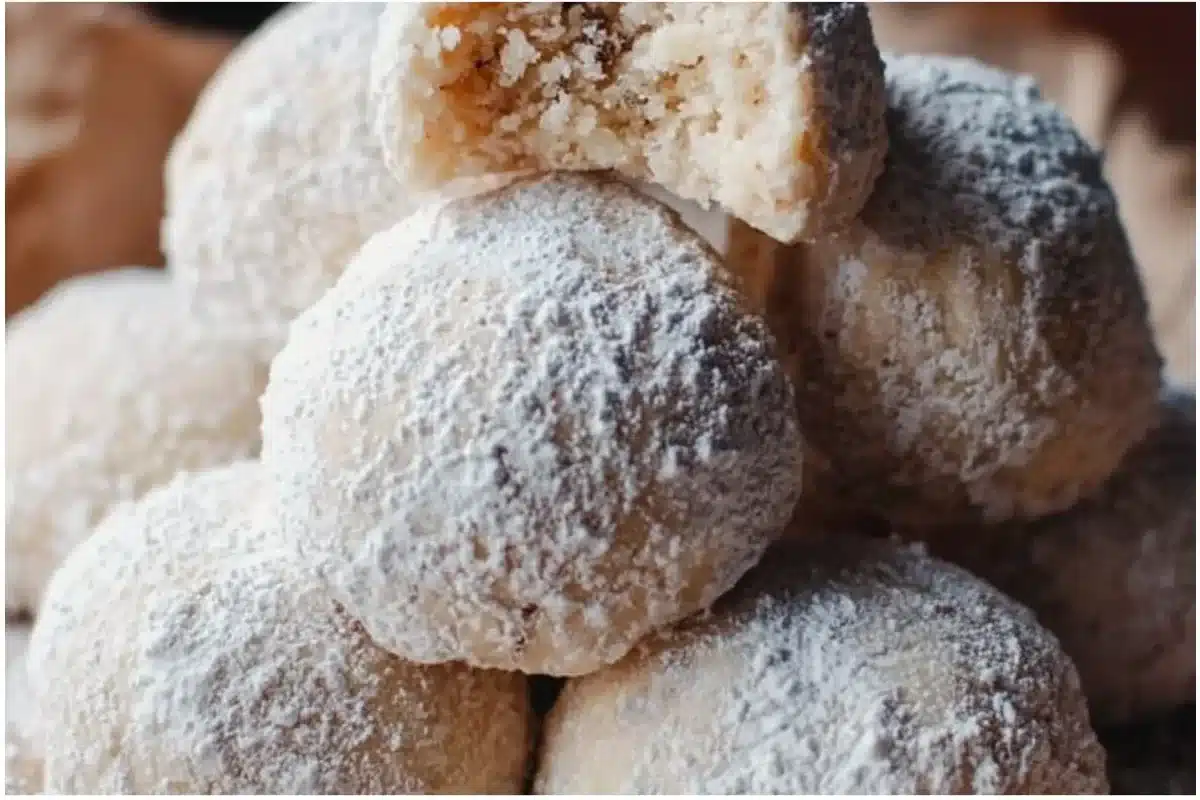
Soft Homemade Snowball Cookies are one of those classic small-batch cookies that feel like a hug in your hand: buttery, tender, and covered in a snowy blanket of powdered sugar. If you’ve ever bitten into a snowball only to have it fall apart in a cloud of sugar and butter, you know the appeal — but you also know the frustration when they’re dry, greasy, or too crumbly. This guide removes the guesswork. You’ll get a reliable, chef-tested recipe plus the why behind each step so you consistently bake soft, melt-in-your-mouth snowballs every time.
Whether you’re building a holiday cookie tray, pairing small cookies with coffee, or looking for a straightforward recipe to scale, this article gives the clarity and techniques to master Soft Homemade Snowball Cookies. For seasonal cookie inspiration, check out this collection of Christmas cookies to plan a complete platter.
Why this recipe matters: unlike many shortbread-style recipes that emphasize crispness, this version intentionally preserves moisture and tenderness so the cookies stay soft even after a generous coat of powdered sugar.
What you’ll learn in this article
- The exact ingredient balances and the science behind them
- A step-by-step technique with chef tips to keep cookies soft and stable
- Variations, add-ins, and swaps (including chocolate/peppermint ideas)
- Storage, freezing, and reheating best practices
- Nutrition insights and common troubleshooting FAQs
Image prompt: A close-up, shallow-depth-of-field photo of Soft Homemade Snowball Cookies arranged on a rustic wooden board, each cookie dusted heavily with powdered sugar, with a small pile of confectioners’ sugar and a vintage sieve in the background. Natural window light with warm tones.
What is a Snowball Cookie?
Snowball cookies — sometimes called Russian tea cakes or butterballs — are bite-sized, nut-studded shortbread cookies rolled in powdered sugar. They’re traditionally associated with holidays because their snow-like appearance is festive, but they make for an elegant tea-time treat year-round.
Key characteristics of the classic snowball:
- Small, round, roughly 1–1.5 inches in diameter
- Tender, shortbread-like crumb with a soft center
- Crunch from finely chopped nuts (commonly pecans or walnuts)
- Generous dusting of powdered sugar that ‘snowfalls’ on the cookie and keeps a delicate visual contrast
This guide focuses on producing soft snowballs rather than crisp cookie variants. If you prefer a firmer bite, you can adjust baking times and fat ratios, but this recipe prioritizes softness first.
Print
Soft Homemade Snowball Cookies
- Total Time: 90 minutes
- Yield: 36 cookies 1x
- Diet: Vegetarian
Description
Learn how to make ultra-soft Homemade Snowball Cookies that are buttery, tender, and covered in powdered sugar. Perfect for holiday trays and everyday baking.
Ingredients
- 1 cup (2 sticks / 226 g) unsalted butter, room temperature
- 1/2 cup powdered sugar, plus more for rolling (sifted)
- 1/4 cup granulated sugar
- 1 teaspoon pure vanilla extract
- 2 cups (240 g) all-purpose flour
- 1/4 teaspoon fine sea salt
- 1 cup finely chopped pecans or walnuts, toasted and cooled
- Optional: 1–2 tablespoons cornstarch for extra tenderness
Instructions
- Preheat oven to 350°F (175°C). Line baking sheets.
- Cream butter and both sugars until light and fluffy. Add vanilla.
- Fold in flour, salt, and optional cornstarch — mix until just combined. Stir in finely chopped nuts.
- Chill dough for 30–60 minutes.
- Scoop 1-inch balls and place on baking sheet about 1.5 inches apart. Bake 10–14 minutes until the edges are set but not brown.
- Cool 5 minutes on sheet, then roll each cookie in powdered sugar while warm. Cool completely, then roll again in powdered sugar for a thick coating.
Notes
For best results, chill the dough before baking to improve texture. Use freshly powdered sugar for rolling.
- Prep Time: 25 minutes
- Cook Time: 10 minutes
- Category: Dessert
- Method: Baking
- Cuisine: American
Nutrition
- Serving Size: 1 cookie
- Calories: 100
- Sugar: 5g
- Sodium: 50mg
- Fat: 8g
- Saturated Fat: 4g
- Unsaturated Fat: 3g
- Trans Fat: 0g
- Carbohydrates: 10g
- Fiber: 0g
- Protein: 1g
- Cholesterol: 30mg
Keywords: snowball cookies, holiday baking, soft cookies, dessert recipes, easy cookies
Ingredient breakdown — science and benefits
Understanding the role each ingredient plays helps you make informed swaps and avoid mistakes.
Unsalted butter (room temperature): Butter is the fat that creates the cookie’s tender, melt-in-your-mouth texture. Using unsalted butter lets you control sodium. Room temperature (soft but not greasy) ensures smooth creaming with sugar, which traps air and creates structure.
Powdered sugar (confectioners’ sugar): Divided usage — some is creamed with butter for tenderization, and a big portion is for rolling. Powdered sugar contains a small amount of cornstarch, which helps stabilize the cookie and gives it a slightly silky mouthfeel.
Granulated sugar: A small amount to assist with browning and structure. If you want even softer cookies, you can reduce granulated sugar slightly and increase powdered sugar, because powdered sugar makes for a softer crumb.
All-purpose flour: Provides structure. Overworking the dough develops gluten and yields a tougher cookie, so mix only until combined.
Salt: Balances sweetness and strengthens flavor from butter and nuts.
Vanilla extract: Flavor amplifier; a high-quality vanilla makes a noticeable difference.
Nuts (finely chopped pecans or walnuts): Nuts give a pleasant crunch. Very finely chopped nuts integrate better and yield a more consistent, melt-in-your-mouth texture. Toasting nuts before chopping deepens flavor.
Optional: Cornstarch (a small addition, 1–2 tablespoons) can be added to help tenderness and keep the crumb silky. Adding cornstarch is a common trick in cookie recipes to soften texture.
Ingredient swaps and notes:
- Gluten-free: Use a 1:1 cup-for-cup gluten-free flour blend with xanthan gum — the cookies will be slightly more fragile.
- Dairy-free: Replace butter with a solid vegan butter with high fat content. The flavor will differ slightly.
- Nut-free: Omit nuts and increase flour by 2 tablespoons; add 1 tablespoon of rice flour or extra powdered sugar for texture.
Pro tip: Use freshly powdered sugar for rolling. If your powdered sugar is clumpy, sift it before use to ensure an even coating.
The recipe (chef-tested)
Recipe card: Soft Homemade Snowball Cookies
Yield: about 36 cookies
Prep time: 25 minutes (plus optional nut toasting)
Chill time: 30–60 minutes (recommended)
Bake time: 10–14 minutes per sheet
Total time: ~1 hour 30 minutes (including cooling and rolling)
Ingredients
- 1 cup (2 sticks / 226 g) unsalted butter, room temperature
- 1/2 cup powdered sugar, plus more for rolling (sifted)
- 1/4 cup granulated sugar
- 1 teaspoon pure vanilla extract
- 2 cups (240 g) all-purpose flour
- 1/4 teaspoon fine sea salt
- 1 cup finely chopped pecans or walnuts, toasted and cooled
- Optional: 1–2 tablespoons cornstarch for extra tenderness
Equipment
- Baking sheets lined with parchment or silicone mats
- Stand mixer or hand mixer
- Mixing bowls, spatula, measuring cups and spoons
- Cooling rack
- Sieve for dusting powdered sugar
Directions (summary)
- Preheat oven to 350°F (175°C). Line baking sheets.
- Cream butter and both sugars until light and fluffy. Add vanilla.
- Fold in flour, salt, and optional cornstarch — mix until just combined. Stir in finely chopped nuts.
- Chill dough for 30–60 minutes (loose dough will spread).
- Scoop 1-inch balls and place on baking sheet about 1.5 inches apart. Bake 10–14 minutes until the edges are set but not brown.
- Cool 5 minutes on sheet, then roll each cookie in powdered sugar while warm. Cool completely, then roll again in powdered sugar for a thick “snow” coating.
Full method with technique and timing follows below.
How to make Soft Homemade Snowball Cookies — step-by-step with chef insights
This section dives deeper into technique and timing. Follow these steps for predictable softness and structure.
Step 1 — Toast and chop the nuts
- Spread nuts on a sheet and toast for 6–8 minutes at 350°F, stirring once. Toasting drives off rawness and amplifies flavor notes. Cool completely, and then finely chop them. Finely chopped nuts distribute evenly and keep the cookie structure consistent.
Step 2 — Cream butter and sugars correctly
- Use room-temperature butter (soft to the touch but not oily). Cream butter with powdered sugar and granulated sugar for 2–3 minutes until pale and airy. If you skip creaming, the cookies will be denser and less tender.
- Why powdered sugar in the creaming? It adds tenderness and a delicate crumb because of its cornstarch content.
Step 3 — Add vanilla
- Add vanilla after initial creaming. For a more complex profile, add 1/2 teaspoon almond extract alongside vanilla.
Step 4 — Incorporate dry ingredients gently
- Add flour, salt, and optional cornstarch in two additions; fold with the mixer on low or by hand until just incorporated. Overmixing builds gluten, which makes shortbreads tough.
Step 5 — Add nuts and chill the dough
- Fold in the cooled, finely chopped nuts. Then chill dough for 30–60 minutes. Chilling firms the butter, limiting spread and improving texture. If you forget to chill, the cookies will spread flat and may brown too much.
Step 6 — Shape uniformly
- Use a small cookie scoop (1-inch) or tablespoon to shape uniform balls. Uniformity ensures even baking. If you want perfectly round cookies, gently roll between palms to smooth.
Step 7 — Bake with an eye on color
- Bake at 350°F for 10–14 minutes. Look for set edges and a pale, barely golden bottom. Snowballs should not brown deeply; that makes them drier and less tender. Baking time varies by oven and cookie size — smaller scoops need less time.
Step 8 — The warm rolling trick
- Transfer cookies to a rack and roll in powdered sugar while still warm (not piping hot). Warm rolling allows sugar to stick. Then, once fully cooled, roll again to create a thicker snow-like coat and a tear-oomph moment when you bite in.
Chef’s timing tip: Bake one test cookie first to dial in your oven time. A single test cookie prevents overbaking the entire batch.
Pro tips and mistakes to avoid
- Mistake: Using melted butter. Soft Homemade Snowball Cookies made with melted butter will spread too much and be greasy. Use softened (not melted) butter.
- Mistake: Overbaking. Even a minute or two too long changes texture from soft to crisp. Pull them when edges are just set.
- Mistake: Large nut pieces. Large nut chunks interrupt texture and make the cookies crumbly. Finely chop or pulse in a food processor for uniformity.
- Pro tip: Add 1–2 tablespoons of cornstarch if you want an especially tender interior — cornstarch prevents gluten formation and stabilizes moisture.
- Pro tip: For perfectly spherical cookies, chill the dough logs and slice, or freeze shaped balls on a tray and then bake from frozen (add 1–2 minutes to bake time).
- Pro tip: Use a scale for precision. 1 inch scoops are roughly 14–15 g each; consistent dough ball weight yields consistent baking.
Variations and flavor swaps
Snowball cookies are a terrific template for riffs. Here are variations that preserve softness.
Nut variations
- Pecans (classic): Toasted and finely chopped. Adds buttery richness.
- Walnuts: Slightly more bitter — toast and use sparingly.
- Pistachios: For a color pop and mild Earthy flavor. Try a 50/50 mix for color and crunch (see our pistachio ganache for dessert inspiration).
Flavor add-ins
- Citrus zest: Add 1 teaspoon of lemon or orange zest to the dough for a bright lift.
- Spices: 1/2 teaspoon ground cinnamon or nutmeg pairs well in fall-spiced snowballs (think pumpkin or apple desserts nearby).
- Chocolate: Fold 1/3 cup mini chocolate chips for a chocolatey twist. For a full chocolate base, replace 2–3 tablespoons flour with good-quality cocoa powder and dust with a mix of powdered sugar and cocoa before serving.
Holiday twists
- Chocolate-peppermint: Swap 1/4 cup of nuts for crushed candy cane and add a tablespoon of cocoa for depth — perfect alongside chocolate-peppermint cookies.
- Cocoa-dusted: Roll in cocoa-sugar mix for a sophisticated, less-sweet coating.
- Jam-filled snowballs: Press a thumb indentation into dough before baking, bake, and then fill with a teaspoon of jam after baking for jam drops hybrid (see our take on jam cookies in the jam drops recipe for technique).
Dietary swaps
- Gluten-free: Use a 1:1 gluten-free flour blend with xanthan gum. Keep chilling time unchanged.
- Vegan: Use a firm plant-based butter with at least 70% fat for proper structure.
Scaling, mixing methods, and equipment notes
- Mixing by hand: You can make these without a mixer, but creaming takes longer. Use a paddle or wooden spoon to cream butter and sugars until light and aerated.
- Make-ahead and freezing: Dough freezes beautifully. Shape balls, freeze on a tray, then transfer to a freezer bag. Bake from frozen, adding 1–2 minutes to baking time.
- Baking sheets: Use light-colored cookie sheets for even baking. Dark pans encourage browning at the bottom.
Storage, freezing, and reheating
Storage
- Room temperature: Store in an airtight container layered with parchment for up to 3 days. The powdered sugar coating will dull but cookies remain soft.
- Refrigeration: Not recommended — chilling in the fridge accelerates sugar moisture migration and can make cookies gummy.
- Freezing: Freeze fully cooled, sugar-coated cookies in a single layer, then stack with parchment between layers inside a freezer-safe container for up to 3 months.
Thawing and reheating
- Thaw in the container at room temperature for 30–60 minutes. If powdered sugar looks damp after thawing, dust gently with fresh powdered sugar.
- Re-crisping outer surface lightly: 2–3 minutes in a 300°F (150°C) oven can refresh texture if cookies were refrigerated or lost their initial “snow” dusting.
Serving tip: These cookies are great alongside coffee or mulled beverages. For creative holiday pairings (and a peppermint match), consider offering alongside candy cane cookies.
Nutrition insights
Snowball cookies are rich and treat-like; understanding the macro breakdown helps with portion control and dietary swaps.
Approximate nutrition per cookie (1-inch ball, assumes about 36 cookies):
- Calories: ~90–110 kcal
- Fat: 7–8 g (mostly from butter and nuts)
- Carbohydrates: 8–10 g (sugars from powdered and granulated sugar)
- Protein: ~1–2 g
Ways to reduce calories or sugar:
- Reduce powdered sugar used in the dough (not the rolling) by 10–15% and substitute more unsweetened powdered ingredients like cornstarch to retain tenderness.
- Reduce nut fat by swapping half the nuts for finely ground oats or almond flour, though flavor and texture will change.
- Portion control: make smaller 3/4-inch balls to cut calories per cookie.
Health note: Nuts add heart-healthy fats and nutrients — switching to walnuts or pecans provides omega-3 precursors and micronutrients compared to a purely flour-based cookie.
Common troubleshooting and FAQs
Q: Why did my cookies fall apart when I picked them up?
A: They were likely underbaked or not cooled enough. Let them set for 5 minutes on the pan before moving to a rack. Also ensure you used enough flour and that the dough was chilled if your kitchen is warm.
Q: Why are my snowballs dry and crumbly?
A: Overbaking and too much flour (or too much cornstarch) will make them dry. Measure flour correctly by spooning into the cup and leveling, or use a scale.
Q: My powdered sugar melts and looks wet. What happened?
A: If you roll them while too hot or store them with trapped moisture, the sugar can dissolve. Roll once warm (not hot), then again when cool. Store in a dry container at room temperature.
Q: How do I keep snowballs soft for gifting?
A: Layer with parchment and include a slice of bread in the container (not touching cookies) — bread helps maintain moisture balance for about 2 days. Alternatively, ship chilled to preserve texture.
Q: Can I make these larger or smaller?
A: Yes. Reduce or increase baking time accordingly. Smaller cookies (3/4-inch) will take 8–10 minutes; larger cookies (1.5-inch) may take 12–16 minutes.
FAQ (schema-ready)
Q: What are snowball cookies called?
A: Snowball cookies are often known as Russian tea cakes or butterballs, depending on the region. The names can be used interchangeably when the cookie is a nutty shortbread rolled in powdered sugar.
Q: Are snowball cookies crunchy or soft?
A: The texture can vary by recipe. This Soft Homemade Snowball Cookies recipe is optimized for a tender, soft interior and a delicate exterior dusted in powdered sugar.
Q: Can I make snowball cookie dough ahead of time?
A: Yes — shape the dough balls, flash-freeze them on a sheet, then store in an airtight container in the freezer for up to 3 months. Bake from frozen, adding 1–2 minutes to the bake time.
Serving ideas and pairing
- Tea and coffee: A classic pairing. The buttery cookie complements dark coffee and milky teas.
- Cookie trays: Mix with other holiday flavors like chocolate-peppermint and spice cookies for varied texture and color. Expand your platter ideas with recipes like chocolate-peppermint cookies for a peppermint-chocolate duo.
- Gift jars: Stack cooled cookies in decorative tins or mason jars, adding a sprinkling of fresh powdered sugar before closing.
Variations gallery (ideas to try)
- Brown-butter snowballs: Brown the butter for a nutty, caramelized flavor before cooling and creaming. Brown-butter snowballs will be deeper in flavor but remain soft — watch for too much liquid from over-browning.
- Espresso snowballs: Add 1 teaspoon instant espresso powder dissolved in 1 tablespoon hot water for a coffee-kissed cookie.
- Orange-pistachio snowballs: Substitute pistachios and add 1 tsp orange zest for a citrus-nut lift.
Conclusion
Soft Homemade Snowball Cookies are an accessible, forgiving, and endlessly adaptable cookie to add to your baking arsenal. They reward a light hand in mixing, proper chilling, and mindful baking time with a tender, buttery bite that holds up beautifully on gift trays and dessert plates. If you want a reference to compare classic versions or recipes that inspired many modern tweaks, check out the long-standing “Best Snowball Cookies Recipe” on Allrecipes, and for another strong classic variation, consider “The Best Snowball Cookies Recipe – Kristine’s Kitchen” which offers useful technique notes and flavor ideas.
For more holiday cookie inspiration or peppermint variations to pair on a cookie platter, explore our related recipes and ideas linked throughout this article.
External references:
If you bake a batch, save this page, snap a photo, and share it — I’d love to know which variation you tried and how you kept your snowballs perfectly soft.







2 thoughts on “Soft Homemade Snowball Cookies”