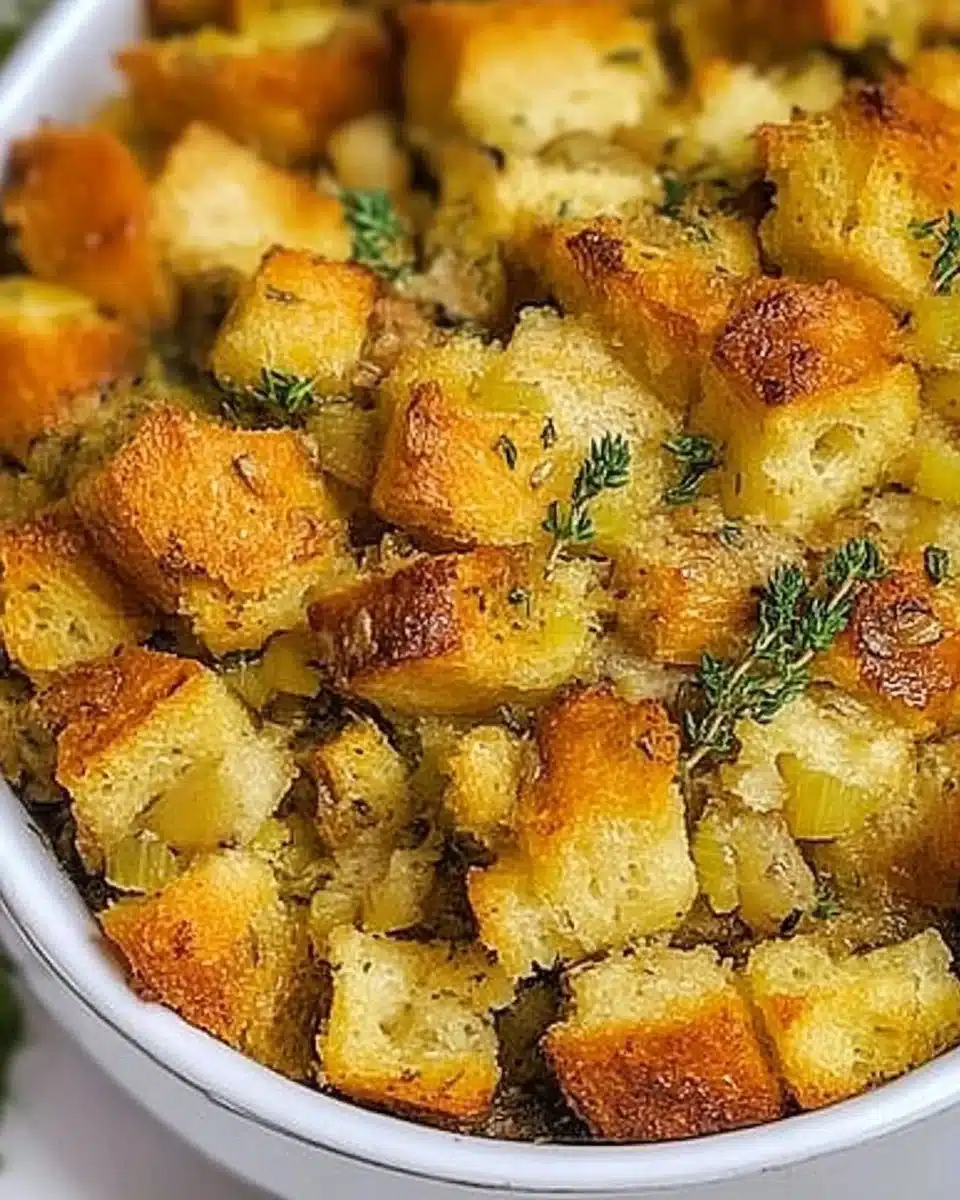
The first time the kitchen filled with the deep, warm scent of butter and sage, I stopped what I was doing and leaned into the doorway like I was listening to an old friend. The smell wrapped around me the way a well-worn sweater does, and I knew the table was about to feel full. If you want to shape these into bites for a party, my stuffing balls recipe makes a lovely companion and keeps small hands happy while the turkey rests.
Why Thanksgiving Stuffing Still Feels Like Home
There are dishes that feed the body and dishes that feed the memory, and this Thanksgiving stuffing does both. It carries the soft sounds of family chatter, the scrape of plates, and the hush that falls when someone says grace. When I make it, I see little hands reaching for crumbs and my mother’s careful way of tearing bread, and I feel the same steady comfort I felt as a child.
This recipe began as a simple way to use up a loaf of bread left from a busy week, and it grew into something we call our own. It earned its place at the table because it is honest and easy, with flavors that sit beside a roast turkey without fighting for attention. The herbs are familiar and the texture is pleasingly soft with a few crisp edges that everyone quietly argues over.
Thanksgiving stuffing is more than an item on a plate for us. It is the bridge between the main event and the little moments in between, like pouring gravy and passing the cranberry sauce. When I tuck fresh rosemary into the mix, it reminds me of winter walks; when I melt butter in the pan, it brings the kitchen to life. I hope this recipe gives you a place to build your own small rituals, and if you ever want to turn this into individual bites for guests, you can find a playful twist in my stuffing balls recipe.
What Makes This Thanksgiving Stuffing Special
It is simple flavors held with care. The herbs are modest but fragrant, the bread soaks up the broth and becomes tender without turning soggy, and the butter gives everything a soft richness. There are no outsized claims here, only a steady, reliable warmth that appears on the plate and invites conversation.
Part of what makes this stuffing feel homey is its flexibility. You can add small things from your kitchen—roasted nuts, sautéed apples, or leftover sausage—and the base will hold them kindly. I often keep it plain for the first run, then scatter extras on top for those who want a second round of flavor. Over the years, family members have slipped in little preferences: my husband loves a heavier hand with sage, my daughter asks for extra celery for crunch, and I always think a whisper of rosemary lifts the whole dish.
When I teach friends to make this, I tell them to listen to their senses. Watch the onions blush in the butter, smell how the dried herbs wake with a minute in the pan, and feel the bread as it soaks up the broth. Cooking like this invites you to be present, and the result is a stuffing that tastes like the hands and heart that made it. If you want more ideas for sharing these flavors in a bite-friendly way, take another look at my stuffing balls recipe.
Bringing Thanksgiving Stuffing Together
“Every time I stir this pot, it smells just like Sunday at home.”
Making this stuffing is a steady rhythm of small actions that add up to something generous. You start with butter on the stove and the soft sizzle of onion and celery, which is like the first few notes of a song you know by heart. The herbs join in and the kitchen fills, and there is a moment when everything seems to say yes.
Colors matter here. The pale cubes of bread turn warm gold as they soak, and the onion becomes translucent and sweet. Listen as the butter talks softly in the pan and the spoon taps the bowl as you mix. Those are the sounds that say it is cooking right.
Texture is part of the story too. You want bread that has softened and given up its edges, yet still holds a bit of shape. When it hits the oven, the outside browns and crisps while the inside stays tender. That contrast is the reason people come back for seconds. Breathe in that herb-warm aroma, and know you are making something that will bring people to the table.
Ingredients You’ll Need
1 loaf of bread, cubed
1 stick of butter
1 onion, chopped
2 celery stalks, chopped
2 teaspoons dried sage
1 teaspoon dried thyme
1 teaspoon dried rosemary
2 cups chicken or vegetable broth
Salt and pepper to taste
A note on ingredients: fresh butter gives this its richness and a soft mouthfeel, so do not skimp if you can help it. If your bread is very fresh, let it sit out uncovered for a few hours so it dries slightly; day-old bread is often perfect. A little extra vanilla if you love a cozy aroma does not belong here in the classic version, but it is the kind of idea I let slip into a baking corner of my mind—this is your kitchen, and a small experiment can become a family favorite.
Choose a sturdy loaf that will hold up to the broth without dissolving into mush. If you prefer a heartier bite, a country-style loaf or sourdough adds personality. For a softer, more neutral base, use a white or sandwich loaf. The herbs are essential but forgiving; if you have fresh herbs, use a bit more, and if you only have dried, the amounts listed will give you a lovely result.
When I shop for this recipe, I like to walk slowly past the produce and smell the celery and onion. It is a small ritual that helps me decide which batch to bring home. The broth is the binder and the flavor carrier, so choose something you like to sip on its own. If you keep vegetable broth on hand, the stuffing will be friendly to vegetarians and still rich in flavor.
Step-by-Step Directions
Preheat the oven to 350°F (175°C).
I set the racks in the middle and feel the small thrill of the kitchen warming up. Let the oven reach its temperature so the stuffing bakes evenly and the edges can brown just right.In a large skillet, melt the butter over medium heat. Add the chopped onion and celery, and sauté until softened, about 5-7 minutes.
Stir until the vegetables turn glossy and fragrant, and breathe in that buttery, sweet smell. The onion should be soft and the celery tender, with no raw bite left.Stir in the dried herbs (sage, thyme, rosemary) and cook for another 2 minutes.
Watch the herbs wake in the warm butter and release their scent into the pan. Move the spoon through the mixture and feel the small puck of flavor building.In a large bowl, combine the cubed bread with the vegetable mixture. Pour the broth over the bread and mix until everything is well combined.
Fold gently so the bread soaks but does not turn to mush, and notice how the color deepens as the broth spreads. The bowl should feel warm in your hands and smell like the coming meal.Season with salt and pepper to taste.
Taste a little of the mixture and adjust, remembering that the oven will soften boldness a touch. Salt lifts the herbs, and pepper gives a friendly nudge.Transfer the stuffing to a greased baking dish and cover with foil.
Smooth the top with the back of a spoon and know the cover will hold steam and create tenderness. This step is a promise that the interior will be soft while the oven does its work.Bake for 25 minutes, then remove the foil and bake for an additional 15 to 20 minutes, until golden brown.
Wait for the edges to turn golden and for the top to develop little pockets of crisp. When you open the oven, let the warm, herb-scented air greet you like a small celebration.Serve warm alongside your Thanksgiving turkey.
Scoop into a waiting dish and let the steam rise, bringing with it the mix of butter, herbs, and warm bread. This is best shared right away, when the textures are most alive.
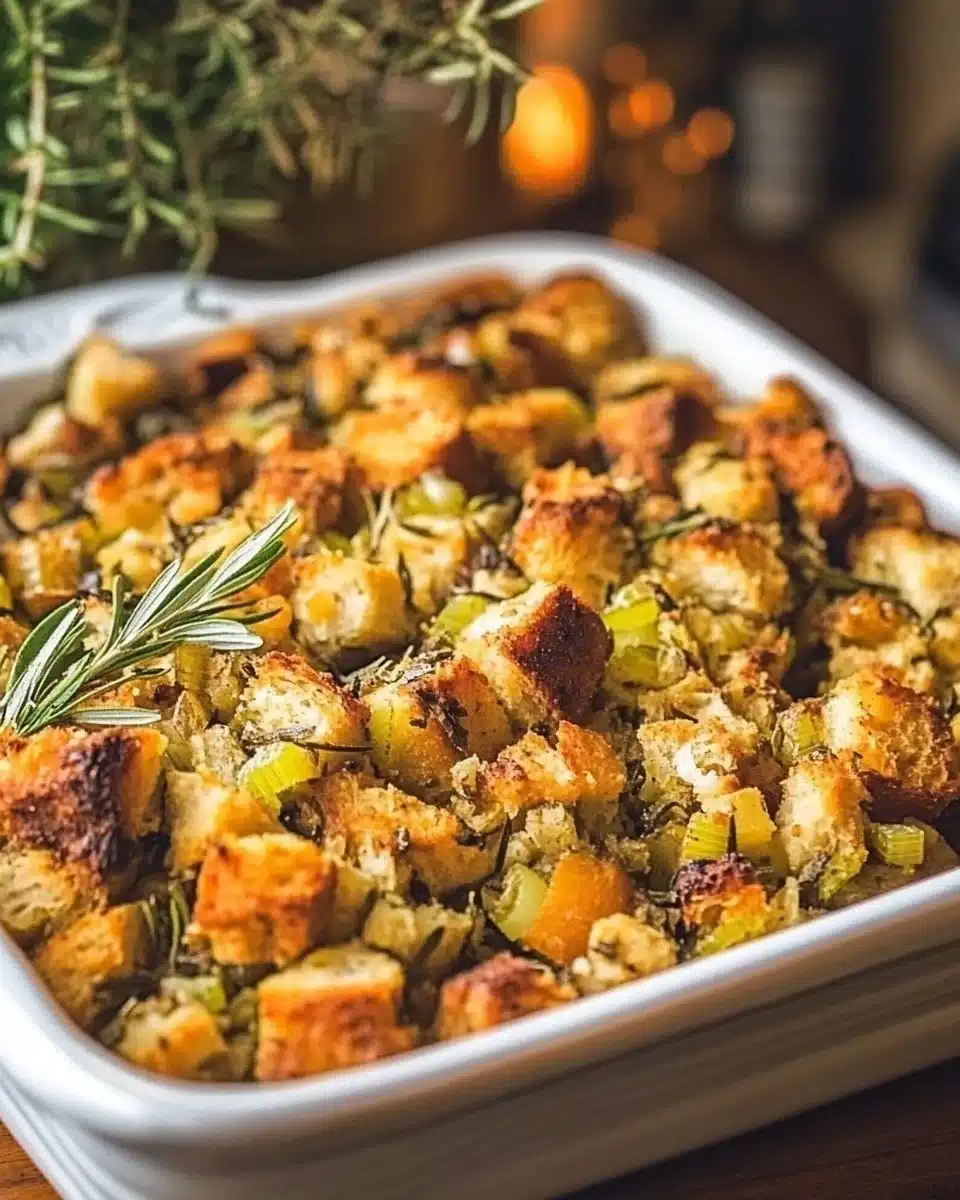
Serving Thanksgiving Stuffing With Family Warmth
I like to bring the stuffing to the table in a simple dish, without fuss, because the contentment in this recipe comes from the sharing more than the display. A rustic spoon and warm serving dish make it easy for family members to help themselves, and I always leave a ladle of extra broth nearby for anyone who likes it moister.
Pairing matters. This stuffing mingles well with tart cranberry sauce and bright roasted vegetables that cut through the richness. For those who love a green note, a simple dressed spinach salad brings a fresh contrast. If your family leans toward more savory plates, a bit of caramelized onion or a side of roasted carrots keeps the meal in balance.
There are little rituals we follow when we serve it. Someone always gives thanks, someone passes the bowl clockwise, and someone else offers a second scoop without asking. My children like to press a few crispy bits against their tongue first, a small private habit that always makes me smile. This is how the dish becomes woven into the meal, not as a side that waits politely, but as a companion that invites conversation.
When plating, I like to spoon some stuffing near the turkey so it can soak up a drizzle of gravy, and I leave a portion off to the side for anyone who prefers it pure. Bowls with high sides keep things warm longer, which matters if you have a big family circle. If you are bringing the stuffing to someone else’s house, take it in a shallow pan so rewarming is quick and the top can regain its crisp.
Small Traditions That Grow Big
We have a quiet ritual of saving the crisp top corners for the person who arrives last, and everyone knows to claim those with a small grin. A pinch of parsley at the end feels like a curtain call, a green note that brightens the plate. Little traditions like these make a simple recipe feel like home every time.
If you are hosting and want a small surprise, toast a few bread crumbs with a bit of butter and sprinkle them over when you serve. The extra crunch delights children and adults alike, and it takes just a minute. These small acts are the kind of care that turns a good meal into a remembered one.
How to Save the Leftovers
Leftover stuffing is a quiet treasure, but it asks for gentle handling so it keeps its charm. Let it cool a bit before you store it, because rushing hot food into the fridge alters textures. Spoon it into an airtight container and press the mixture lightly so it holds together without becoming compacted.
In the refrigerator, it will keep well for three to four days, and the flavors will continue to soften and mingle. If you find the mixture seems dry after a day or two, sprinkle a little broth on top before reheating to refresh it. The herbs will have relaxed into the bread, and the whole thing often tastes richer the next day.
To reheat, place the stuffing in a covered dish and warm it in a 350°F oven until heated through, about 15 to 20 minutes depending on portion size. If you like the top crisped, remove the cover for the last five minutes. For a single portion, I sometimes reheat it in a skillet over medium heat with a touch of butter, which brings back the edges I love.
If you freeze leftovers, spread them in a shallow, freezer-safe container and wrap tightly. It will keep for up to three months. Thaw in the fridge overnight, then reheat gently so the moisture comes back without turning soggy. I find that thawing slowly keeps the texture closer to the original.
Keeping It Fresh and Comforting
When you return to this dish the next day, take a moment to taste and add a small flourish if needed. A squeeze of lemon feels odd but brightens things, especially if your herbs are very soft. A sprinkle of toasted nuts gives texture, and a few pieces of warm apple offer a sweet counterpoint.
If you bring this to a friend or neighbor, pack the components thoughtfully. Keep the crisp top separated if possible and warm it briefly before serving. A small note with the dish that says, "Reheat at 350°F for 15 minutes" is a simple kindness that others really appreciate.
Troubleshooting Common Questions
If your stuffing turned out too dry, it likely missed a bit of broth or needed a touch more butter. Warm a little broth and fold it in gently until you reach the texture you like. If it is too wet, spread it in a shallow pan and bake for a bit longer to let the extra liquid evaporate.
If the herbs feel weak, they might be old and need replacing. Dried herbs lose their intensity over time, so if you cannot smell them in the jar, use a few more or switch to fresh. Fresh herbs will give a brighter note and a little color.
If the bread did not soften evenly, maybe it was cut too large or the liquid was not mixed through. Next time, cut the bread into smaller pieces and mix with your hands so the broth reaches every corner. Often the easiest fix is to gently press the mixture into the dish so heat and moisture distribute evenly during baking.
A Few Personal Tips from My Kitchen
I keep a small jar of dried sage on the counter during the season so I remember to add it with intention. Tasting as you go is one of the best habits you can build; it keeps you connected to the dish and gives you the chance to make tiny corrections that matter. When the kids were small, we made a game of naming the smells in the pan, which turned cooking into a way of teaching them appreciation for simple ingredients.
If you have a child who prefers a milder bite, set aside a small portion before you add the herbs and seasonings, then combine them after everyone has taken their first helping. This small choice keeps everyone happy and prevents waste. I also like to set the butter on the counter for a few minutes so it softens and melts evenly in the pan.
When I plan Thanksgiving, I make the bread cubes a day ahead so their texture becomes ideal. It saves the morning rush and quiets one small worry from the list. There is something calming about tackling one task early and letting the day unfold with room for conversation and laughter.
Conclusion
If you want a classic, steady recipe that brings people together without fuss, this stuffing is a warm choice and a gentle anchor for your holiday table, much like a favorite buttery herb stuffing that I often turn to for inspiration.
Print
Classic Thanksgiving Stuffing
- Total Time: 60 minutes
- Yield: 8 servings 1x
- Diet: Vegetarian
Description
A classic Thanksgiving stuffing that is warm, comforting, and easy to make, perfect for complementing your holiday turkey.
Ingredients
- 1 loaf of bread, cubed
- 1 stick of butter
- 1 onion, chopped
- 2 celery stalks, chopped
- 2 teaspoons dried sage
- 1 teaspoon dried thyme
- 1 teaspoon dried rosemary
- 2 cups chicken or vegetable broth
- Salt and pepper to taste
Instructions
- Preheat the oven to 350°F (175°C).
- In a large skillet, melt the butter over medium heat. Add the chopped onion and celery, and sauté until softened, about 5-7 minutes.
- Stir in the dried herbs (sage, thyme, rosemary) and cook for another 2 minutes.
- In a large bowl, combine the cubed bread with the vegetable mixture. Pour the broth over the bread and mix until well combined.
- Season with salt and pepper to taste.
- Transfer the stuffing to a greased baking dish and cover with foil.
- Bake for 25 minutes, then remove the foil and bake for an additional 15-20 minutes, until golden brown.
- Serve warm alongside your Thanksgiving turkey.
Notes
For added flavor, consider incorporating roasted nuts or sautéed apples. If your bread is fresh, let it sit uncovered for a few hours to dry slightly before using.
- Prep Time: 15 minutes
- Cook Time: 45 minutes
- Category: Side Dish
- Method: Baking
- Cuisine: American
Nutrition
- Serving Size: 1 serving
- Calories: 320
- Sugar: 2g
- Sodium: 500mg
- Fat: 15g
- Saturated Fat: 9g
- Unsaturated Fat: 6g
- Trans Fat: 0g
- Carbohydrates: 45g
- Fiber: 2g
- Protein: 7g
- Cholesterol: 30mg
Keywords: Thanksgiving, stuffing, holiday recipe, side dish, comfort food