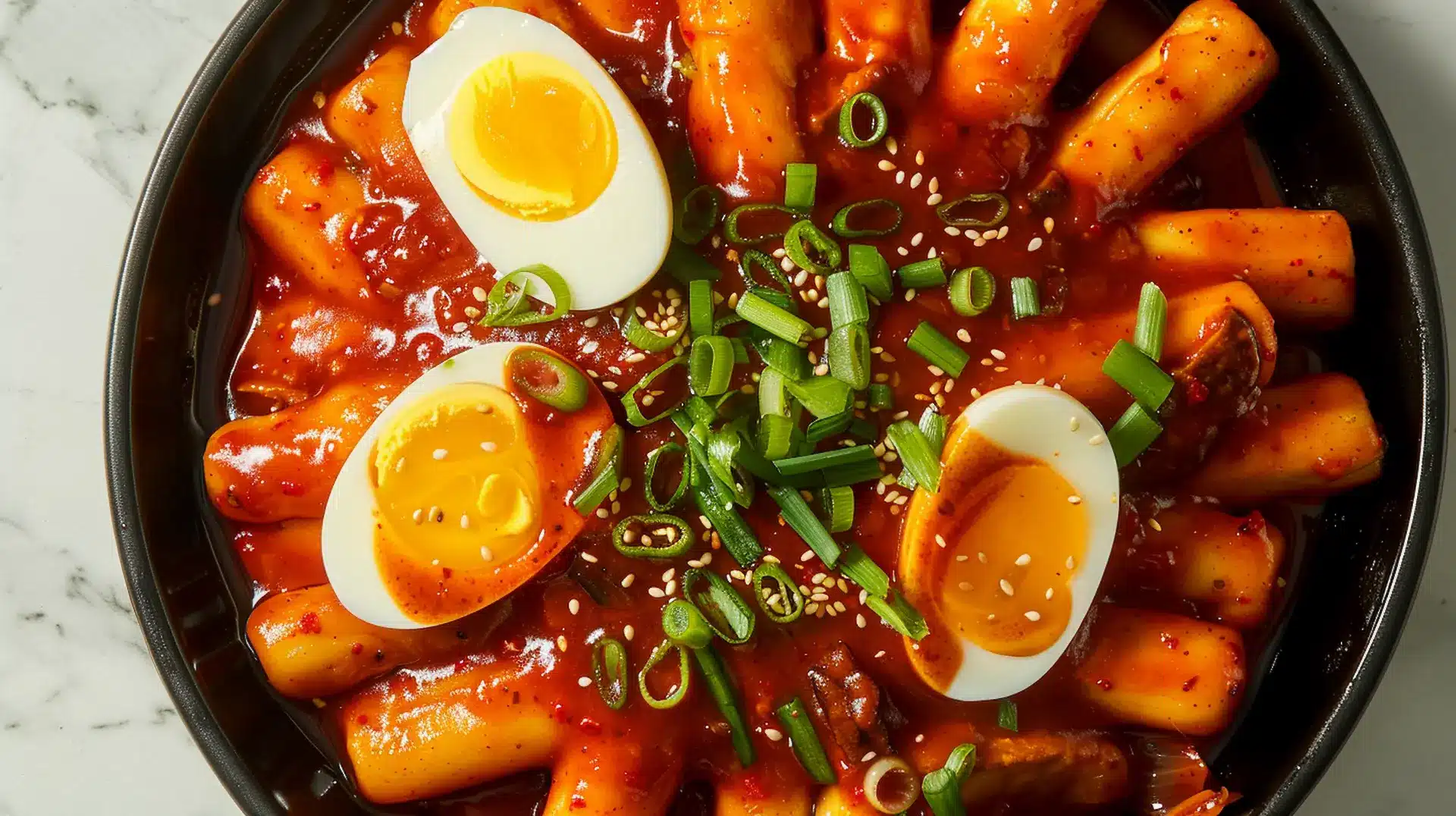
I’ll never forget the first time I tried to make tteokbokki at home. I’d spent years eating it from street vendors in Seoul, those little paper cups filled with chewy rice cakes swimming in fiery red sauce, the kind you’d eat standing up while your mouth burned and your heart felt full. When I moved away, I missed it like you’d miss an old friend.
So one afternoon, armed with a bag of rice cakes and a jar of gochujang from CJ CheilJedang I’d hoarded from my last trip, I decided to recreate it. The first attempt? Watery. The second? Too sweet. By the third try, I’d figured out the balance, and when that glossy, deep-red sauce clung to each rice cake exactly the way it should, I knew I’d cracked it.
In this comprehensive tteokbokki recipe guide, I’ll walk you through exactly how to make authentic Korean spicy rice cakes at home, the kind that tastes like it came from a bunshikjip in Seoul, not a recipe that compromises. You’ll learn the flavor tricks that make the difference, the best ingredients to use, and how to get that perfect chewy-spicy-sweet balance every single time.
What Exactly Is Tteokbokki?
Tteokbokki (떡볶이) is one of Korea’s most beloved street foods, recognized by the Korea Tourism Organization as an iconic dish of Korean food culture. Chewy cylinder-shaped rice cakes simmered in a spicy-sweet gochujang-based sauce. It’s the kind of food that Koreans grow up eating after school, at pojangmachas (street tents), or late at night when nothing else will do.
The word itself breaks down simply: tteok means rice cake, and bokki means stir-fried or simmered. But calling it “stir-fried rice cakes” doesn’t capture what it actually is. It’s comfort food, nostalgia food, the kind of dish that makes you feel something.
The Three Versions You Should Know
There are actually several styles of tteokbokki recipe variations, but three stand out:
Classic Tteokbokki (Bunshik-style): The spicy, gochujang-based version most people know and love. This is what we’re making today.
Royal Court Tteokbokki (Gungjung Tteokbokki): A soy-based, non-spicy version originally served in Korean royal courts. It’s stir-fried with vegetables and meat in a savory soy glaze. If you’re curious about non-spicy Korean dishes, check out our guide to semaglutide-friendly recipes that also focus on balanced flavors without heat.
Rose Tteokbokki (Creamy Tteokbokki Recipe): A modern fusion version that adds cream to the classic spicy sauce, creating a milder, creamier result. It’s trendy, Instagram-friendly, and delicious in its own right.
Today, we’re sticking with the classic bunshik-style, the one that defined Korean street food culture.
Print
Classic Tteokbokki Recipe: Korean Spicy Rice Cakes That Actually Taste Like Seoul
- Total Time: 25 minutes
- Yield: 4 servings 1x
Description
Authentic Korean tteokbokki recipe with chewy rice cakes in glossy gochujang sauce. This classic street food comes together in 25 minutes with deep, layered flavors that taste just like Seoul.
Ingredients
1 lb (450 g) Korean rice cakes (garaetteok)
2 sheets fish cake, sliced into triangles
1 Korean leek (or 3 green onions), sliced
2½ cups (600 ml) water
2 anchovy stock coins (or dashida)
3 tbsp (45 g) gochujang (Korean red chili paste)
1 tbsp (7 g) fine gochugaru (Korean chili powder)
1 tbsp (15 ml) soy sauce
1½ tbsp (20 g) light brown sugar
1½ tsp (4 g) onion powder
1 tbsp (15 ml) Korean oligo syrup (optional)
Sesame seeds for garnish (optional)
Instructions
1. If using refrigerated or frozen rice cakes, soak them in warm water for 10 minutes until softened. Drain and set aside.
2. Slice fish cake sheets into large bite-sized triangles. Slice Korean leeks or green onions diagonally.
3. In a deep skillet or shallow pot, combine water, anchovy stock coins, gochujang, gochugaru, soy sauce, brown sugar, and onion powder. Stir well until gochujang dissolves completely.
4. Bring sauce to a gentle boil over medium heat. Add drained rice cakes and stir to coat evenly.
5. Simmer for 7-10 minutes, stirring often to prevent sticking. Rice cakes should become soft and chewy while sauce thickens.
6. Add fish cakes and sliced leeks. Continue simmering for 3-5 minutes until fish cakes absorb sauce and leeks soften.
7. For glossy finish, drizzle Korean oligo syrup in the last minute of cooking. Adjust consistency: keep soupy for street-style or simmer longer for thicker glaze.
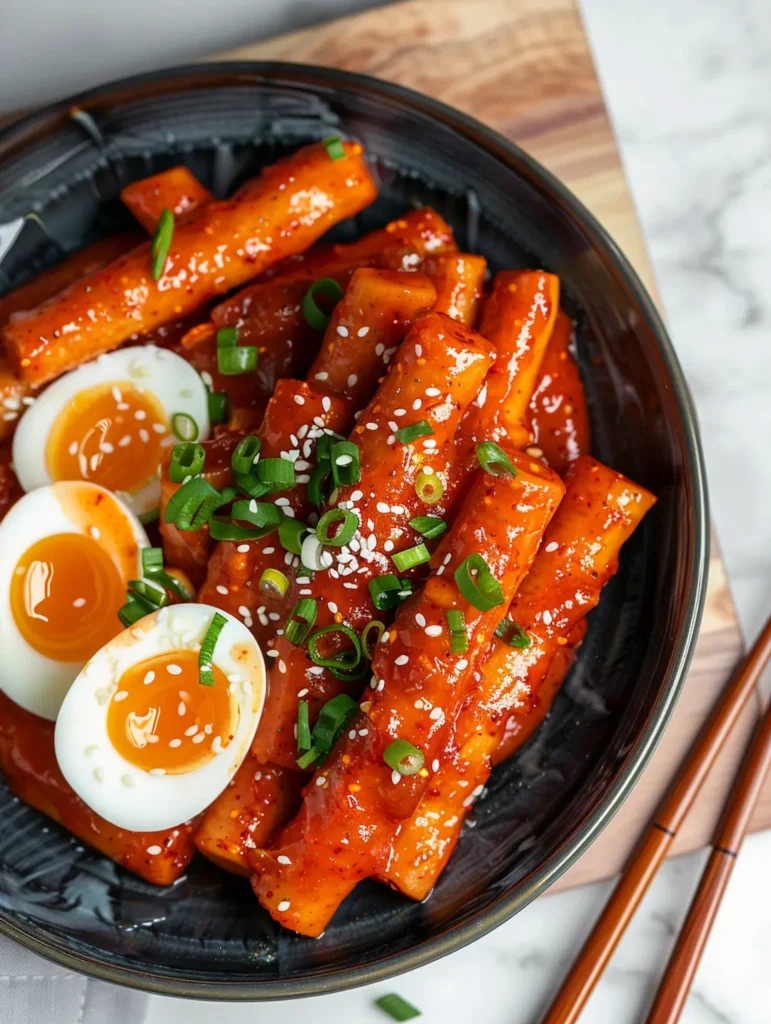
8. Serve immediately in bowls. Garnish with sesame seeds if desired. Pair with hard-boiled eggs, gimmari, or kimbap for authentic Korean bunshik experience.
Notes
Soaking refrigerated or frozen rice cakes prevents uneven cooking and mushy texture.
Fine gochugaru creates smoother sauce than coarse flakes. Blend coarse gochugaru in blender if needed.
Anchovy stock adds essential umami without fishy taste. Use vegetable broth for vegetarian version.
Sauce continues to thicken as it cools. For reheating, add splash of water.
Variations: Add mozzarella for cheese tteokbokki, heavy cream for rose tteokbokki, or omit gochugaru for mild version.
Store leftovers in airtight container for up to 3 days. Do not freeze cooked tteokbokki.
For best results, use Korean brands: Chung Jung One or Haechandle gochujang, and CJ Dashida stock.
- Prep Time: 10 minutes
- Cook Time: 15 minutes
- Category: Korean Street Food, Main Dish, Snack
- Method: Simmer
- Cuisine: Korean
Nutrition
- Serving Size: 1 cup (about 200g)
- Calories: 285
- Sugar: 6g
- Sodium: 680mg
- Fat: 2g
- Saturated Fat: 0.5g
- Unsaturated Fat: 1.5g
- Trans Fat: 0g
- Carbohydrates: 58g
- Fiber: 2g
- Protein: 8g
- Cholesterol: 8mg
Keywords: tteokbokki recipe, Korean spicy rice cakes, easy tteokbokki recipe, tteokbokki sauce recipe, cheese tteokbokki recipe, vegetarian tteokbokki recipe, creamy tteokbokki recipe
The Flavor Secret That Changes Everything
Every Korean cook has their own version of this easy tteokbokki recipe, but here’s what sets mine apart: it’s about layering flavors, not just dumping in gochujang and hoping for the best.
Most tteokbokki recipe tutorials tell you to mix gochujang with water, add rice cakes, and call it done. That works if you want something edible. But if you want something that tastes like the tteokbokki you’d stand in line for at Gwangjang Market? You need to build depth.
Here’s What I Do Differently
Fine gochugaru instead of coarse: I use finely ground Korean chili powder certified by Korea Agro-Fisheries, not the coarse flakes. It creates a smoother tteokbokki sauce with a richer, deeper red color that clings to each rice cake like it should. The texture is silkier, and the heat distributes more evenly.
Onion powder for umami depth: A small addition, but it adds a savory backbone that you don’t get from gochujang alone. It’s subtle, but you’d miss it if it weren’t there.
Brown sugar, not white: I prefer the deeper caramel notes of brown sugar. White sugar works, but brown gives you a rounder, more complex sweetness that balances the heat better.
Anchovy stock as the base: This is non-negotiable for me. Real Korean home-style tteokbokki always starts with anchovy stock (myulchi yuksu). It doesn’t taste fishy, it just adds a layer of umami that water or even dashi can’t match. If you’re exploring umami-rich broths, you might also enjoy our immune-boosting soup recipes that rely on similar depth-building techniques.
The right sweet-spicy-savory balance: This rice cake recipe should never be one-note. It’s not just spicy. It’s spicy, yes, but also sweet with a hint of tang and a subtle savory undertone. When all those flavors come together in that sticky red sauce, it’s the kind of thing that makes you understand why Koreans crave this dish so intensely.
Key Ingredients for Authentic Tteokbokki
You don’t need a long ingredient list, but what you do use matters. Here’s what goes into this tteokbokki recipe, and why.
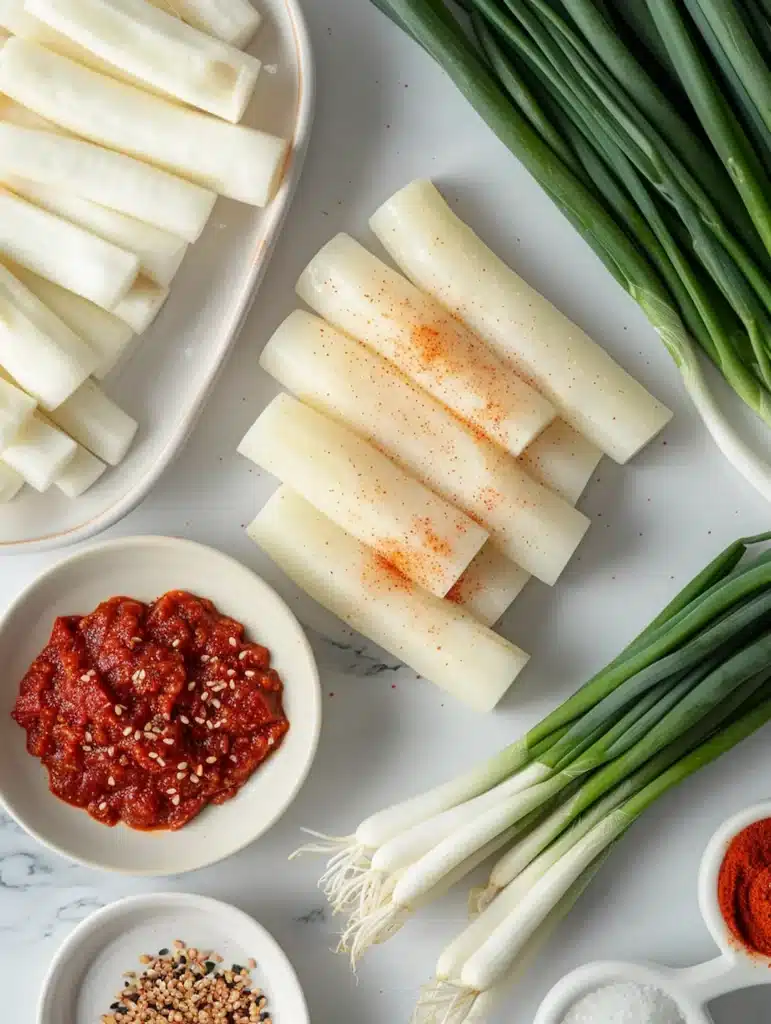
Rice Cakes (Tteok, 떡)
Use garaetteok, the long, cylinder-shaped rice cakes made specifically for tteokbokki. They’re usually sold fresh or vacuum-sealed at Korean grocery stores, and sometimes in the refrigerated section of larger Asian markets. If you’re searching for “tteokbokki near me” or checking your local tteokbokki épicerie, ask specifically for garaetteok.
Fresh rice cakes are ideal, but refrigerated or frozen ones work perfectly if you soak them in warm water for about 10 minutes before cooking. This softens them and prevents them from turning mushy or breaking apart during simmering.
Can I make rice cakes from scratch? Yes, you can make a tteokbokki recipe rice flour version at home. Mix sweet rice flour (mochiko) with water and salt, knead into a dough, roll into cylinders, and cut into pieces. It takes more time, but it works beautifully.
Fish Cakes (Eomuk, 어묵)
Go for thin, flat fish cake sheets, the kind you can cut into triangles or strips. They’re light, slightly chewy, and soak up the sauce beautifully. You’ll find them in the refrigerated or frozen section of Korean markets, usually in large rectangular sheets.
If you can’t find Korean fish cakes, you can skip them or substitute with thinly sliced fish balls, though the texture won’t be quite the same. For a tteokbokki recipe vegetarian version, simply omit the fish cakes or replace them with fried tofu triangles.
Korean Leek (Daepa, 대파)
Korean leeks are thicker and more aromatic than regular green onions. They add a mild sweetness when simmered in the sauce. If you can’t find them, use a bunch of large green onions, they’re the next best thing.
Korean Stock Coin
This is my shortcut when I don’t have time to make anchovy broth from scratch. Korean stock coins (also called dashida coins or broth tablets) are concentrated flavor bombs that melt right into the sauce. Just drop a couple into the skillet with water, gochujang, and gochugaru, and you get that deep, savory base in minutes.
No, it doesn’t taste artificial or fishy, it tastes like real Korean home cooking. If you’re building a pantry of wellness staples, these coins are as essential as the bone broth cubes we discuss in our gelatin wellness guide.
Gochujang (Korean Red Chili Paste)
This is the heart of the tteokbokki sauce recipe. Gochujang from Sempio or other authentic Korean brands is a fermented chili paste made from red chili powder, glutinous rice, fermented soybeans, and salt. It’s spicy, slightly sweet, deeply savory, and absolutely essential. Don’t substitute with sriracha or another hot sauce, it won’t work.
Look for brands like Chung Jung One or Haechandle. They’re widely available at Asian markets and even some regular grocery stores now.
Gochugaru (Korean Chili Powder)
I use fine-grind gochugaru for a smooth texture and that beautiful scarlet sheen. If you only have coarse Korean chili flakes, blend them into a fine powder before using. It makes a real difference in how the sauce looks and clings to the rice cakes.
Brown Sugar
For sweetness with depth. You can use white sugar or even honey, but I prefer brown for its richer caramel notes.
Korean Oligo Syrup (Optional)
This is a slightly sweet syrup made from oligosaccharides. It’s optional, but if you want that glossy, restaurant-style finish, drizzle a little at the end of cooking. It’s not just for looks, it adds a subtle sweetness and makes the sauce cling beautifully.
Step-by-Step: How to Cook Tteokbokki with Gochujang
This easy tteokbokki recipe comes together in under 30 minutes, but every step matters. Follow along, and you’ll have a pot of glossy, spicy, deeply satisfying tteokbokki that rivals anything you’d get in Korea.
Step 1: Prepare the Rice Cakes and Fish Cakes
If your rice cakes are refrigerated or frozen, soak them in warm water for about 10 minutes. This softens them just enough so they cook evenly and don’t go mushy or break apart.
While they’re soaking, cut your fish cake sheets into large bite-sized triangles (or any shape you like). I usually cut each sheet into 6-8 pieces.
Pro tip: Don’t skip the soaking step if your rice cakes have been chilled or frozen. Soaking rehydrates the outer layer and prevents them from absorbing too much sauce too quickly, which can make them soggy.
Step 2: Build the Tteokbokki Sauce
In a deep skillet or shallow pot, combine:
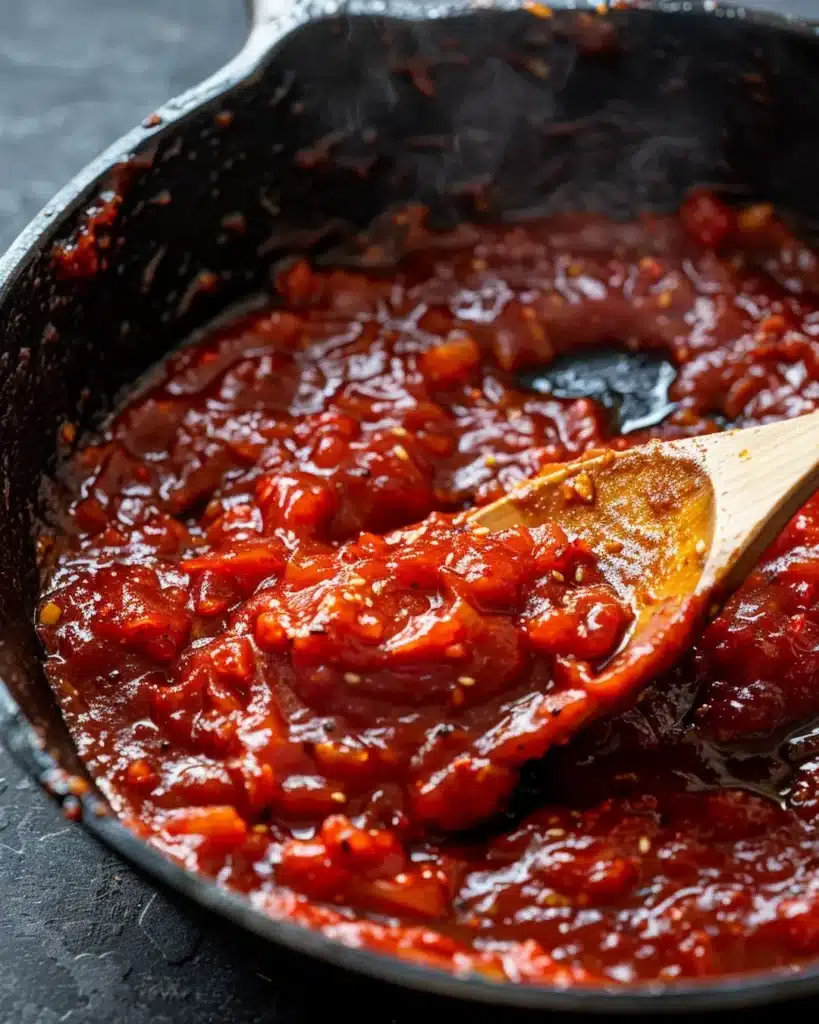
- 2½ cups (600 ml) water
- 2 anchovy stock coins
- 3 tablespoons (45 g) gochujang
- 1 tablespoon (7 g) fine gochugaru
- 1 tablespoon (15 ml) soy sauce
- 1½ tablespoons (20 g) brown sugar
- 1½ teaspoons (4 g) onion powder
Stir everything together until the gochujang dissolves completely. The mixture will look thin at first, that’s normal. The tteokbokki sauce will thicken as it simmers and the rice cakes release their starch.
Step 3: Simmer the Rice Cakes
Bring the sauce to a gentle boil over medium heat. Once it’s bubbling, add the drained rice cakes. Stir well to coat them evenly.
Let the rice cakes simmer for 7-10 minutes, stirring often so they don’t stick to the bottom of the pan. You’ll notice the sauce starting to thicken and the rice cakes becoming soft and chewy.
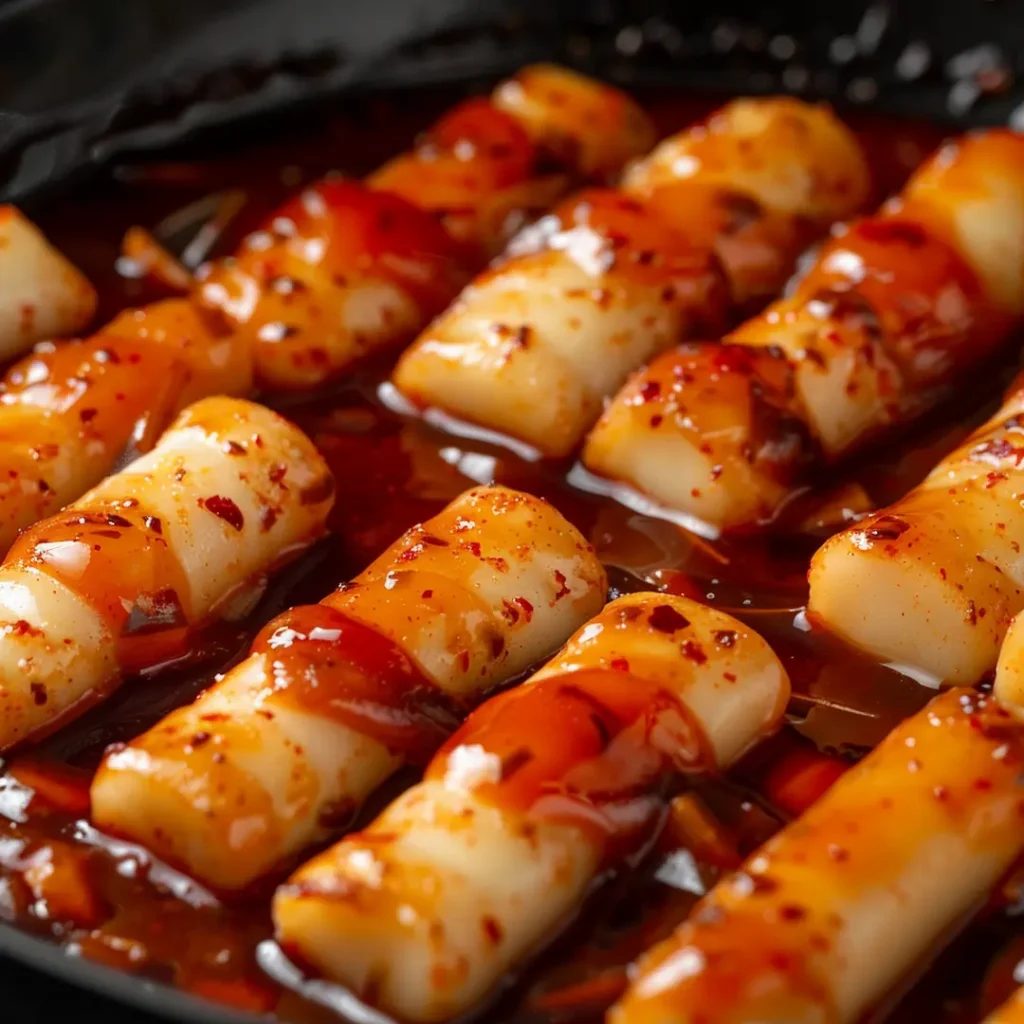
What to watch for: The rice cakes should be soft but still have a pleasant chew, not mushy or falling apart. If they’re still firm after 10 minutes, add a splash more water and simmer a bit longer.
Step 4: Add Fish Cakes and Leeks
Once the sauce has thickened and the rice cakes are cooked through, stir in:
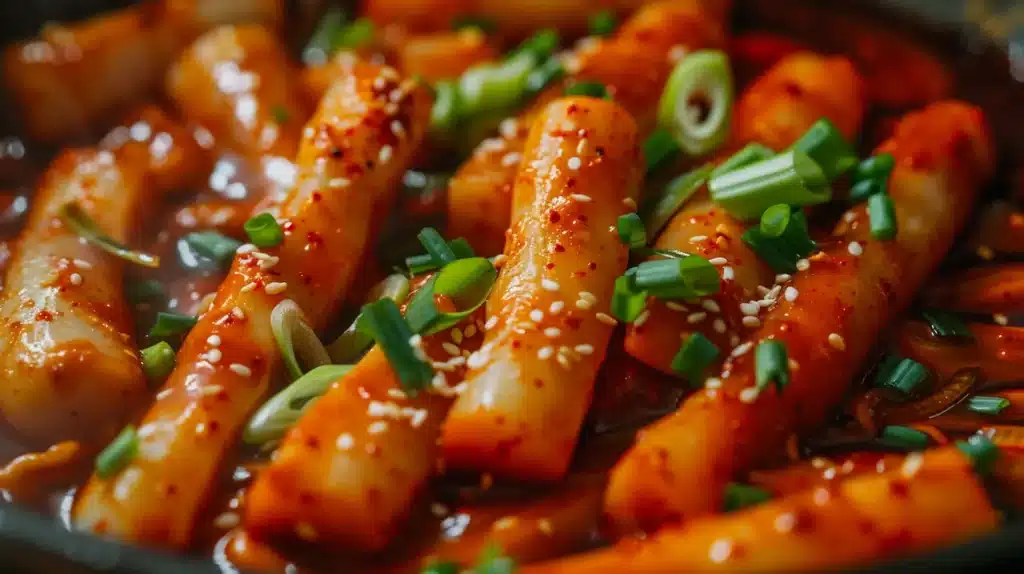
- Sliced fish cakes (or omit for tteokbokki recipe vegetarian)
- Sliced Korean leeks (or green onions)
Let everything simmer together for another 3-5 minutes. The fish cakes will absorb the tteokbokki sauce, and the leeks will soften and add a mild sweetness.
Adjust the consistency: If you like your tteokbokki slightly soupy (the classic Korean street style and my personal favorite), stop here. If you prefer a thicker, glaze-like sauce, let it simmer a few minutes longer. Just remember: the sauce will continue to thicken as it cools.
Step 5: Finish with Oligo Syrup (Optional)
For that irresistible glossy finish, drizzle about 1 tablespoon of Korean oligo syrup over the top in the last minute of cooking. Stir it through gently. This step is optional, but it gives your tteokbokki recipe that restaurant sheen and a subtle sweetness that rounds out the heat.
Easy Tteokbokki Recipe Variations
Once you’ve mastered the classic tteokbokki recipe version, you can play with it. Here are some variations I love:
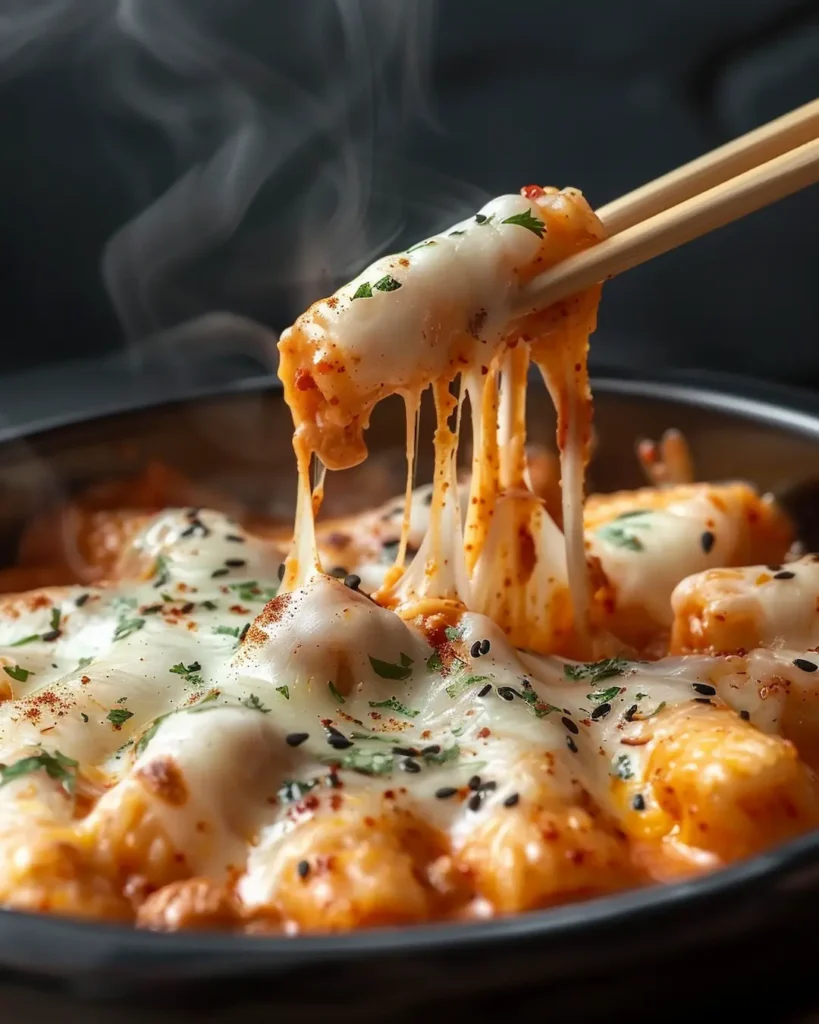
Cheese Tteokbokki Recipe
Add a handful of shredded mozzarella in the last minute of cooking. It melts into the sauce and creates a creamy, indulgent cheese tteokbokki recipe version that’s wildly popular in Korea right now. The cheese adds richness and helps balance the heat for those who find the classic version too spicy.
Creamy Tteokbokki Recipe (Rose Tteokbokki)
Stir in ¼ cup of heavy cream or milk after the rice cakes are cooked. This creates a pink, creamy sauce that’s milder and richer. You can also add a tablespoon of butter for extra silkiness. This creamy tteokbokki recipe is perfect for those who want the flavors without the full heat.
Tteokbokki Recipe Vegetarian
Skip the fish cakes and anchovy stock. Use vegetable broth or plain water with a dash of soy sauce and mushroom powder for umami. Add extra vegetables like mushrooms, cabbage, or fried tofu for protein and texture in this tteokbokki recipe vegetarian adaptation.
Tteokbokki Recipe Not Spicy (Gungjung-Style)
Omit the gochugaru and reduce gochujang to 1 tablespoon (or skip it entirely). Build the sauce with soy sauce, sesame oil, garlic, and a touch of honey instead. Stir-fry the rice cakes with vegetables and beef for a mild, savory tteokbokki recipe not spicy version.
Tteokbokki Recipe Without Gochujang
If you don’t have gochujang, you can make a simplified tteokbokki recipe without gochujang using tomato paste mixed with soy sauce, honey, garlic powder, and a pinch of cayenne pepper. It won’t taste exactly the same, but it creates a sweet-spicy sauce that works in a pinch.
Seafood Tteokbokki
Stir in shrimp, squid, or mussels along with the fish cakes. The seafood cooks quickly and adds a briny sweetness to your tteokbokki recipe.
Instant Ramen Tteokbokki
Add a packet of instant ramen noodles (without the seasoning packet) in the last 3 minutes of cooking. The noodles soak up the sauce, and the combination is dangerously addictive. For more noodle-based comfort food ideas, try our quick and easy ground beef recipes.
How to Serve Tteokbokki
Tteokbokki is delicious on its own, but in Korea, it’s often paired with other snacks to create a full bunshik (snack food) experience.
Classic Pairings
- Gimmari: Crispy fried seaweed rolls filled with glass noodles. You dip them right into the tteokbokki sauce. The contrast between crunchy and chewy is unbeatable.
- Hard-boiled eggs: Halved and placed on top. The egg yolk helps cut the heat and adds richness.
- Mandu (dumplings): Pan-fried or steamed, served alongside or simmered in the sauce.
- Kimbap: Korean seaweed rice rolls. Together, tteokbokki and kimbap make one of the most popular Korean meal combos.
- Fried snacks: Korean corn dogs, fried squid, or tempura vegetables.
- Pickled radish (danmuji): The tangy crunch cuts through the richness perfectly.
If you’re looking for more Korean-inspired comfort food pairings, our honey-glazed ham recipe offers a sweet-savory balance that complements spicy dishes beautifully.
Personally, I like to eat tteokbokki straight from the pan with a pair of chopsticks and a side of pickled radish to cut through the richness.
Common Mistakes and How to Avoid Them
Even though this easy tteokbokki recipe is simple, a few missteps can throw off the final result. Here’s what to watch out for:
1. Not Soaking Refrigerated or Frozen Rice Cakes
If you skip this step, the rice cakes can cook unevenly, tough on the outside, mushy on the inside. Always soak them in warm water for 10 minutes if they’ve been chilled or frozen.
2. Using Coarse Gochugaru Without Blending It
Coarse chili flakes don’t dissolve well into the sauce and can make it gritty. If you only have coarse gochugaru, blend about ½ cup in a blender until it’s fine, then use what you need and store the rest in the fridge.
3. Making the Sauce Too Sweet
Tteokbokki should be spicy-sweet, not candy-sweet. Start with the amount of sugar in the tteokbokki recipe, then taste and adjust. You can always add more, but you can’t take it back.
4. Overcooking the Rice Cakes
If you simmer them too long, they’ll turn mushy and lose their signature chew. Aim for soft but springy. If you’re unsure, taste one after 7 minutes, it should be tender with a slight bounce.
5. Not Stirring Enough
Rice cakes release starch as they cook, and if you don’t stir regularly, they’ll stick to the bottom of the pan and burn. Stir every minute or two, especially in the first 5 minutes.
Storage and Reheating Tips
Tteokbokki is best eaten fresh, but you can store leftovers if you have them.
Storage: Transfer cooled tteokbokki to an airtight container and refrigerate for up to 3 days. The rice cakes will firm up as they chill, that’s normal.
Reheating: Add a splash of water to the pan or microwave-safe bowl and reheat gently over medium-low heat or in the microwave, stirring often. The water will loosen the tteokbokki sauce and soften the rice cakes again. If you’re exploring other reheating techniques for sauce-based dishes, our crock pot enchilada casserole guide has great tips for maintaining moisture.
Freezing: I don’t recommend freezing cooked tteokbokki, the rice cakes can get mealy and lose their texture. But you can freeze uncooked rice cakes for up to 3 months.
Frequently Asked Questions
What are tteokbokki ingredients?
The essential tteokbokki ingredients are: Korean rice cakes (garaetteok), gochujang (Korean red chili paste), gochugaru (Korean chili powder), fish cakes, Korean leeks or green onions, soy sauce, brown sugar, onion powder, and anchovy stock or water. According to Korean food research by the National Institute of Korean Language, traditional tteokbokki always includes these core components. Optional additions include hard-boiled eggs, cheese, vegetables, or seafood. For a vegetarian version, simply omit the fish cakes and use vegetable broth.
Is Korean tteokbokki healthy?
Korean tteokbokki can be part of a balanced diet when eaten in moderation. Rice cakes are naturally low in fat and made from rice flour, making them gluten-free. The dish provides carbohydrates for energy and can include vegetables and protein from fish cakes or eggs. However, traditional tteokbokki is relatively high in sodium and sugar, so portion control matters. For a healthier tteokbokki recipe version, reduce the sugar, add more vegetables, and use less sodium in the tteokbokki sauce recipe. If you’re looking for wellness-focused Korean-inspired dishes, check our turmeric hack for weight loss guide for anti-inflammatory cooking techniques.
What goes with tteokbokki?
Tteokbokki pairs beautifully with several Korean snacks and sides. Classic accompaniments include gimmari (fried seaweed rolls), hard-boiled eggs, mandu (Korean dumplings), kimbap (seaweed rice rolls), Korean corn dogs, and pickled radish (danmuji). For drinks, try Korean rice wine (makgeolli), soju, or cold barley tea. The combination of tteokbokki with kimbap is one of the most popular Korean meal pairings, often called “tteokbokki + kimbap set” at street food stalls.
How to cook tteokbokki with gochujang?
To cook tteokbokki with gochujang, start by soaking rice cakes in warm water if they’re refrigerated or frozen. In a skillet, combine water, gochujang, gochugaru, soy sauce, brown sugar, and seasonings to create the tteokbokki sauce. Bring to a boil, add the rice cakes, and simmer for 7-10 minutes until soft and chewy, stirring frequently. Add fish cakes and leeks, then simmer for another 3-5 minutes until the tteokbokki sauce recipe thickens to your desired consistency. The key is balancing the spicy gochujang with sweetness and umami for that authentic Korean street food flavor.
Why This Tteokbokki Recipe Works
This tteokbokki recipe stays true to the classic bunshik-style tteokbokki you’d find at street stalls and snack shops in Korea, but it’s refined just enough to work perfectly in a home kitchen.
What makes this tteokbokki recipe work:
- Fine gochugaru creates a smooth, glossy tteokbokki sauce with deep color
- Anchovy stock adds essential umami without tasting fishy
- Brown sugar balances heat with complex sweetness
- Onion powder adds subtle savory depth
- The right simmer time ensures chewy rice cakes without mushiness
- Adjustable consistency lets you make it soupy or thick, depending on your preference
The result is tteokbokki that tastes like it came from Seoul, spicy, sweet, deeply savory, and utterly craveable.
Where to Find Ingredients (Tteokbokki Épicerie Guide)
If you’re wondering where to find tteokbokki ingredients or searching “tteokbokki near me” for ready-made options, here’s what I recommend:
Korean Grocery Stores: H Mart, 99 Ranch Market, or local Korean markets will have everything you need for your tteokbokki recipe, garaetteok (rice cakes), gochujang, gochugaru, fish cakes, and Korean leeks.
Online: Amazon, Weee!, or Korean specialty sites like KoreanBuddy and Komart carry all the essentials and will ship directly to you.
Asian Supermarkets: Many large Asian grocery stores stock Korean ingredients in their Korean food section.
Regular Grocery Stores: Some mainstream supermarkets now carry gochujang in the international aisle. Rice cakes are harder to find but occasionally available frozen.
Tteokbokki Épicerie (European readers): If you’re in Europe, look for Korean specialty shops in major cities or online Korean food retailers that serve your region.
Make This Easy Tteokbokki Recipe Your Own
The beauty of this tteokbokki recipe is how adaptable it is. Whether you’re making the classic spicy version, a tteokbokki recipe vegetarian for plant-based friends, a cheese tteokbokki recipe for kids, a creamy tteokbokki recipe for milder heat, or even a tteokbokki recipe not spicy for those who can’t handle the fire, the foundation stays the same.
Master this tteokbokki sauce recipe, and you’ll have a skill that brings Korean street food magic into your home kitchen anytime you crave it. The chewy rice cakes, the glossy red sauce, the way it fills your kitchen with warmth and your belly with comfort, that’s what this rice cake recipe is all about.
Once you fall for tteokbokki, the craving tends to come back often. And now, you’ll know exactly how to satisfy it with this authentic tteokbokki recipe.
Ready to Bring Korean Street Food Home?
This easy tteokbokki recipe is more than just a meal, it’s an experience. It’s the kind of dish that turns a regular weeknight into something special, that makes you feel connected to a culture and a tradition even if you’ve never set foot in Seoul.
Whether you’re meal prepping for the week, cooking for friends, or just craving something deeply satisfying, this rice cake recipe delivers every time. And with all the tteokbokki recipe variations, from cheese to creamy to vegetarian, there’s a version for everyone at your table.
So grab your rice cakes, mix up that tteokbokki sauce, and get ready to taste what real Korean comfort food is all about. Your kitchen is about to smell amazing, and your taste buds are about to thank you.
Did you make this tteokbokki recipe? Share your photos and tag us on social media! We’d love to see your take on this classic Korean dish. And if you have questions or want to share your own tteokbokki tips, drop a comment below, I read and respond to every single one.
For more authentic recipes that bring global flavors home, explore our collection of international comfort food classics and traditional recipes made accessible.
Happy cooking, and enjoy every chewy, spicy, delicious bite of your homemade tteokbokki recipe!