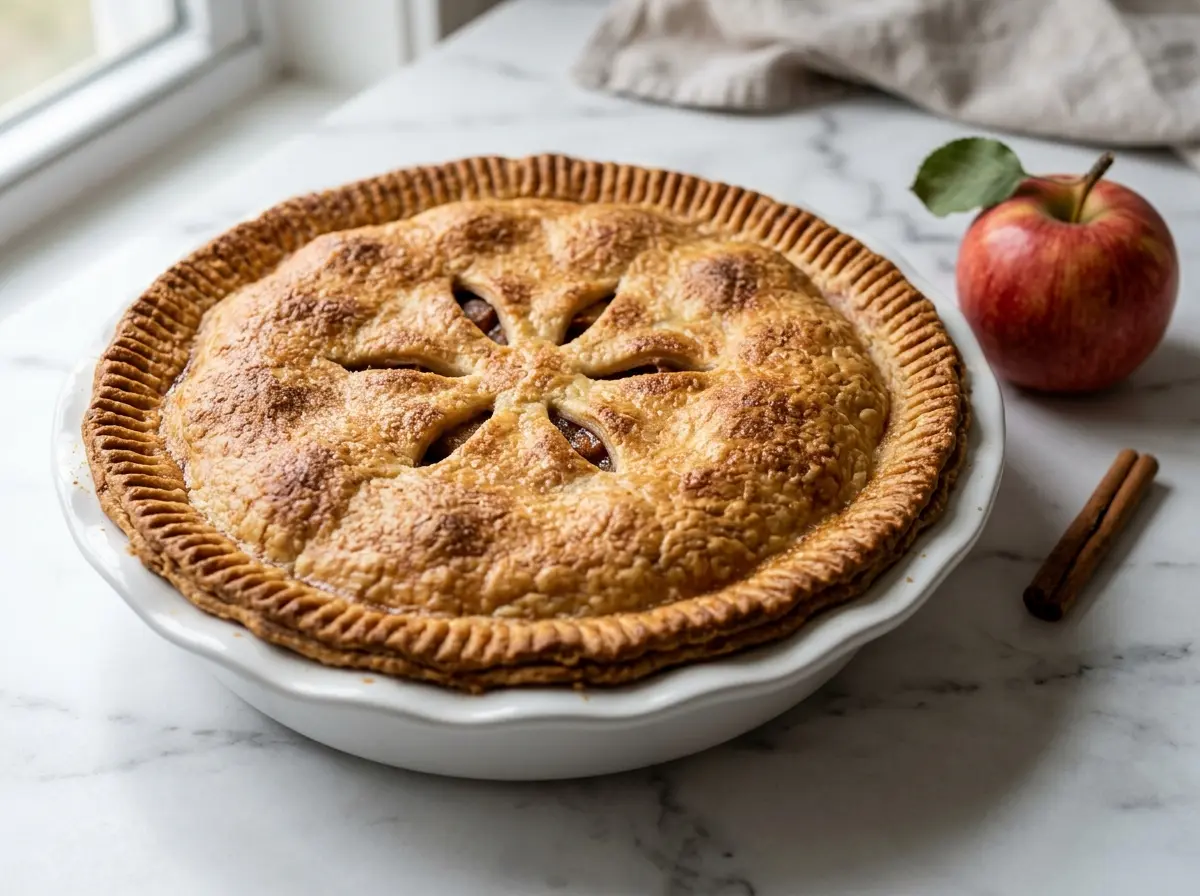
This apple pie recipe uses a double-crust all-butter pie pastry and a 6-spice apple filling. The filling combines Granny Smith and Honeycrisp apples for the best balance of structure and sweetness. A two-temperature baking method at 425°F for the first 20 minutes, then 375°F for 40 minutes, produces a golden flaky crust and a thick non-watery filling every time.
Total time from start to finish is approximately 2 hours including crust chilling time. The entire recipe uses pantry staples with no special equipment beyond a 9-inch pie dish and a rolling pin.
Most homemade apple pies fail in one of three places. The crust shrinks and becomes tough. The filling turns watery and floods the bottom crust. Or the apple slices dissolve and leave a hollow gap under the top crust. This apple pie recipe from scratch solves all three problems with specific techniques that make an enormous difference without adding extra time.
Cold butter worked quickly into flour produces a crust that is both flaky and tender. Macerating the apples in sugar before filling draws out excess moisture before it ever enters the oven. Mixing apple varieties gives the filling a balance of tartness, sweetness, and structural integrity that a single variety cannot provide.
At wecookrecipe.com, this homemade apple pie recipe covers every technique decision with a reason, not just an instruction. Understanding why you chill the dough, why you macerate the apples, and why you start at a high oven temperature before reducing means you can adapt this easy apple pie recipe to any apples in your kitchen and any equipment you have on hand.
The best apple pie recipe uses a blend of tart and sweet apples such as Granny Smith and Honeycrisp, a 6-spice filling of cinnamon, nutmeg, allspice, cloves, ginger, and black pepper, and a cold all-butter double crust. Bake at 425°F for 20 minutes then reduce to 375°F for 40 minutes. Macerate the apple slices in sugar for 30 minutes before filling to draw out excess liquid. Thicken with 2 tablespoons of cornstarch and dot with cold butter before adding the top crust.
Why This Apple Pie Recipe Works
The foundation of a great apple pie recipe is understanding that apples release a significant amount of water during baking. A raw apple slice placed directly into a pie crust will release so much liquid in the first 20 minutes that the bottom crust becomes soggy and the filling stays thin rather than thick and jammy.
The maceration step solves this. Raw apple slices are tossed with sugar and left to sit for 30 to 60 minutes at room temperature before the pie is assembled. This draws the excess moisture out of the apple cells through osmosis before the filling ever reaches the oven. According to Serious Eats’ food science research, pre-draining apple filling can remove up to 30% of its moisture, directly preventing a watery result.
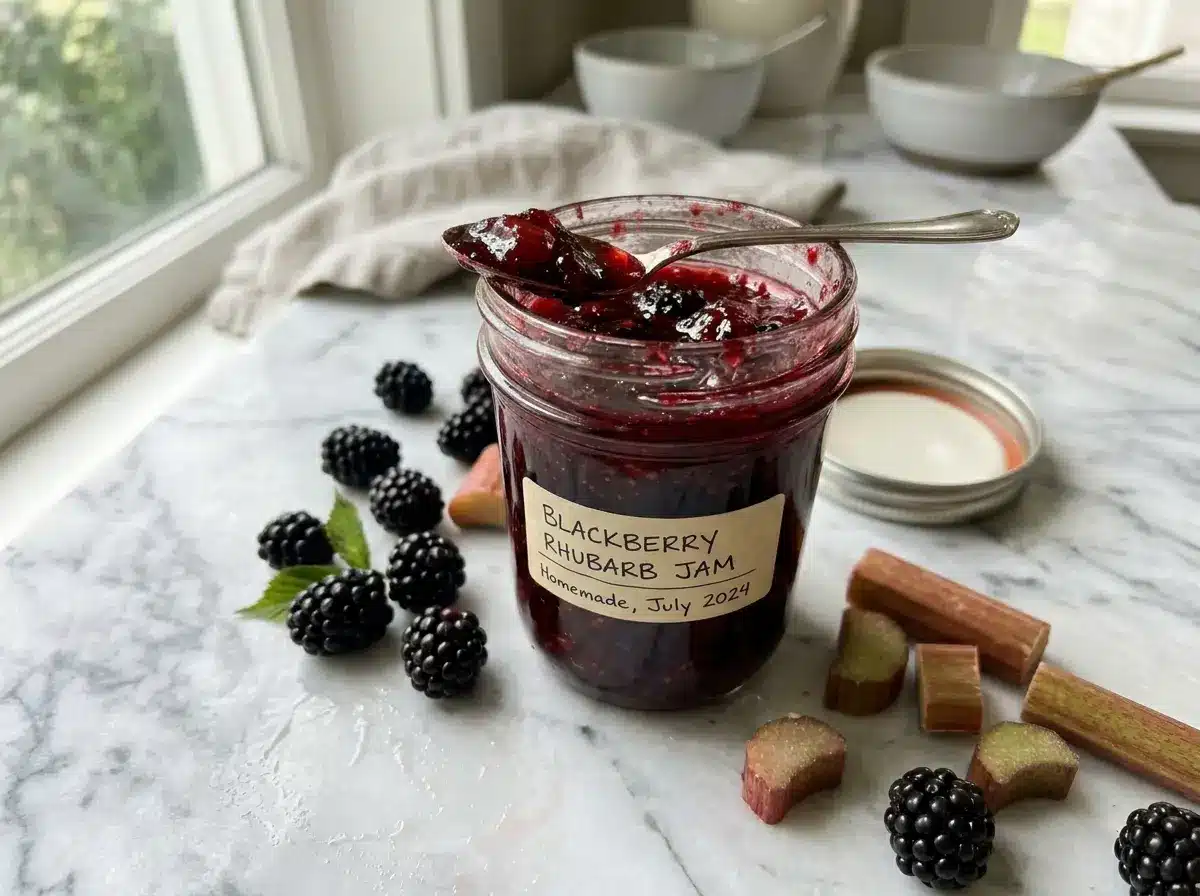
The liquid that collects in the bowl can be reduced on the stovetop to a concentrated syrup and stirred back in for extra flavor. If you enjoy cooking with fruit in other formats, our blackberry rhubarb jam uses the same maceration principle to produce a thick, vibrant jam with no added pectin.
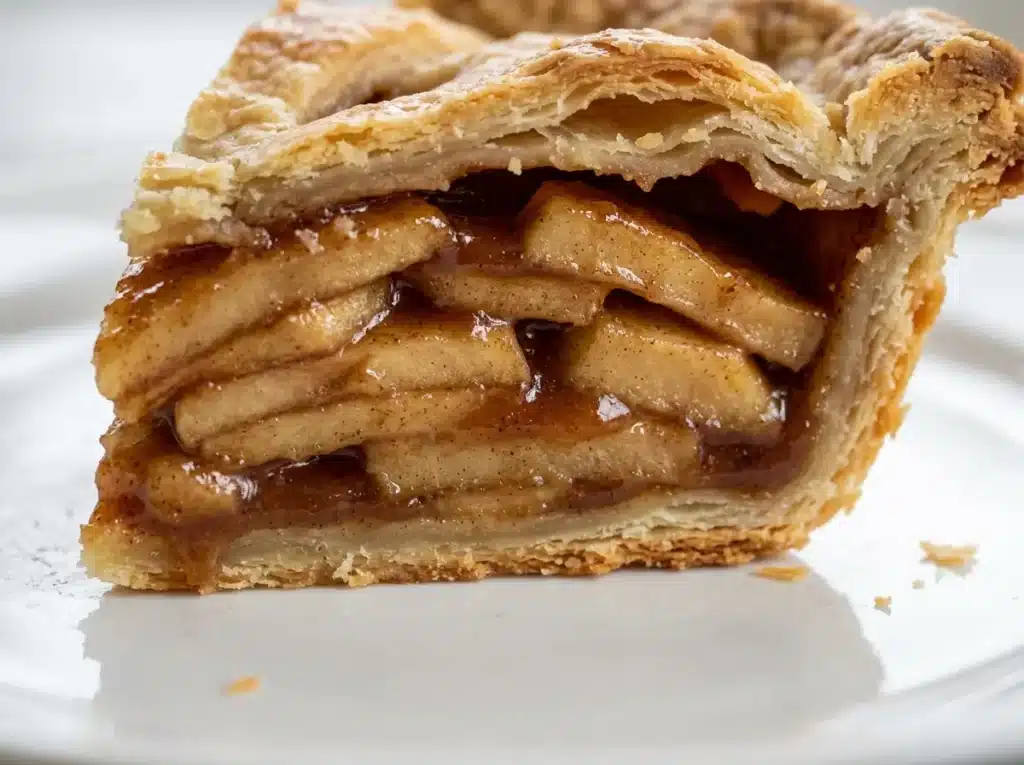
Apple variety selection is the second most important decision in a classic apple pie recipe. Granny Smith apples hold their shape during the long bake time, but alone they can taste aggressively tart. Combining Granny Smith with Honeycrisp, Pink Lady, or Braeburn apples in a 50/50 ratio adds natural sweetness and complexity that a single variety cannot produce.
The two-temperature baking method solves the undercooked bottom crust problem that plagues single-temperature baking. Starting at 425°F sets the bottom crust quickly before filling liquid can soak in. Reducing to 375°F finishes the filling and achieves even golden color on top without burning. Placing the pie on a preheated baking sheet transfers direct heat to the bottom of the dish from below.
How to Make the Perfect Apple Pie Crust
The all-butter pie crust in this apple pie recipe relies on three conditions. The butter must be genuinely cold at all times during mixing. The water must be added gradually until the dough just holds together. The dough must rest in the refrigerator long enough for the gluten to relax before rolling.
Cold butter creates steam pockets as it melts in the oven, pushing the pastry layers apart and creating the visible flakiness that distinguishes a homemade crust from a commercial one. The King Arthur Baking guide to pie crust explains that keeping fat cold and minimizing gluten development are the two most critical factors for a flaky, tender result.
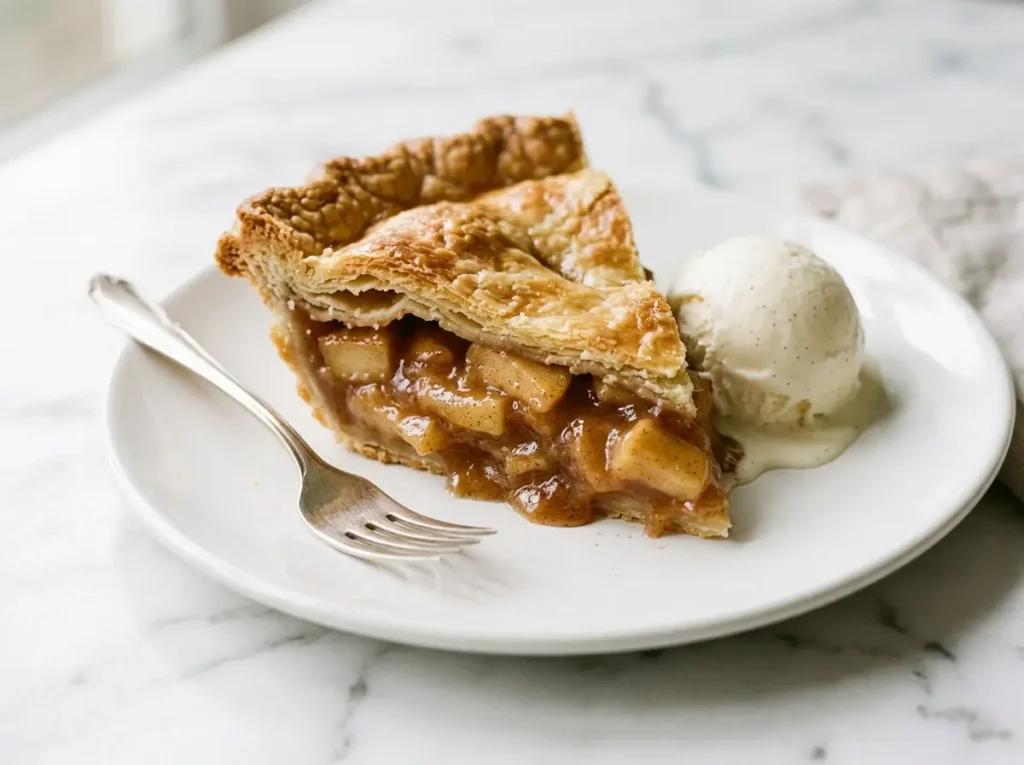
The most common mistake in any easy apple pie recipe crust is overworking the dough. Every time the dough is handled, heat from your hands warms the butter and develops the gluten network. The moment the dough holds together when pressed, stop adding water and stop mixing.
Visible streaks of butter in the finished dough disc are a sign that the crust will be flaky. Roll with a light touch, work quickly, and return the dough to the refrigerator immediately if it begins to soften or feel sticky during assembly.
Blind baking the bottom crust is not required in this apple pie recipe from scratch. The two-temperature method and the preheated baking sheet supply enough direct bottom heat. For bakers with persistent soggy-bottom problems, brushing the raw bottom crust with a thin layer of beaten egg white and allowing it to dry for 5 minutes before adding the filling creates an effective moisture barrier.
Best Apples for Apple Pie Recipe
The best apples for a homemade apple pie recipe balance structural firmness with flavor complexity. Granny Smith apples hold their shape throughout the full bake time. Their high malic acid content brightens the flavor and their low natural sugar means the sweetness of the pie is controlled entirely by the sugar in the recipe.
Honeycrisp apples add natural sweetness, a subtle honey-like aroma, and a juiciness that makes the filling feel more abundant. Because Honeycrisp soften faster than Granny Smith, the 50/50 blend produces a filling where some slices retain firm bite and others become tender and saucy. Pink Lady, Braeburn, and Fuji apples all work as direct substitutes for Honeycrisp.
Golden Delicious can be used but tends to break down too completely during the full bake time. Red Delicious and McIntosh should be avoided entirely. Red Delicious has a mealy texture even when raw. McIntosh dissolves almost completely during baking, producing a filling that is more applesauce than structured pie.
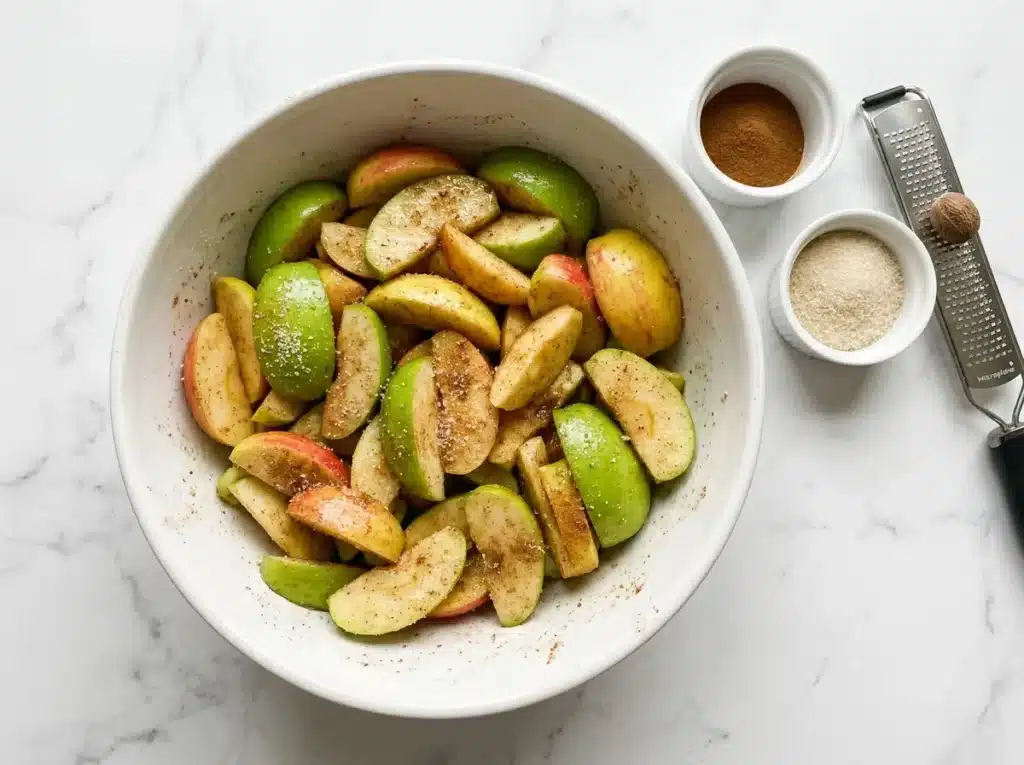
If you want a faster apple bake that uses the same apple varieties, our apple crisp recipe with oats delivers the same flavor in a fraction of the time with no crust work required.
Apple Pie Recipe Spice Blend Explained
The 6-spice blend in this apple pie recipe goes beyond the standard cinnamon-only approach. Each spice serves a specific flavor purpose. Cinnamon at 1 and 1/2 teaspoons is the dominant warming spice. Nutmeg at 1/4 teaspoon adds a woody, slightly floral warmth and is most effective when freshly grated directly into the filling.
Allspice and cloves contribute a peppery, aromatic intensity. Both are used at small quantities, 1/4 teaspoon and 1/8 teaspoon respectively, because they overpower apple flavor if used too generously. Ground ginger at 1/8 teaspoon adds a faint brightness without reading as a distinct ginger flavor.
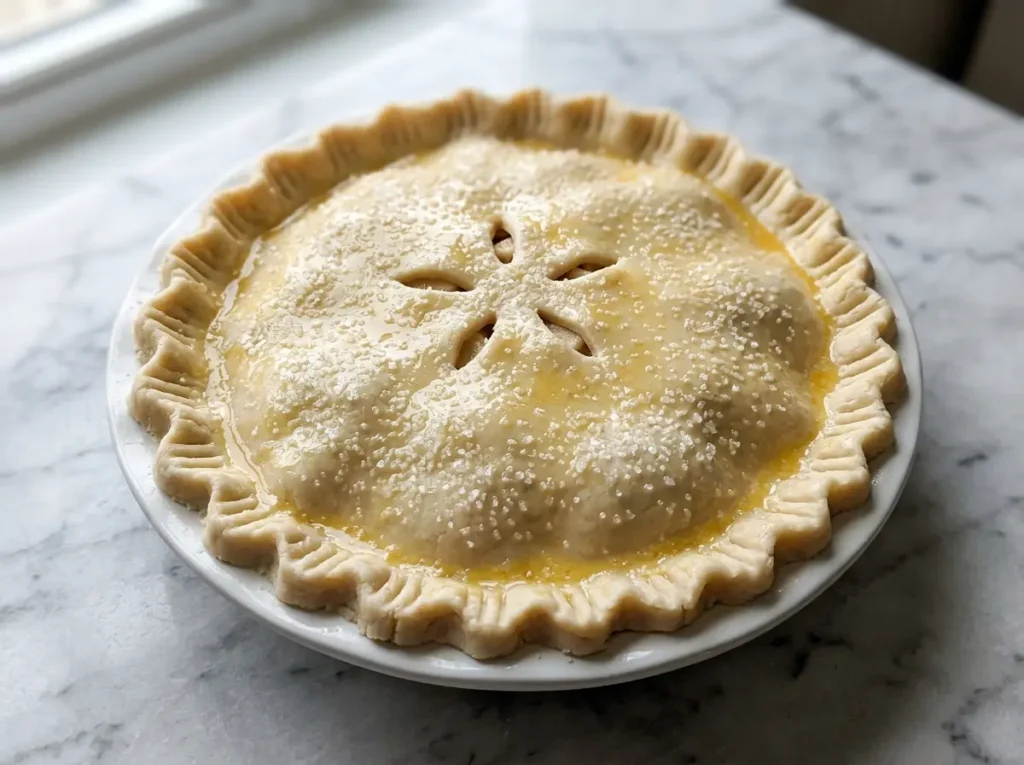
The pinch of black pepper is the most unusual element in this best apple pie recipe spice blend. It functions as a flavor amplifier, sharpening the perception of the other spices and adding a barely perceptible warmth that makes the filling feel richer. BBC Good Food’s spice pairing guide confirms that black pepper activates the same sensory receptors as warming spices and intensifies overall spice perception in sweet bakes.
This same spice logic applies to our apple cider donut bread, which uses a nearly identical spice profile in a quick bread format that requires no pastry work.
Brown sugar alongside granulated white sugar contributes a molasses depth that white sugar alone cannot provide. The ratio of 1/2 cup white sugar to 1/4 cup brown sugar keeps caramel notes present without overwhelming the bright apple and spice flavors. Bakers using sweeter apple varieties exclusively can reduce total sugar by up to 2 tablespoons without affecting the structural integrity of the filling.
Key Data Table: Apple Pie Recipe at a Glance
| Element | This Recipe | Why It Matters |
|---|---|---|
| Apple varieties | Granny Smith and Honeycrisp, 50/50 | Balances structure with natural sweetness |
| Maceration time | 30 to 60 minutes before filling | Removes excess moisture before baking |
| Thickener | Cornstarch, 2 tablespoons | Produces clear glossy sauce without cloudiness |
| Crust fat | All butter, 226g | Maximum flavor and flaky layers |
| Butter temperature | Very cold, straight from fridge | Steam pockets create flaky layers in the oven |
| Baking temperature | 425°F for 20 min then 375°F for 40 min | Sets bottom crust fast, finishes filling evenly |
| Cooling time | Minimum 2 hours before slicing | Filling sets fully only as the pie cools |
| Spice count | 6 spices including black pepper | Depth and complexity beyond cinnamon alone |
How to Store and Freeze Apple Pie Recipe
A fully baked apple pie recipe stores at room temperature covered loosely with plastic wrap or aluminum foil for up to 2 days. The sugar content of the filling acts as a natural preservative. The crust also maintains better texture at room temperature than in the refrigerator, where humidity tends to soften the pastry.
For storage beyond 2 days, transfer the pie to the refrigerator where it keeps well for up to 5 days. Reheat individual refrigerated slices in a 350°F oven for 10 minutes to restore crust crispness. Microwaving makes the pastry soft and chewy rather than flaky. Other classic pastry desserts on this site like our pumpkin pie and Boston cream pie follow the same room-temperature storage rules for the first 48 hours.
Both the unbaked assembled pie and the fully baked finished pie freeze well for up to 3 months. Freezing an unbaked pie preserves the crust texture better because the pastry has not yet gone through the bake cycle. To freeze unbaked, assemble the pie completely through the egg wash step, freeze uncovered on a baking sheet for 2 hours until firm, then wrap tightly in two layers of plastic wrap and one layer of foil.
Bake directly from frozen at 425°F for 25 minutes followed by 375°F for 55 to 60 minutes. The FDA food safety guidelines recommend storing fruit pies no longer than 2 days at room temperature and 3 to 4 days in the refrigerator when the filling contains eggs or dairy. This all-fruit filling without dairy is safe for the full 5-day refrigerator window.
Frequently Asked Questions About Apple Pie Recipe
Why is my apple pie recipe filling watery?
A watery filling is almost always caused by one of three things. Skipping the maceration step is the most common cause. Using high-moisture apples like McIntosh or Golden Delicious without adjusting the cornstarch is the second. Cutting the bake time short before the filling thickens is the third.
The maceration step is the most impactful fix. It removes excess moisture from the apple cells before assembly rather than allowing it to release during baking. If the filling still appears watery after baking, increase the cornstarch to 3 tablespoons in the next bake and ensure the pie bakes until the filling visibly bubbles through the steam vents.
How do I keep my apple pie recipe crust from shrinking?
Crust shrinkage is caused by overworked gluten and insufficient chilling time. When the dough is mixed beyond the point where it just holds together, the gluten network becomes tight and elastic. This elasticity causes the pastry to contract back toward its original shape in the oven.
Handle the dough as minimally as possible after the water is added. Refrigerate for a minimum of 30 minutes and ideally 1 hour before rolling. Press the rolled crust gently into the pie dish without stretching it. Stretching the crust to fit the dish guarantees it will shrink back during baking.
Can I make an apple pie recipe the day before?
Yes, and making this apple pie recipe from scratch the day before serving is actually recommended. The baked pie stored at room temperature overnight allows the filling to set fully and the flavors to meld and deepen in a way that a pie served immediately after cooling does not achieve.
The crust remains crisp at room temperature for up to 2 days. Alternatively, make the pie dough up to 2 days ahead and refrigerate as discs, make the apple filling up to 24 hours ahead and store covered in the refrigerator, then assemble and bake on the day of serving for maximum crust freshness.
What temperature should I bake an apple pie recipe?
This easy apple pie recipe uses a two-temperature baking method. Bake at 425°F for the first 20 minutes to set the bottom crust quickly. Then reduce to 375°F for the remaining 35 to 45 minutes to finish the filling and achieve even golden browning on top without burning.
A single temperature of 375°F throughout produces a correctly cooked filling but often leaves the bottom crust pale and undercooked. A single temperature of 425°F risks burning the top crust edges before the filling has fully thickened. The two-stage method solves both problems at once.
How many apples do I need for an apple pie recipe?
This best apple pie recipe uses 6 medium to large apples totaling approximately 1.5 kilograms before peeling and coring. This yields approximately 1.2 to 1.3 kilograms of sliced apple for the filling, enough to fill a standard 9-inch pie dish with a slight mound above the rim.
Using fewer apples produces a flat filling with a significant gap under the top crust as the apples reduce. Using significantly more makes the pie difficult to seal without breaking the top crust and may extend the bake time by 10 to 15 minutes.
How long does homemade apple pie last?
A baked homemade apple pie recipe lasts 2 days at room temperature covered loosely, up to 5 days in the refrigerator, and up to 3 months in the freezer. Refrigerator storage may cause slight textural softening of the crust that can be reversed by reheating individual slices at 350°F for 10 minutes.
To freeze a baked pie, wrap tightly in plastic wrap and then foil. Thaw overnight in the refrigerator before reheating in a 350°F oven for 20 to 25 minutes until warmed through.
Final Thoughts
A great apple pie recipe is not complicated, but it is technical. The same three or four decisions made at specific moments in the process determine whether the result is memorable or forgettable. Cold butter mixed quickly. Apples macerated before filling. A preheated baking surface beneath the pie. Two hours of patience after it comes out of the oven.
These are not difficult steps. They are the right steps, and they are what separates a homemade apple pie recipe that earns requests for the recipe from one that is simply adequate.
This apple pie recipe from scratch is the version to come back to every fall when the best baking apples are in season and every Thanksgiving when something reliable and impressive is needed. It stores well, freezes beautifully, and gets better on day two. If you are looking for equally simple bakes that require no rolling or pastry work, our 3-ingredient banana oatmeal cookies are the fastest thing in this collection and share the same wholesome, unfussy philosophy as this pie.
Disclaimer: Nutritional information provided is an estimate calculated per slice based on standard ingredient quantities and may vary depending on the specific brands, apple varieties, and portion sizes used. Always verify nutritional data if preparing this recipe for individuals with specific dietary requirements or medical conditions.