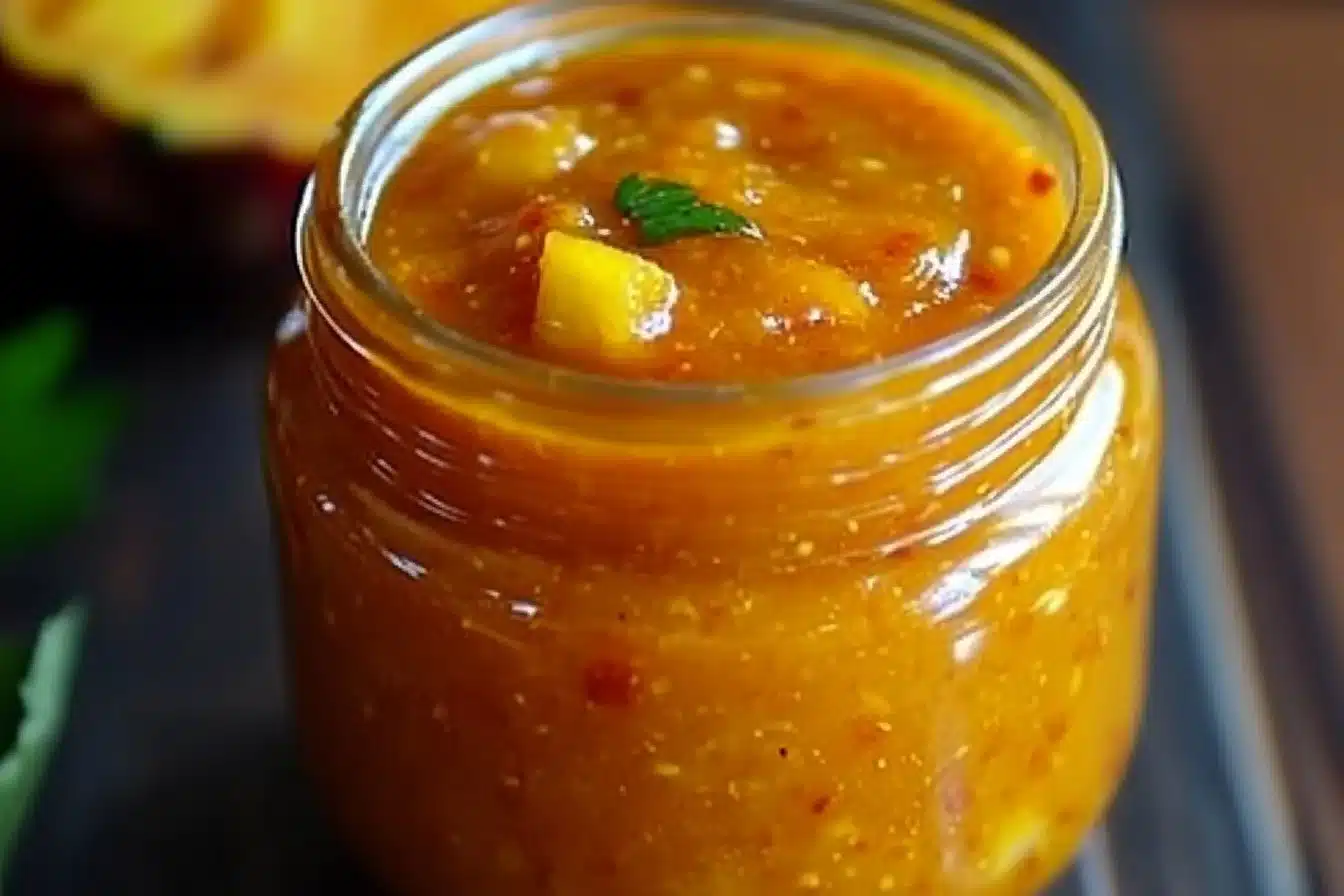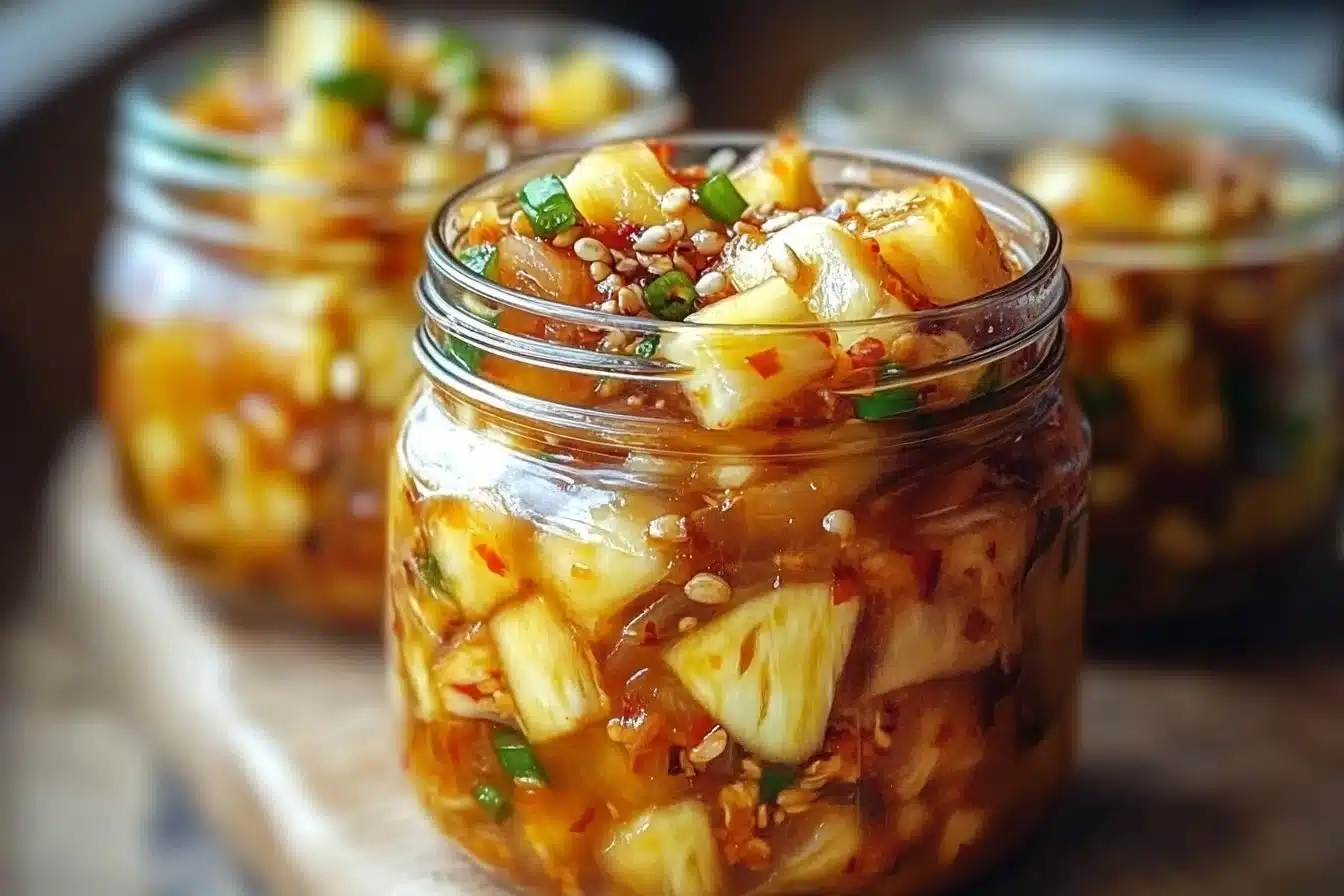
The air in my kitchen first told me this would be special. I remember the bright, sweet smell of pineapple mingling with the warm, peppery scent of ginger and garlic as my little one pressed a sticky finger against the rim of the jar and grinned. That small, curious face and the hush that followed when the first bite landed on our tongues are the moments I keep when I make Fermented Pineapple Kimchi. It feels like a small miracle of home: something alive, tangy, and kind enough to bring everyone to the table.
Why This Fermented Pineapple Kimchi Means So Much
This recipe began as an experiment on a rainy afternoon when I had an extra pineapple and a craving for something bright. I wanted a side that tasted like sunshine but warmed the heart the way my grandmother’s stews did. Fermented Pineapple Kimchi answered that call. It is playful and grounded at the same time. It sings with sweet fruit but holds a steady, savory backbone.
I learned early that fermentation invites patience. It taught me to slow down, to watch and smell instead of rush. When I first served it at a family gathering, people paused between bites. They talked about summer markets and backyard barbecues. It felt like a bridge between places we had been and the small kitchen we share now. That is what I mean when I say this kimchi means so much: it carries memory, it brightens a plain meal, and it gathers people close.
If you like bright smoothies in the morning, this is a dish that can follow that same thread of fresh flavors into the evening. I often reach for a quick green drink in the morning, like the one I use in my pineapple spinach ginger smoothie, and by dinner I want those same notes—sweet, peppery, and alive—on my plate. Fermented Pineapple Kimchi brings that continuity to a whole meal.
The Story Behind Our Favorite Fermented Pineapple Kimchi
My kitchen has always been a place of gentle experiments. I love turning simple things into something that feels like an event. Years ago I made a small batch for the first time to take to a potluck. People asked for seconds and then for the jar. A neighbor asked for the recipe and promised to bring a loaf of bread in return. That moment of sharing made me feel like I was handing someone a small, fragrant piece of my home.
This kimchi reminds me of summer mornings when pineapples were piled high at the market and we would haul them home, already planning how to eat them. It also carries a hint of the spicy, fermented foods my family loves. It is a dish that fits both festive tables and busy weeknights. You can make a jar, pop it in the fridge, and come back to it over days. The flavors change in kind and gentle ways, and each stage feels like a small discovery.
I often fold this into a simple bowl of rice or use it as a topping for grilled fish. My kids like it spooned over tacos and my husband reaches for it when he wants something bright next to a cozy stew. These little habits are the threads of our family life, and Fermented Pineapple Kimchi has woven itself quietly into them.
How to Make Fermented Pineapple Kimchi
“Every time I stir this pot, it smells just like Sunday at home.”
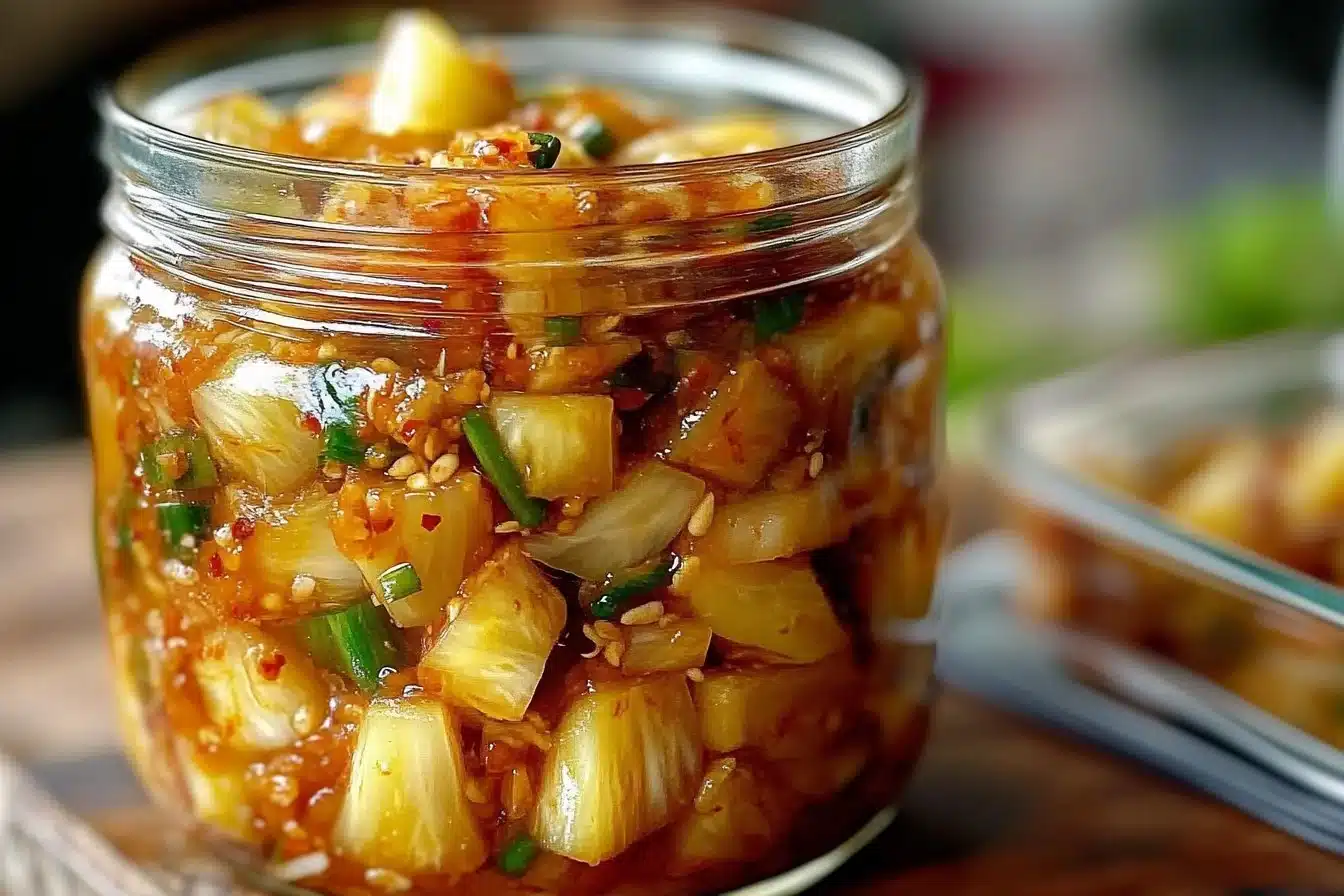
Making this kimchi is a warm, rhythmic process. You will notice the colors first: bright yellow fruit, the deep red of gochugaru, and the pale green of sliced onions. The textures change as you work, too. The pineapple shifts from firm and crisp to glossy and slightly soft as the salt draws out juices. You will hear the gentle slap of fruit against the bowl and the soft clink of a spoon as you mix.
When I make it, I slow my breathing and pay attention to the little things. I grate ginger over the pile of fruit and let the steam of its oils lift into the air. I mince garlic and imagine the warmth it will add to each bite. Once packed into a jar, you will see bubbles begin to form in a day or two. That is the sound of the kimchi finding its voice. Taste it each day the way you would check on a sleeping child, with care and curiosity, until it sings to you.
Every step has a small reward. When you massage the salt into the pineapple and feel the fruit start to release its juice, you know you are on the right path. When the jar smells tart, sweet, and faintly spicy, you know it is getting close. Trust your nose and your taste buds. They are the best guides in this kitchen.
Ingredients You’ll Need
1 ripe pineapple, peeled and chopped
1 tablespoon sea salt
2 cloves garlic, minced
1 tablespoon ginger, grated
1-2 tablespoons Korean red pepper flakes (gochugaru)
1 tablespoon fish sauce (optional)
1 cup grated carrots
2 green onions, sliced
A little side note: if you love a cozy aroma, add a small splash of toasted sesame oil at the end. If you keep a jar of salty anchovy paste or miso, a whisper of that can deepen the flavor. I sometimes add a pinch of sugar when the pineapple is not very sweet. These little changes feel like adjusting the lighting in a room; they warm things up without changing the soul of the dish.
I like to gather everything first so the kitchen moment feels calm. Lay out your knife, a large bowl, a clean jar, and a spoon. Put a small plate nearby for tasting. The act of arranging your tools is the beginning of the ritual. If you have kids or friends, invite them to help rinse the carrots or measure the gochugaru. It turns the task into a way to make memories.
If you enjoy fruity morning blends, there is a family of flavors you already love. Try pairing small tastes of this kimchi with a pink pineapple smoothie on a busy brunch day. The sweet drinks and the tangy kimchi make a playful duet on the tongue.
Step-by-Step Directions
- In a large bowl, combine the chopped pineapple and sea salt. Massage the salt into the pineapple pieces for a few minutes until they start to release their juices. You will feel the fruit soften and the bowl fill with bright, sweet liquid, and the sound of a small kitchen joy will rise.
- Add the minced garlic, grated ginger, Korean red pepper flakes, fish sauce (if using), grated carrots, and sliced green onions to the bowl. Mix well to combine all the ingredients. Stir until glossy and the peppers dust the fruit like a sunburst, and breathe in the aroma that fills your kitchen.
- Pack the mixture tightly into a clean glass jar, leaving some space at the top for expansion during fermentation. Press down gently so the juices rise and the pieces nestle together, and watch the colors settle into a happy pattern.
- Cover the jar with a lid but do not tighten it fully; you want to allow gases to escape. You can use a cloth and rubber band if you like less resistance, and the little gas bubbles will keep you company as they form.
- Leave the jar at room temperature for 2-5 days, tasting daily. Once it reaches your desired level of fermentation, transfer it to the refrigerator to slow down the fermentation process. Taste often; each day brings a new note. Wait for the edges to turn golden and the scent to sing.
- Enjoy your Fermented Pineapple Kimchi as a side dish or topping with your meals! Serve it chilled or at room temperature, and notice how the flavors shift and deepen with every bite. It keeps well and becomes more complex the longer it rests.
Bringing Fermented Pineapple Kimchi Together
This kimchi is a balance of sweet, salty, spicy, and tangy. The pineapple gives a bright sweetness that plays beautifully against the heat of gochugaru. The garlic and ginger add warmth and depth. If you use fish sauce, it brings a savory note that rounds the flavor like a hand on your shoulder.
When I stir the kimchi into a bowl of steamed rice, the steam lifts the scents and makes the whole kitchen feel cozy. The contrast of soft rice and crisp pineapple is one of my favorite simple pleasures. If you are serving this at a meal, offer small spoons so everyone can add just as much as they like. It is a dish that invites personalization.
If you want to make a larger batch, double the pineapple and keep the ratios similar. Fermentation is forgiving when you keep the salt and pepper levels kind. If your family likes bold heat, nudge the gochugaru up a bit. If small hands will be tasting, keep it milder and let guests add extra spice at the table.
I have a habit of setting out a small bowl of kimchi with grilled fish and a cooling yogurt sauce. The bright fruit offsets the smoky flesh of the fish and the yogurt soothes the spice. These small pairings are how this kimchi finds its place at our table.
Serving Fermented Pineapple Kimchi With Family Warmth
When I bring this jar to the table, I do it with a smile. It is the kind of food that invites conversation and curiosity. Put it in a small dish with a spoon and let people taste freely. I like to place it beside a pot of plain rice, a plate of roasted vegetables, or a simple grilled chicken.
At brunch, I spoon a little over scrambled eggs and fresh herbs. My kids love it on top of corn tortillas with a dollop of crema. For guests, I often set out a tiny board of different toppings: toasted sesame seeds, chopped cilantro, and lime wedges. The kimchi feels like a center note among those accents.
We have a small family tradition: on slow Sundays, whoever opens the jar first reads one memory aloud from the week. It is a small way to slow down and gather around a shared flavor. Food tastes best with company, and this kimchi has a way of making even the quietest meal feel like a small celebration.
If you want ideas for a full meal, think of simple meats and roasted roots, green salads with citrus, or a bowl of warm grains. The bright pineapple will cut through rich flavors and bring balance. This is comfort food and sunny food at once.
Storing Fermented Pineapple Kimchi for Tomorrow
When your jar reaches the perfect point of tang and spice, move it to the refrigerator. Cold slows fermentation and keeps the flavors steady. I label the lid with the date so I can remember when I opened it and how the flavors have changed. The kimchi will keep for weeks, and it often tastes even better after a week or two as the flavors settle and mature.
If you see foam or a white film on top, gently skim it away. This is usually harmless yeast, but your senses are the best judge. If the jar smells off in a way that makes you uneasy, trust your nose and discard it. Safety and comfort go hand in hand in my kitchen.
To share, spoon the kimchi into small jars and tuck a handwritten note with a serving idea. I find friends appreciate a small jar with a suggestion for pairing. They often send me a picture of how they used it, and that keeps the circle of home cooking alive.
When you reheat dishes that include this kimchi, do so gently. Quick heat will keep its texture and most of its bright notes. If you simmer it for too long, the pineapple will soften markedly and the fresh top notes will fade. That can be lovely too, but it gives a different kind of comfort.
Small Troubleshooting and Friendly Tips
If your pineapple is very sweet, reduce the salt by a small pinch so the fruit does not become cloying. If the mix seems dry after the first day, press it down to release more juice. If it seems too wet, leave the lid slightly loosened so more liquid can evaporate.
Taste is your guide. Some days you will want a tang that bites the back of your tongue. Other days you will prefer a soft, rounded sweetness. Let the kimchi ferment to match your mood. It is an act of gentle permission to change your mind.
If you have trouble with too much heat, rinse a spoonful under cold water before adding it to rice or other neutral bases. That tames the spice without losing the core flavor. I keep a small bowl of plain yogurt on the table when serving this to a crowd. It is a hands-off way to calm things and make the dish welcome to all ages.
For a deeper flavor, try adding a small strip of kombu into the jar before fermenting. Remove it after a day or two if you like. The hint of sea will give body without turning the kimchi into something else. Little adjustments like this are how recipes become yours.
If you want to repeat this with new flavors, try swapping the carrots for thinly sliced daikon, or adding a few thin rings of chili for color and bite. Each change teaches you something new about balance.
Variations That Keep the Heart of the Dish
There are simple paths to variation that keep the spirit of Fermented Pineapple Kimchi intact. Add a handful of chopped cilantro at the end for a fresh, citrusy finish. Stir in a teaspoon of toasted sesame seeds when you serve for a little crunch. Use lime juice for a tang that brightens the pineapple in a different way.
If you prefer a no-seafood version, omit the fish sauce and replace it with a teaspoon of soy sauce or a splash of tamari. That keeps a savory anchor while keeping the dish friendly for many diets. For extra depth, roast the pineapple briefly before fermenting. That warm caramel note sings against the red pepper.
When I teach neighbors how to make this, I ask them about the flavors they already love. Then we pick one small change and try it together. It is a friendly way to learn and to make the recipe belong to someone else.
If you are the kind of cook who likes to learn across recipes, you might enjoy seeing other ways pineapple plays in the kitchen. I sometimes pair a spoonful of this kimchi with a morning smoothie idea I keep on hand, like my pineapple spinach ginger smoothie or the bright colors of a pink pineapple smoothie. Those small connections make the kitchen feel like a single, unfolding story.
Making This a Habit, Not a Chore
When you make Fermented Pineapple Kimchi the first time, it might feel like a project. Let it. Projects become habits when they bring joy. Keep a jar in the fridge and reach for it when you need a bright note. Pack it into lunches, spoon it over warm bowls, or let it sit on the counter as a reminder that good food can be simple and alive.
Invite family members to help with one step. My children love pressing the mixture into the jar and listening for the little pop as the air escapes. Those small roles turn a recipe into a memory. If you make a few jars, keep one for yourself and give others as gifts. There is something tender about sharing food that needed time and attention.
I often write a quick note about the day I made the jar and tuck it into the pantry. It becomes a tiny diary of flavors and moments. Over the months, the notes pile up and each jar tells a story of a season. That is the real home cooking I want to pass on: dishes that carry a life.
Conclusion
Thank you for spending this kitchen moment with me. If you want to learn more about different takes on pineapple kimchi and find a helpful how-to guide, this recipe from Amy Levin offers a clear and warm approach that pairs well with what I have shared: Pineapple Kimchi – Recipes by Amy Levin. For a different voice and a spicy hot sauce twist on pineapple kimchi, this detailed post walks through the steps and ideas in a friendly, hands-on way: How to Make Pineapple Kkakdugi (Kimchi) & Pineapple Kimchi Hot …
I hope this jar finds a place in your kitchen, that it becomes a small ritual, and that it brings people together around simple, honest flavor.
Print
Fermented Pineapple Kimchi
- Total Time: 2-5 days (fermentation time)
- Yield: 1 jar 1x
- Diet: Vegetarian
Description
A vibrant and tangy fermented pineapple kimchi that combines sweet pineapple with spicy gochugaru and savory garlic and ginger.
Ingredients
- 1 ripe pineapple, peeled and chopped
- 1 tablespoon sea salt
- 2 cloves garlic, minced
- 1 tablespoon ginger, grated
- 1–2 tablespoons Korean red pepper flakes (gochugaru)
- 1 tablespoon fish sauce (optional)
- 1 cup grated carrots
- 2 green onions, sliced
Instructions
- In a large bowl, combine the chopped pineapple and sea salt. Massage the salt into the pineapple pieces for a few minutes until they start to release their juices.
- Add the minced garlic, grated ginger, Korean red pepper flakes, fish sauce (if using), grated carrots, and sliced green onions to the bowl. Mix well to combine all the ingredients.
- Pack the mixture tightly into a clean glass jar, leaving some space at the top for expansion during fermentation.
- Cover the jar with a lid but do not tighten it fully. Leave the jar at room temperature for 2-5 days, tasting daily until it reaches your desired level of fermentation.
- Transfer the jar to the refrigerator to slow down the fermentation process once it’s reached the desired tang and spice.
Notes
This kimchi gets better over time. Feel free to adjust the ingredients based on your taste preferences, such as using less salt for sweeter pineapples or adding extra spice.
- Prep Time: 15 minutes
- Cook Time: 0 minutes
- Category: Side Dish
- Method: Fermentation
- Cuisine: Korean
Nutrition
- Serving Size: 2 tablespoons
- Calories: 70
- Sugar: 4g
- Sodium: 400mg
- Fat: 0g
- Saturated Fat: 0g
- Unsaturated Fat: 0g
- Trans Fat: 0g
- Carbohydrates: 16g
- Fiber: 1g
- Protein: 1g
- Cholesterol: 0mg
Keywords: fermented, kimchi, pineapple, side dish, Korean, vegetarian, tangy